
Goods from sectors, including agriculture, precious stones, chemicals, pharma, medical devices, electricals, and machinery may get impacted if the US will go ahead with imposing reciprocal tariffs on Indian products, according to experts. They said that these sectors could face additional customs duties from the Trump administration because of the high tariff differential or gap, which is the difference between the import duties imposed by the US and India on a product.
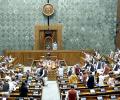
India's opposition parties have sharply criticized the Union Budget, calling it inadequate to address the country's economic woes and accusing the BJP-led government of using it to woo voters in Bihar and Delhi ahead of upcoming elections. Leaders from the Congress, TMC, DMK, SP, and CPI(M) voiced their disapproval, highlighting concerns over inflation, unemployment, and the lack of substantial measures to support the agricultural sector and the poor. They also criticized the tax cuts for the middle class as insufficient and coming too late after years of high taxes and rising prices.

A heated debate erupted in the Rajya Sabha over the ongoing strike by ASHA workers in Kerala, with Congress and CPI(M) MPs trading accusations over responsibility for addressing their demands for a higher honorarium and post-retirement benefits. Congress MP Jebi Mather alleged that both the Kerala government and the Union government had ignored the workers' pleas, while CPI(M) MP John Brittas countered by claiming Kerala provides the highest honorarium to ASHA workers. The debate also saw demands for an AIIMS in Kerala and a hike in MBBS seats, as well as concerns over maternal health, elderly care, and mental health in India.

The GST Council in its next meeting may look at raising the lowest tax slab to 8 per cent, from 5 per cent, and prune the exemption list in the Goods and Services Tax regime as it looks to increase revenues and do away with states' dependence on Centre for compensation, sources said on Sunday. A panel of state finance ministers is likely to submit its report by this month end to the Council suggesting various steps to raise revenue, including hiking the lowest slab and rationalising the slab. Currently, GST is a four-tier structure attracting a tax rate of 5, 12, 18 and 28 per cent.

Businesses across the country may soon be required to issue electronic invoices, or e-invoices, directly to consumers for the sale of goods and services. The Goods and Services Tax (GST) Council, in its forthcoming meeting on Monday, is expected to discuss extending the e-invoicing mandate to cover business-to-consumer (B2C) transactions. Currently, e-invoicing is compulsory for businesses with a turnover of Rs 5 crore and above, but only for their business-to-business (B2B) transactions.

Finance ministers of states demanded an increase in allocation under 50-year interest-free loan scheme, while fiscally stressed states like Punjab and Kerala pitched for a special package and borrowing flexibility, sources said on Friday. In a pre-budget meeting with Union Finance Minister Nirmala Sitharaman, states have also urged for higher borrowing limits to support fiscal activities, besides additional funds for Jal Jeevan Mission.
The Supreme Court addressed concerns about misinformation spreading related to an incident involving Delhi High Court judge Justice Yashwant Varma. The court clarified that the proposal to transfer Justice Varma to Allahabad High Court was independent of an internal investigation into the discovery of a large sum of cash at his residence following a fire. The Delhi High Court Chief Justice is conducting the investigation and will submit a report to the Chief Justice of India today.

Online skill-based gaming industry has made a case for retaining the service under 18 per cent GST slab instead of putting it into the highest 28 per cent tax rate category, saying the move will badly hit the $2.2-billion sector. The increase in taxation would not only have catastrophic impact on the industry but also encourage offshore operators who would circumvent Indian tax jurisdiction by hosting games in some other country, Games24x7 Co-CEO Trivikraman Thampy said. "It would be a triple whammy -- the industry loses out, the government loses out on tax revenue and players loses out as they would be exposed to unscrupulous operators," he said.

Actor Vijay, founder of the Tamizhaga Vettri Kazhagam (TVK) party, has declared that his party will challenge the ruling DMK in the 2026 Tamil Nadu Assembly elections. In a general council meeting, Vijay criticized the DMK's dynasty politics, their handling of law and order, and women's safety. He also targeted the BJP-led central government over issues like the Waqf Bill, delimitation, and the three-language policy. Vijay promised his party's support to working classes, government employees, and vowed to oppose projects harmful to natural resources and agriculture. He assured 100% safety for women and strict law and order if TVK forms the government. The party passed resolutions opposing the Waqf Bill, delimitation, and the three-language policy, and also voiced support for the two-language policy, finding a permanent solution for fishermen's issues, and opposing the Parandur airport project.
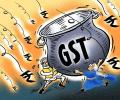
GST collections in September rose 26 per cent to over Rs 1.47 lakh crore, the finance ministry said on Saturday. Goods and Services Tax (GST) mop-up has been over Rs 1.40 lakh crore for seven months in a row.

Ask rediffGURU and PF expert Milind Vadjikar your insurance, stocks, mutual fund and personal finance-related questions.

Supplying food to schools under mid-day meal scheme, pre-schools and anganwadis is exempt from GST, the Central Board of Indirect Taxes and Customs (CBIC) has said. Issuing a set of clarification on certain decisions taken by the GST Council in its 43rd meeting on May 28, the CBIC said it had received representations regarding applicability of GST on the issues as to whether serving of food in schools under mid-day meals scheme would be exempt if such supplies are funded by government grants and/or corporate donations. Under the goods and services tax (GST), any catering service, including mid-day meals, provided to an educational institution is exempt from the levy.

The Gujarat High Court dismissed a plea filed by journalist Mahesh Langa seeking the quashing of an FIR registered against him for allegedly stealing "highly sensitive and confidential documents" belonging to the Gujarat Maritime Board (GMB). The court found that prima facie, Langa's involvement in the crime was evident from the evidence collected during the investigation. The court further stated that the investigation is at a nascent stage and it would be inappropriate to exercise its inherent powers in favor of the petitioner at this stage.

As auto major Mahindra & Mahindra (M&M) became the number two player in the retail passenger vehicle segment for the first time in February, powered by its new launches, the company is setting its sights on technology upgrades.

From 30 Sensex shares, Bajaj Finserv jumped nearly 8 per cent while Bajaj Finance soared over 6 per cent. Maruti, Titan, Mahindra, Mahindra & Mahindra, Infosys, HCL Tech, Zomato, UltraTech Cement and Kotak Mahindra Bank were the other major gainers. Sun Pharma emerged as the only laggard.
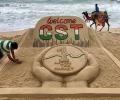
GST revenues rose 16.6 per cent to about Rs 1.52 lakh crore in October -- making it the second highest collection ever. Goods and Services Tax (GST) collection had touched a record high of nearly Rs 1.68 lakh crore in April. In October last year, the revenues stood at over Rs 1.30 lakh crore.
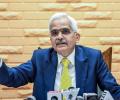
P K Mishra, a retired IAS officer of the Gujarat cadre, is currently serving as the principal secretary to the prime minister.
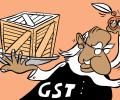
The decision to impose a 28 per cent tax on the full face value of bets placed on online games will be implemented from October 1 even though there was demand for a review from states like Delhi and Goa, finance minister Nirmala Sitharaman said on Wednesday. The GST Council -- the highest decision making body of the new indirect tax regime that comprises Union finance minister and representatives of all states -- discussed the language of amendments that will be needed to enabling taxing online gaming, she said after the panel meeting.

The time is ideal for a 'Dream Budget' akin to the 1991 reforms that sparked high growth and unlocked significant gains in productivity, points out Rajeswari Sengupta.

The AAP chief stressed the need for an increase in healthcare spending, suggesting a rise to 10 percent of the GDP, along with the removal of taxes on health insurance premiums.

High frequency indicators, like vehicles sales, air traffic, steel consumption and GST E-way bills, point towards a sequential pickup in momentum of economic activity during the second half of the fiscal 2024-25 and sustain moving forward, RBI Bulletin said on Wednesday. However, a strong dollar, driven by US economic resilience and trade policy pivots, could exacerbate capital outflows from emerging economies, push risk premiums higher, and intensify external vulnerabilities, said an article on 'State of the Economy' published in RBI's February bulletin.

The GST Council has set up a Group of Ministers, chaired by Haryana Deputy Chief Minister Dushyant Chautala, to suggest required changes in the law for setting up the GST Appellate Tribunal (GSTAT). The GST Council, chaired by Finance Minister Nirmala Sitharaman and comprising state ministers, had last week decided to constitute a Group of Ministers (GoM) to address various concerns raised by states in relation to constitution of the GSTAT. As per the Terms of Reference (ToR) of the GoM, the panel would recommend required amendments in the GST law to ensure that the legal provisions maintain the right federal balance and are in line with the overall objective of uniform taxation within the country.

Dominic Xavier offers his take in the recent changes in GST.
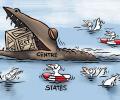
In signs of acceleration in economic activity, India's tax collections on goods sold and services rendered returned to over Rs 1 lakh crore in July after the second wave of Covid-related restrictions caused a blip in the previous month. Goods and Services Tax (GST) mop-up grew 33 per cent year-on-year in July to over Rs 1.16 lakh crore, indicating that the economy is recovering at a fast pace. In July 2020, the collection was Rs 87,422 crore. This is the second highest collection so far this fiscal after a record Rs 1.41 lakh crore mop-up in April.

The Centre has recovered around Rs 95.86 crore from at least 11 crypto exchanges for evading goods and services tax (GST), according to data released by Parliament on Monday. The amount includes interest and penalty. The GST investigation department has detected a total tax evasion of Rs 81.54 crore by crypto exchanges that include WazirX, Coin DCX, CoinSwitch Kuber, Buy Ucoin, UnoCoin and Flitpay, among other exchanges. In a written reply to Lok Sabha, minister of state (MoS) for finance Pankaj Chaudhary said 11 cases of GST evasion by cryptocurrency exchanges have been detected by central GST formations.

Sri Annapoorna Hotel on Saturday appealed to the people to put to rest unnecessary assumptions and political misunderstanding after a video of its owner apologising to Union Finance Minister Nirmala Sitharaman over his remarks on Goods and Services Tax (GST) went viral on September 13.

The Appellate Authority for Advance Rulings (AAAR) of Gujarat has held that papad fryums would not attract any goods and services tax (GST) as they are similar to traditional round papads in all respects. In this connection, the appellate authority modified the ruling of the authority for advance rulings (AAR), which had ruled that Fryums would attract 18 per cent GST. The AAAR held that Fryums is a brand and not a generic name of the product, Harpreet Singh, partner, indirect taxes at KPMG in India said while explaining the order.
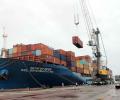
Industry associations and companies in the United States, including the US Chamber of Commerce, Coalition of Services Industries and the iconic bike company Harley Davidson have called on the Donald Trump dispensation to push India to reduce tariffs, non-tariffs, and regulatory barriers to boost American exports.
Ask tax gurus Mihir Tanna, Samkit Maniar, Vivek Lala, Anil Rego, T S Khurana and Mahesh Padmanabhan your Budget-related tax questions
The collections from Goods and Services Tax (GST) grew by 15 per cent to over Rs 1.49 lakh crore in December 2022, indicating improved manufacturing output and consumption demand, besides better compliance. This is the 10th month in a row that the revenues have remained above the Rs 1.4 lakh crore mark. The collection in November was about Rs 1.46 lakh crore. "The gross GST revenue collected during December 2022 is Rs 1,49,507 crore, of which CGST is Rs 26,711 crore, SGST is Rs 33,357 crore, IGST is Rs 78,434 crore (including Rs 40,263 crore collected on import of goods) and cess is Rs 11,005 crore (including Rs 850 crore collected on import of goods)," the ministry said in a statement.

An ardent cricket fan told me he was 118,000th in the queue, and within minutes, he received the disappointing news that his hopes of securing a ticket had vanished with all tickets sold out.
The government on Tuesday informed Rajya Sabha that GST compensation of Rs 17,176 crore is pending to states as on June 2022. Replying to supplementaries during the Question Hour, Minister of State for Finance Pankaj Chaudhary said the Centre is giving GST compensation to states for five years. He said even during Covid times when no GST was collected, the Government of India had given compensation to states after taking loans of Rs 1.1 lakh crore and 1.59 lakh crore during 2020-21 and 2021-22.
GST collections in June witnessed a 56 per cent year-on-year increase to over Rs 1.44 lakh crore on economic recovery and better anti-evasion measures, the finance ministry said on Friday. Goods and Services Tax (GST) collections in June, 2021 stood at Rs 92,800 crore. Speaking at the GST Day celebrations, Finance Minister Nirmala Sitharaman said Rs 1.4 lakh crore is the "rough bottom line" for monthly GST revenue collections.

GST revenue for May stood at nearly Rs 1.41 lakh crore, a 44 per cent increase over the same month last year, the finance ministry said on Wednesday. Bucking the month-on-month increasing trend of the last two months, the Goods and Services Tax (GST) revenues came in lower than the record high collection in April at Rs 1.68 lakh crore. In March GST revenues were at Rs 1.42 lakh crore, while in February it was Rs 1.33 lakh crore.

While liquidity in the banking system has turned surplus in the last few weeks, it could go back to deficit again, mainly due to corporate advance tax outflows. The net liquidity surplus of the banking system rose to touch Rs 1 trillion on Tuesday on the back of government spending, according to the data released by the Reserve Bank of India.
All GST anti-profiteering complaints would be dealt with by the Competition Commission of India (CCI) from December 1 as the extended tenure of National Anti-profiteering Authority ends this month, an official said on Tuesday. A notification in this regard is expected to be issued by the finance ministry later this month, the official added. The National Anti-profiteering Authority (NAA) was set up in November 2017 under Section 171A of Goods and Services Tax (GST) law to check unfair profiteering activities by registered suppliers.
'We are not asking for incentives, but at least taxation can be aligned such that the rupee tax on consumers remains the same.'

It will also be new Revenue Secretary Sanjay Malhotra's first GST Council meeting. He will take charge after the incumbent Tarun Bajaj retires on November 30.

'From the tiniest to mid-level organisations and even some at the lower end of the large-scale ones would say that computerisation and the extensive documentation and regulatory requirements for GST have made the compliance process worse in many cases.'

The fervour for the India-Pakistan match is so intense that for many beating Pakistan in Dubai seems even more important than winning the Champions Trophy itself, observes K R Nayar, the veteran cricket writer.
