
With lower GST rates taking effect, fast-moving consumer goods players face challenges in setting reduced prices for their products in round figures, but expect the magical price points to be restored within two months.

DBS Bank India has launched a direct tax payment facility after authorisation from the Central Board of Direct Taxes (CBDT). Utkarsh Small Finance Bank partners with Mumbai Indians as banking partner for T20 League 2026.

The Confederation of Indian Industry (CII) has proposed a 20-point policy agenda to the finance ministry, including a conflict-linked emergency credit line guarantee scheme and tax rationalisation on energy inputs, to support MSMEs, exporters, and energy-intensive industries affected by the ongoing West Asia war.
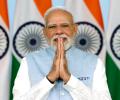
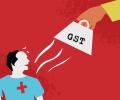
The Congress party has criticized Prime Minister Narendra Modi's handling of GST reforms, calling them inadequate and demanding an apology for the tax imposed on essential items. They argue that the reforms are merely a 'band-aid' solution and that the government should address the states' demand for extended compensation.

TransUnion Cibil CEO Bhavesh Jain highlights the improved retail portfolio quality in January but stresses the need for lenders to continuously engage with borrowers on credit usage and repayment, similar to the approach taken during the Covid-19 pandemic, as the impact of the Iran war on credit quality is still being assessed.
'It will support our growth aspirations. It's very positive as it helps expand the market in a segment that really needs it.'

New lower GST rates kicked in from Monday, resulting in a slashing of prices of as many as 375 items ranging from toothpaste and shampoo to cars and television sets, a move seen as an attempt to boost consumption to cushion an economy facing tariff headwinds. Tax rates of 5, 12, 18, and 28 per cent have been clubbed into two rates of 5 per cent and 18 per cent, resulting in a reduced price of 99 per cent of daily use items.

Victory wrested from regime that only listens when forced, the TMC said on GST exemption on insurance.
Reduction of GST on health insurance premium from 18% to 0% looks like a straight 18% reduction in what consumers pay. The truth, however, is...

The government's move to cut GST on medicines and medical devices while exempting lifesaving drugs from the levy is a bold step that will bring direct relief to patients and families while significantly reducing financial strain on them, pharmaceuticals and healthcare industry players said on Thursday.

Union Finance Minister Nirmala Sitharaman on Wednesday said the Next Gen GST reforms have infused Rs 2 lakh crore into the economy, which has left people with more cash on hand, which otherwise would have gone to taxes.

Foreign portfolio investors sold stocks worth Rs 1.42 trillion in 2025, with their sales hitting Rs 12,257 crore in the first four trading days of September.

Banking sector has witnessed healthy growth in advances in the third quarter of financial year 2026 (Q3FY26) against the same period last year, as the full impact of goods and service tax (GST) rate cuts drove growth. Most of the lenders saw their credit growth outpace the deposit growth in the quarter.

GST Reform 2.0, which trims tax slabs from four to two, signals a push for demand-led growth, and together with recent income tax cuts, sets the stage for sustained economic growth, experts said. The Goods and Services Tax (GST) Council on September 3 approved an overhaul of the indirect tax regime by taxing essentials at 5 per cent and other goods at 18 per cent. A new 40 per cent tax will be applicable on luxury and sin items.

Simplifying GST rates, removing exemptions, easing disputes, and speeding up refunds can boost investment in India and offer the best reply to Trump's tariffs, observes V S Krishnan, former member, Central Board of Indirect Taxes and Customs.

'LIC will reduce but not fully exit its stake in IDBI Bank, which remains an important bancassurance partner,' says LIC of India' MD and CEO R Doraiswamy.

Electric vehicle (EV) manufacturers breathed a sigh of relief after the GST Council on Wednesday night retained the concessional 5 per cent rate on EVs, though they now face competition from small petrol and diesel cars, which will attract a lower 18 per cent levy.

The Centre has proposed exempting life and health insurance policies for individuals from GST, Bihar Deputy Chief Minister and convenor of insurance GoM Samrat Choudhary said on Wednesday. Currently, health and life insurance premium attracts 18 per cent GST.

'In case a particular industry has not passed on the benefits and if we receive complaints, we will take up the matter with the industry body concerned.'
Noting that recent uncertainties created by global tariffs have not impacted the Indian economy severely, Anuradha Thakur, secretary, Department of Economic Affairs, said the central government is hopeful that the recent goods and services tax (GST) rationalisation will ignite the much needed animal spirits in the financial sector.

Indian government's decision to cut GST rates on various products will increase purchasing power of consumers and boost demand for residential properties in the upcoming festive season, according to realtors' body CREDAI. The association, which has a 13,000 members from across India, said the construction cost is expected to come down because of reduction in GST rates on cement and few other building materials.

The small sports utility vehicle (SUV) segment - comprising models less than 4 metres in length - could witness the "maximum" growth among all categories in the coming months following the recent goods and services tax (GST) rate rationalisation, Tarun Garg, chief operating officer of Hyundai Motor India (HMIL), said.

With gains of over 28 per cent, Hero MotoCorp has emerged as the best-performing largecap automotive stock over the past three months. The rally has been driven by an improved outlook for the rural segment, higher demand during the ongoing festival season, and rising affordability following cuts in goods and services tax (GST) rates.

The GST Council on Wednesday approved a two-tier rate structure of 5 and 18 per cent, which will be implemented from September 22.

German carmaker Audi plans to reassess and adjust its product launch strategy in India once the specific details of import duty reductions under the India-EU free trade agreement (FTA) become clear, according to Balbir Singh Dhillon, the brand's director in India.

States will remain "net gainers" of the proposed GST rate rationalisation exercise with their GST revenues, including devolution, estimated to be over Rs 14.10 lakh crore this fiscal, according to an SBI Research report released on Tuesday. It said that, as was evidenced in the earlier exercise of GST rate rationalisation in 2018 and 2019, an immediate reduction in rates can cause a short-term dip of around 3-4 per cent in month-on-month collections (roughly Rs 5,000 crore, or an annualised Rs 60,000 crore), revenues typically rebound with sustained growth of 5-6 per cent per month.

The GST Council on Wednesday approved two slabs of 5 per cent and 18 per cent effective from September 22, the first day of Navaratri.

The 18 per cent tax slab is expected to remain the major contributor to GST revenues if the Centre's proposal for a two-tier GST structure and a special 40 per cent rate is implemented, according to a source. At present, the Goods and Services Tax (GST) follows a four-tier structure with rates of 5 per cent, 12, 18, and 28 per cent.

The Central Board of Indirect Taxes and Customs (CBIC) announced the implementation of the Eligible Manufacturer Importers (EMI) scheme from April 1, allowing eligible importers to defer customs duty payments.

Some of the key names include: Maruti, M&M, Ashok Leyland, Britannia, Ultratech, JK Cement, Havells, Voltas, Amber, Metro, Trent, LemonTree, Indian Hotels, Niva Bupa, HDFC Life, IGL, Acme Solar, Suzlon, Swiggy, Delhivery, ICICI Bank, HDFC Bank, Bajaj Finance, Shriram Finance," according to a report by Motilal Oswal Financial Services.

Billionaire Mukesh Ambani on Thursday termed the second-generation GST reforms as a big booster to consumption-driven growth while his firm promised to pass on the benefit of the cut in tax rates to consumers.

The government has asked manufacturers to revise the maximum retail price (MRP) on unsold stocks in line with the change in GST rates. The government has reduced GST on various products and services, which will come into effect from September 22.

A police constable in Udaipur, Rajasthan, was arrested by the Anti-Corruption Bureau for allegedly accepting a bribe from a garage owner. Three other police personnel are currently absconding.

Hiring demand strongest in ecommerce, tech startups, healthcare, and energy sectors, with Bengaluru, Hyderabad, and Pune leading.

To meet liquidity pressure because of advance tax outflows this month, the Reserve Bank of India (RBI) has adopted a measured approach with its latest announcement of open-market operations (OMOs), worth Rs 1 trillion.

Fexo, an AI intelligence platform focused on the BFSI sector, has launched its AI decisioning engine for business loans, designed to help financial institutions accelerate AI adoption and improve decision-making processes.


As lower GST rates take effect on Monday, sales of air-conditioners, TV sets surged dramatically with buyers rushing to grab cheaper deals offered by retailers at the beginning of the Navratra festival.
At the D Y Patil International University's Foundation Day, experts advised students to embrace AI wisely, highlighting its potential and the importance of critical thinking in the digital age.

'The government is putting insurance in the same category as food, which is essential for life.' 'Now this is an opportunity for the sector to focus on the consumer.'
