
GST Reform 2.0, which trims tax slabs from four to two, signals a push for demand-led growth, and together with recent income tax cuts, sets the stage for sustained economic growth, experts said. The Goods and Services Tax (GST) Council on September 3 approved an overhaul of the indirect tax regime by taxing essentials at 5 per cent and other goods at 18 per cent. A new 40 per cent tax will be applicable on luxury and sin items.

'The government is putting insurance in the same category as food, which is essential for life.' 'Now this is an opportunity for the sector to focus on the consumer.'

'The frenzy for gold is primarily due to the uncertainty surrounding the tariff war.'

For LG Electronics India, the Rs 11,607 crore initial public offering (IPO) is not just a fundraising exercise. The company's senior executives describe it as a step towards becoming "future-ready", showcasing financial strength while preparing for the next phase of growth in a market they see as still underpenetrated.

Banks are receiving requests for cancellation of approved car loans, in view of the implementation of GST rate cut, which will lower the price of passenger vehicles and also lead to subsequent reduction in the amount needed to purchase them. It is to be noted that the 56th GST Council meeting earlier this month, approved substantial reduction in the GST rate for cars for up to 1,200 cc to 18 per cent from the existing 28 per cent.

Despite a strong 7.8 per cent growth in the first quarter, the Indian economy is expected to grow at 6.5 per cent in the current financial year as the impact of US tariffs on Indian exports will reduce prospects, particularly in the second half, ADB said on Tuesday.

Foreign portfolio investors sold stocks worth Rs 1.42 trillion in 2025, with their sales hitting Rs 12,257 crore in the first four trading days of September.

Two-wheeler sales volume is expected to grow 5-6 per cent this fiscal, while that of passenger vehicles to see a 2-3 per cent rise, following the GST rates rationalisation on automobiles, according to Crisil Ratings. The GST Council's decision to move to a two-rate structure of 5 per cent and 18 per cent, effective September 22, 2025, is a timely move that will revive demand for automobiles, Crisil Ratings said in a statement.

'Indian markets may underperform global peers for the next two quarters.' 'But beyond that, India should catch up and resume its long-term growth path.'
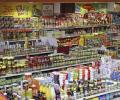
Daily essentials and food products will be cheaper from Monday, as leading FMCG companies have slashed prices, extending GST cut benefits to consumers.

While the Syros shines in many areas, its ride quality is a point of contention, notes Rajesh Karkera.

'If nominal growth improves and earnings pick up, Indian stock markets could see a rally next year.'

Pulse oximeters, hand sanitisers, temperature check equipment and ambulances too will attract lower 5 per cent tax.

Response to Rahul yatras in Gujarat forced GST cuts, says Congress. It reflects Modi's willingness to listen, says BJP.

Facing a deepening slowdown, the auto sector is pinning hopes on the GST Council meeting on September 20 for a rate cut from 28 per cent to 18 per cent. However, states including Bihar, West Bengal, Kerala, and Punjab are of the view that the slowdown in the auto sector is not because of the GST rate but structural issues in the economy.

'At the end of the day, we want to see maximum items out and only few items remaining in the 28 per cent slab.'

GST rates on under-construction houses maybe reduced from 12 pc with input tax credit to 5 pc without ITC. Similarly, the rate for under-construction affordable houses could come down to 3 per cent without input tax credit, from the current 8 per cent.

Blocked working capital worth Rs 1,500 crore, in the almost-defunct job work diamond polishing units, is expected to be released even as diamantaires will issue fresh orders to such units following the GST relief.

Many consumer good companies say they will pass on the benefits to consumers, which will bring down prices.

The Indian economy requires a Rs 3 lakh crore fiscal stimulus, including cash transfer to households through Jan Dhan accounts to spur economic growth amid the pandemic, industry chamber CII said on Thursday and pitched for appointment of a 'Vaccine Czar' for speedy vaccination coverage. CII president T V Narendran also said the chamber expects GDP to grow at 9.5 per cent in 2021-22 as the strong growth in the second half of the fiscal year will be supported by robust external demand and large-scale coverage of vaccination, allowing resumption of economic activity. He also advocated for appointment of a "Vaccine Czar" for speedy vaccination coverage.

Experts said the builders will now factor in their losses arising from the removal of input tax credit when they pass on the benefits to end users while the latter may want the entire GST cut to be given to them.

Cars and two-wheelers attract 28% GST and a cess in the range of 3-22%, taking the effective tax rate to up to 50%.

Officers across departments and ministries have been asked to speak to people across sectors for 'SWOT' analysis of issues for revival of the economy.

Shekhar Bajaj, chairman and managing director of the firm, explains to Viveat Susan Pinto on what led to this sales jump, besides throwing light on the benefits accruing to the sector on account of the GST rate cuts in appliances.

'I suggest a cut in the GST rates and an infusion of Rs 1.2 trillion into the economy in six months.'

Tata Starbucks had hiked the base price of one its coffee variant after the GST Council cut tax rates on restaurants from 18 per cent to 5 per cent with effect from November 15, 2017.

Net profit at M&M and Mahindra Vehicle Manufacturing Ltd contracted to Rs 918 crore from Rs 1,238 crore a year ago while revenue and other income decreased to Rs 12,997 crore from Rs 13,551 crore a year ago.

As per SIAM data, vehicle sales across categories, including passenger vehicles and two-wheelers and commercial vehicles stood at 18,21,490 units last month as against 23,82,436 units in August 2018, a fall of 23.55 per cent.

Durable, automobile and real estate players have been lobbying hard for a tax cut, saying it will boost demand.

While the November 2017 round of rate revisions saw mainly eating joints unwilling to pass on GST benefits, this time round, sanitary napkin makers, TV manufacturers and even paint companies have said passing on GST benefits is not a feasible exercise.

The deposit has been made on account of the rate reductions approved by the GST Council in its November. The rate was reduced on items including shampoo, detergents, chocolates, beauty products, sanitary ware, leather clothing, cookers, stoves, after-shave, deodorant, detergent and washing power. Companies found it difficult to pass on the benefits to consumers immediately at the time of GST rate reduction owing to logistical issues.
 © 2026 Rediff.com - Advertise with us - Disclaimer - Privacy Policy - Sitemap - Feedback - About us - Terms of use - Grievances