
The National Stock Exchange (NSE) Nifty Next 50 Index could undergo large-scale changes if the proposed tweaks to its computation methodology get implemented. In a discussion paper floated recently, NSE Indices, which owns and manages a portfolio of over 350 indices under the Nifty brand, proposed that only stocks that are traded in the futures and options (F&O) segment can be part of the index. Currently, as many as 11 non-F&O stocks are part of the Nifty Next 50 Index, which, as the name suggests, represents the next rung of large and liquid securities after the Nifty50.

From the seas to the stars, this partnership will now be deepened by the defining role of technology, the statement said.

From the Sensex pack, State Bank of India, ICICI Bank, IndusInd Bank, Axis Bank, Kotak Mahindra Bank, HDFC Bank, Reliance Industries were among the major laggards. Bucking the trend, auto stocks Tata Motors and Mahindra & Mahindra closed with gains.

Tamil Nadu secured investments worth Rs 1.44 trillion on Monday by signing of memoranda of understanding (MoU) with 60 companies, laying of foundation stones and inauguration of new projects.

Gautam Adani was the world's third and Asia's richest man a month back but a damning report by a US firm triggered a massive sell-off in shares of his apples-to-airport group, plunging his own wealth by $80 billion and the tycoon slipping to No.30 on the world billionaire index. Adani's sprawling conglomerate, which spans from sea ports to airports, edible oil and commodities, energy, cement and data centres, is under attack by US short-seller Hindenburg Research, which successfully deflated electric-vehicle maker Nikola Motors in 2020. Hindenburg, which held short positions in unidentified shares of Adani Group firms through its US-traded debt and offshore derivatives, on January 24 accused the conglomerate of "brazen stock manipulation and accounting fraud" and using a number of offshore shell companies to inflate stock prices.

TotalEnergies will acquire 25 per cent shareholding in Adani New Industries Ltd -- the firm that houses Adani Group's new energy business -- for an undisclosed amount, the two firms said in separate statements. "TotalEnergies has entered into an agreement with (Adani Group's flagship) Adani Enterprises Limited (AEL) to acquire a 25 per cent interest in ANIL," the French energy giant said.

Earnings growth, attractive valuations and change in FPI flows from negative to positive over the next 12 months are some of the key triggers for an upside. "A poor monsoon, high inflation and further rate hike are some of the key risks
Shares of Adani Group companies were in focus during Monday's session, with four of the six listed stocks being locked in the upper circuit of 5 per cent, bouncing back up to 11 per cent from their respective intra-day lows on the BSE. Adani Green Energy (Rs 1,115.85), Adani Transmission (Rs 1,297.65), Adani Total Gas (Rs 1,321) and Adani Power (Rs 120.60) were locked in 5 per cent upper circuit on the BSE. Adani Ports and Special Economic Zone (APSEZ) and Adani Enterprises rallied over 7 per cent and 6 per cent, respectively, in intra-day trade. In comparison, the Sensex rose 0.44 per cent to 52,574.46 on Monday. Last week, all Adani group stocks had come under pressure after a media report suggested that the National Securities Depository (NSDL) had frozen accounts of three foreign funds that own stake in four of Adani Group companies.

Kinetic Engineering (KEL), the makers of the iconic Luna two-wheelers in the seventies, will soon start producing components for an electric version of the moped. Pune-based Kinetic said in September that Luna would make a comeback in an electric avatar. The electric Luna, or E-Luna, will be launched by KEL's sister company Kinetic Green Energy and Power Solutions.

The combined market-cap of all listed Adani group firms has plunged nearly Rs 7.11 trillion since January 24 when the Hindenburg report was made public.

Nirmala Sitharaman's messaging was clear when she presented a well-balanced Budget with an eye on state elections in nine states followed by a general election next year, observes Ramesh Menon.

The last time a bear attack was launched on a controversial businessman was when a cabal of brokers launched an assault in the early 1980s on what they thought was an over-priced Reliance share, recalls T N Ninan.

'With a solid investment programme and sustainable development strategy, India can exceed 7 per cent growth per year, or a doubling of high-quality national income within a decade.'

'Professors can teach even when they are 90 because they don't lose their skill with words. Go deeper and there's spirituality in it.'

Engineering giant Larsen & Toubro (L&T) is looking to divest its exposure to road and power concessions and incubate digital and e-commerce businesses as part of its new five-year plan ending 2025-26 (FY26). The base year for the plan is 2020-21 (FY21). The blueprint, called Lakshya 2026, is intended to help the company exit sub-scale businesses, concentrate on high-technology (tech) manufacturing, construction and green energy projects, and increase its share from information technology (IT) and digital services. The lending operations of the financial services business, meanwhile, will be reorganised, with focus on retail lending.
Billionaire Gautam Adani on Monday said his infrastructure conglomerate will invest between $50-70 billion in organic and inorganic growth opportunities across the entire energy value chain over the next decade. Speaking at an industry event, he said the port-to-energy group will invest over $20 billion in renewable energy generation alone. "Over the next decade, we will invest over $20 billion in renewable energy generation.
Billionaire Gautam Adani's embattled conglomerate said its balance sheet is "very healthy" and is laser focused on continuing business momentum, as it looked to reassure investors to keep faith in the conglomerate despite a share rout triggered by a damning report by a US short-seller. Group CFO Jugeshinder (Robbie) Singh in an earnings call said the group is confident of its internal controls, compliance and corporate governance. Separately, it released a compendium of group companies to highlight that it has adequate cash reserves and has ability to refinance debt.

Puri said the government has a moral duty to provide energy at affordable rates to consumers.

She said the grant does not cover the actual cost of vaccine and distribution expenses, which will be made separately as and when the vaccine is available.

Zerodha and True Beacon co-founder Nikhil Kamath, along with Abhijeet Pai, has invested in Omnipresent Robot Tech through their investment arm Gruhas Proptech. This round also saw co-investments from Kavin Shah, and other individual high networth individual (HNIs), according to a statement released on Thursday. However, the amount invested by Kamath and Pai has not been disclosed.

Reliance Industries Ltd on Friday reported a 15 per cent drop in its net profit to Rs 15,792 crore for the third quarter, according to a company's stock exchange filing. The net profit of Rs 15,792 crore in October-December 2022 compares to Rs 18,549 crore a year back.

Mr Adani has a fight on his hands. It is not a fight to the death, asserts T N Ninan.
Given the hydrogen connection, it's ironic that Hindenburg Research released a long report, accusing the Adani group of financial manipulation, observes Devangshu Datta.
Reliance Industries on Tuesday said it will acquire a majority stake in California-based solar energy software developer SenseHawk for $32 million (around Rs 256 crore). The acquisition of a 79.4 per cent stake in SenseHawk is part of the conglomerate's aggressive push into renewable energy to decarbonise its oil and chemical-dominated business. SenseHawk, founded in 2018, develops tools for the solar industry to help companies streamline processes and use automation. It had a turnover of $2.3 million in last financial year.

Mobile phones and TV sets manufactured in India would become cheaper with Finance Minister Nirmala Sitharaman announcing cuts in Basic Customs Duty (BCD) on import of their components but smokers would have to pay more as the government has increased taxes.

Two firms belonging to the Adani group - India's most valued conglomerate - are part of the Nifty 50 index. The group, however, has no representation in the Sensex. And it could stay this way if a proposed index qualification rule change gets approved. Recently, Asia Index, a joint venture between S&P Dow Jones Indices and BSE responsible for index composition, floated a consultation paper where it proposed that a stock must have a derivative contract to be eligible for inclusion in the flagship 30-share Sensex index.

More than a year of Covid-19 has pushed most businesses into gloom but Reliance Industries Ltd (RIL) managed to reduce its gross debt 25 per cent, enabling it to turn towards its next phase of capital expenditure that has come in the form of a Rs 75,000-crore plan for green energy and power storage. The company managed to stay afloat during the pandemic because of its large presence in the consumer-centric businesses of retail and telecommunication (see chart: "A new Reliance"). These two businesses constituted 45 per cent of its EBITDA during FY21 from 36 per cent in FY20.

The firm is on course to replace state-owned Gail India in the widely-followed index during the semi-annual review set for March.

Gautam Adani's alleged proximity to Narendra Modi may dent the latter's self-styled image of incorruptibility, points out Kanika Datta.

The Tata group is planning to invest $90 billion in new industries such as mobile components plant, semiconductor, electric vehicles, batteries, renewables energy and e-commerce by 2027. The Tata group's investment in India is far higher than the $75-billion investments planned by Mukesh Ambani-owned Reliance Industries and $55-billion investment planned by the Adani group in the next five years in the country, the Economist reported recently. The investment by the Tata group is a shift in its strategy to focus more in the home markets instead of international markets where the group lost money.

India's equity markets are on a roller-coaster ride, after delivering spectacular returns for two consecutive years - in 2020 and 2021. The benchmark National Stock Exchange's (NSE's) Nifty50 is down 1.5 per cent in the first nine months of the current calendar year 2022 (CY22) as foreign portfolio investors sold Indian stocks due to rising bond yields in the US and across global markets, including India. The sell-off in the Indian equity markets has, however, not been broad-based and largely limited to sectors facing earnings headwinds from rising interest rates, lower commodity and energy prices, and likely economic recession in advanced economies.

Two Adani group companies -- Adani Enterprises and Adani Transmission -- have uprooted the traditional leader Reliance Industries in annual wealth creation in 2022 so far, while the top 100 of them created a massive Rs 92.2 lakh crore of wealth, according to a report. However, Reliance Industries has smashed all records to emerge as the largest wealth creator during the five-year period ending March 2022, says the leading brokerage Motilal Oswal in its 27th annual wealth creation study. The Gautam Adani group companies have been rallying to dizzying heights in the year as the group snapped up many assets and diversified into newer areas.

Shares of Adani group companies witnessed a massive drubbing in morning trade on Monday, tumbling up to 25 per cent, amid reports that the National Securities Depository Ltd (NSDL) has frozen certain FPIs accounts that have holding in some of these firms.

Biden said that the Saudi Crown Prince told him he was not "personally responsible" for Khashoggi's murder.

Indian companies are planning to increase investments in the new year to expand capacity, acquire companies, and go on a hiring spree, a survey of top executives showed. They, however, cited rising costs, weak consumer demand, and increasing interest rates as major concerns for 2023 which may impact their plans.
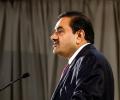
In the context of market integrity, the IRAI and RBI should go over the minutes of the LIC and SBI board meetings when the decisions to invest in Adani equity or debt were taken, notes Jaimini Bhagwati, former World Bank treasury professional.

'In terms of semiconductors, challenges do remain in the pan industry, but I think we are much better than where we were a year or so back.'

Billionaire Mukesh Ambani's Reliance Industries Ltd on Friday announced the buyout of British battery maker Faradion Ltd for an enterprise value of 100 million, as the oil-to-retail conglomerate continued with the acquisition of end-to-end technology for its multi-billion-dollar clean energy portfolio. Reliance New Energy Solar Ltd (RNESL), a unit of the nation's most valuable company, signed definitive agreements to acquire 100 per cent shareholding in Faradion for an enterprise value of 100 million and will invest an additional 25 million as growth capital to accelerate the commercial roll-out, the company said in a statement. Based out of Sheffield and Oxford in the UK and with its patented sodium-ion battery technology, Faradion is one of the leading global battery technology companies.
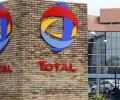
French oil and energy group Total has agreed to a $2.5 billion deal that includes buying a 20 per cent minority stake in Adani Green Energy Ltd (AGEL) from Adani Group, as it builds up its presence in the renewable energy sector. The deal involves Paris-based Total getting a board seat in the largest solar energy developer in the world, as well as a 50 per cent stake in a 2.35 gigawatts portfolio of operating solar assets, the two firms said in statements. Total had in 2018, agreed to buy a 37.4 per cent stake in Adani Gas Ltd - the city gas distribution firm of the Adani Group, and a 50 per cent stake in the billionaire Gautam Adani-run ports-to-energy conglomerate's under-construction Dhamra LNG project in Odisha.
After missing two self-imposed deadlines, billionaire Mukesh Ambani's Reliance Industries Ltd on Friday announced recalibration of a proposed $15 billion deal to sell 20 per cent stake in its oil refinery and petrochemical business to Saudi Aramco, saying the two firms have agreed to re-evaluate the proposed investment in light of the Indian firm's new energy forays. The stake sale talks, which were first officially revealed in August 2019, are being reset in light of Reliance making forays into new energy business in recent months by investing $10 billion in alternative energy over three years. To pivot to green energy, it has already bought a German maker of photovoltaic solar wafers and signed a deal with a Danish company to manufacture hydrogen electrolysers in India.
 © 2026 Rediff.com - Investor Information - Advertise with us - Disclaimer - Privacy Policy - Sitemap - Feedback - About us - Terms of use - Grievances