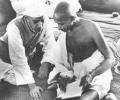
On the 83rd anniversary of the Quit India movement, Utkarsh Mishra recalls the conditions under which the Congress, led by Mahatma Gandhi, launched the final struggle for independence.
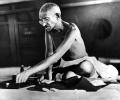
Gandhiji asked me if I had sufficient warm clothes in view of the coming cold season. I said yes. But he verified my statement by asking Miraben to search my bag to make sure. Such was Gandhiji.

Prime Minister Narendra Modi also met the freedom fighters and greeted them on this occasion. Vice-President M Venkaiah Naidu, former prime minister Dr Manmohan Singh, Home Minister Amit Shah, Lok Sabha Speaker Om Birla were among the dignitaries present there.

Last week, as I was driving to work past Gowalia Tank Maidan in Mumbai, I could not help but wonder what the gentlemen assembled there on August 8, 1942 would have made of some recent events. The call they had issued that day to the British Raj government to "Quit India" resulted five years later in the Indian nation-state, one whose edicts within its geographic borders would be absolute and unchallenged.
Today was the beginning; a humble beginning if you want to call it that, but one that will rock the foundations of many hard-held beliefs, one that will show the rest of the country what committed citizens can do if they only step out of their comfort zone.

Heavy, continuous rains for the past two days have dampened the spirits of Mumbaikars, as they had to contend with waterlogged roads and heavy traffic.
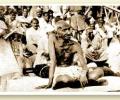
'I remember the confusion over the slogan, 'Karenge Ya Marenge! (Do Or Die!)'.' 'I think this confusion arose because Gandhiji was arrested.' 'People used to wonder: What are we supposed to do?' 'How are we supposed to die?' 'How are we to fight the British?'

The blaze erupted around 7 am in Kamla building located opposite Gandhi Hospital at Gowalia Tank, the official of the Brihanmumbai Municipal Corporation (BMC) said.
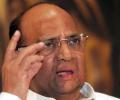
Bharatiya Janata Party looks set to emerge as the single largest party in the Lok Sabha polls but National Democratic Alliance will fall short of the magic figure to form government, Nationalist Congress Party chief Sharad Pawar said, in remarks that may not go down well with the ruling UPA.

'These naval sailors should have been given due respect as freedom fighters.' 'February 18, 1946 should be as important as January 26 because that date changed everything.'
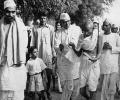
'It was a battle that took many forms, ranging from non-violent mass satyagrahas, mammoth public meetings, huge protest rallies in cities and towns to underground organisation of sabotage of communication and transport networks, an underground radio, illegal patrikas (newsletters) and the formation of parallel governments in Ballia, Midnapore and Satara.'
 © 2026 Rediff.com - Advertise with us - Disclaimer - Privacy Policy - Sitemap - Feedback - About us - Terms of use - Grievances