
In the final part of a three-part series on America's war on substandard Indian generic drugs, Aziz Haniffa speaks about American doctors' contempt for drugs exported from India and the ineptitude of the US Food and Drug Administration to stop the menace.
Some US doctors are becoming concerned about the quality of generic drugs supplied by Indian manufacturers following a flurry of recalls and import bans by the Food and Drug Administration.
Emerging markets, from South Africa to China and India, are battling to bring down healthcare costs.

Under terms of the agreed deal, Ranbaxy shareholders will get 0.8 of a Sun Pharmaceutical share for each Ranbaxy share they own.
Last year, India's agricultural exports to the United States topped $5 billion.
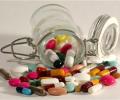
The generic drugs at issue were manufactured at Ranbaxy's facilities in Paonta Sahib and Dewas in India and included acne drug Sotret, epilepsy and nerve pain drug gabapentin and antibiotic ciprofloxacin.

The state govt has raised drug procurement budget.

The drug Glivec was a genuinely new and important discovery deserving of patent protection.
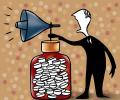
With all major US export-oriented drug manufacturing plants in the country up for inspection in 2022, some estimates peg that at least 20-30 per cent of the new product launches lined up for the US will be subject to on-site inspection by the US Food and Drug Administration (USFDA). The last two years saw limited physical inspections due to travel restrictions during the pandemic. "Pre-Covid, the frequency and number of inspections of manufacturing plants in India by USFDA had increased significantly," analysts from ICICI Securities Research noted. "With growing ANDA filings, especially for complex products. "We expect this trend to return with the environment normalising," analysts from ICICI Securities Research noted.
The worry is that India's cavalier approach to intellectual property may catch on in other parts of the developing world

Firm pleads guilty to lying to US FDA; says it had set aside the money.

In a landmark judgment that has the potential to change the direction of India's pharmaceutical business, the apex court said on Monday that the drug failed to qualify for a patent according to Indian law.

Expectations of Healthcare sector from Union Budget 2013-14.

A few states are already running their own schemes for providing free drugs from the government health centres.
Closure would mean manufacturer might not be able to launch any new generic products in India in future.

We asked readers to give their reasons as to why Katappa killed Baahubali in the hugely-awaited film Baahubali: The Conclusion, and we got some amazing answers.

It was in 2005, India changed its patent law and started granting patents in medicines.
These two are now among India's most valuable business houses, ahead of older and more diversified groups, such as the Bajaj, OP Jindal, Anil Ambani, UB, Godrej and Hinduja.
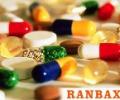
Ranbaxy was scheduled to launch its drug on September 21, the day Diovan's patent expired.

European countries are trying to woo back the Indian customers they had lost following seizure of drug consignments by Customs authorities of several European Union members.

Dr Reddy's Laboratories today said it will form a joint venture with Fujifilm Corporation to develop, manufacture and market generic drugs in Japan.

In the clearest indication from the European Commission yet that a resolution to the ongoing dispute between New Delhi and Brussels regarding generic drug seizures had been reached, a senior EC official told reporters on Wednesday that the EU was "open to changing" the offending regulation.

Over 550,000 small drug retailers in the country are transforming into producers and marketers of pharmaceutical products, readying to compete with companies such as Ranbaxy, Cipla, Sun Pharma and Lupin whose produce they sell.
Charging the multinational companies with making several drugs beyond the reach of the poor, visiting Commerce Minister Anand Sharma today asserted it is the Indian generics which have challenged such a "suffocating stranglehold" and made the medicines affordable.

Sun Pharmaceutical Industries Ltd Chairman Dilip Shanghvi said he expects Ranbaxy Laboratories Ltd to become profitable in the short term.

India's status as the pharmacy of the world is at stake.
US-based Purdue Pharma has filed a patent infringement suit against India's largest drug company, Ranbaxy, after the latter's wholly-owned US subsidiary, Ranbaxy Pharmaceuticals Inc, applied for marketing approval of a low-cost version of Purdue's pain relieving medicine, Oxycodone.

European regulators have estimated that consumers are paying up to 20 per cent more for medicines in some cases.

GVK Biosciences is the latest Indian firm to come under international scrutiny over quality issues.
In a twist to the tale of drug patent infringement cases in the United States, Indian drug company Lupin has sued Ranbaxy Laboratories, which is now controlled by Japanese drug major Daiichi Sankyo, in an American court.

Indian government has set up a panel to fix prices of patented drugs in the country.

India and the European Union (EU) have begun discussions to resolve the ongoing dispute over the seizure of Indian generic drugs consignments in transit at European ports. Lutz Guellner, spokesperson for the European Trade Commissioner, told Business Standard that a meeting of the EU-India Joint Customs Cooperation Committee held in New Delhi on Thursday proved "constructive" with an "open discussion of the issues" taking place.

Swiss drug multinational Roche AG suffered yet another setback in its ongoing patent fights in India after the Chennai patent office rejected its claim over Valcyte (valganciclovir).

A senior European Union representative said here on Tuesday that the body would soon change its Customs laws to address the issue of seizures of Indian generic drug shipments while en route for export to other countries.

The long-pending issue of seizure of Indian generic drugs by European Union countries has been resolved, with the EU accepting India's position and agreeing to amend the rules to plug the loopholes that led to the seizure of shipments.

This increase is despite the decreased growth of drug sales in the US - the world's largest market - which has seen a tightening of regulations and aggressive competition.
The government on Wednesday approved a production-linked incentive (PLI) scheme for the pharmaceutical sector, entailing an outlay of Rs 15,000 crore. The Union Cabinet, chaired by Prime Minister Narendra Modi, approved the scheme which will benefit domestic manufacturers, help create employment and is expected to contribute to the availability of a wider range of affordable medicines for consumers. The duration of the scheme would be from 2020-21 to 2028-29 and is expected to promote the production of high value products in the country and increase the value addition in exports, an official release said.

The Department of Pharmaceuticals has submitted a freight subsidy scheme for exporters to the Commerce Ministry so that they could take alternate routes and avoid transit through Europe, which is a shorter route with better connectivity.

US-based Eli Lilly has planned to continue its focus on innovation-driven products, instead of opening up to opportunities in off-patent generic drugs, being tapped by its larger competitors like GSK and Pfizer.
AstraZeneca on Wednesday announced that it had filed separate patent infringement actions in the United States District Court, Delaware, against seven generic drug manufacturers, which have submitted abbreviated new drug applications (ANDAs) with the US Food and Drug Administration (FDA) seeking marketing authorisation for Crestor.
 © 2026 Rediff.com - Investor Information - Advertise with us - Disclaimer - Privacy Policy - Sitemap - Feedback - About us - Terms of use - Grievances