
As India's decline continued on global indices, the government first blamed methodology and then motives. This is where we remain today as we wish each other and ourselves a happy Independence Day, points out Aakar Patel.

A leading British law firm has challenged the fairness and legality of the trial and death sentence handed down to deposed Bangladeshi Prime Minister Sheikh Hasina, citing violations of international law and a politically hostile environment.

'Are elections still fair in India, or are we all witness to a macabre style of 'selection' of lawmakers? The jury will be out on this for a long time because there is no definitive evidence on either contention, at least as yet,' notes Nilanjan Mukhopadhyay, author, Narendra Modi: The Man, The Times.
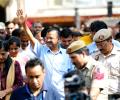
Today in 2024, the BJP jails its opponents during an election and still believes, or at least wants us to believe, that it is only following the rules of democracy, asserts Aakar Patel.
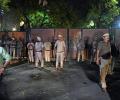
We need not spend much time going over what this government has done and is doing to the Opposition, by misusing the Enforcement Directorate and the CBI. There is a daily update on that, notes Aakar Patel.
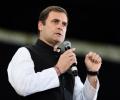
This comes after another global report by a US government-funded NGO, Freedom House downgraded India's status from "free" to "partly free" and claimed that "political rights and civil liberties have eroded in India since Narendra Modi became prime minister in 2014".

The government has issued a notice to Twitter to comply with all its past orders by July 4, an official source said on Wednesday.

The ministry of electronics and IT had set a deadline of July 4, failing which Twitter could have lost the intermediary status, which means it will be liable for all the comments posted on its platform.

India must evolve its own standards on how democracy must be ranked in a diverse and multi-religious, multi-ethnic, multi-lingual and pluralistic idea called India, suggests R Jagannathan.

Asked about the report, MEA spokesperson Anurag Srivastava said, "The political judgements of Freedom House are as inaccurate and distorted as their maps."
The microblogging site has challenged a government order issued in June 2022, terming the blocking orders 'overbroad and arbitrary', adding that the requests failed to provide notice to the originators of the content and were disproportionate in several cases.

Former vice president Hamid Ansari and four US lawmakers have expressed concern over the current human rights situation in India. They were speaking at a virtual panel discussion organised by the Indian American Muslim Council on Wednesday.

It is a difficult problem and will require the Union, state governments and civil society, meaning NGOs, to work together, points out Aakar Patel.

Our precipitous decline is being noticed and recorded abroad with alarm. It is strange that within India we are carrying on as if it is business as usual, observes Aakar Patel.

'Laws have been used in a way to serve the needs of the current regime and its authoritarian ideology.'

On such things as the meat ban and hijab ban, we are finding that elements that comprise the system are enthusiastic about denying people their rights. It says something awful about us as a society, asserts Aakar Patel.

Let's take a look at Internet freedom across the world, including India.

The recent action comes amid the ongoing tension between India and China after the violent standoff on June 15 in Galwan Valley area in eastern Ladakh in which both sides suffered casualties.

India's most powerful prime minister in five decades gets publicly admonished -- if gently -- by the US vice-president. The question is, would this make him reflect on how and why, or which ones of his government and party's missteps exposed his flank like this? asks Shekhar Gupta.

'Many Indians are not voting mostly on the basis of issues like the economy and their own well-being as measured by data provided by the government.' 'They seem to be as concerned and perhaps more concerned about other things, especially those that have to do with the harassment of India's minorities,' asserts Aakar Patel.
Let's take a look at Internet freedom in India and around the world.
A special report by US-based non-government organisation Freedom House -- 'The Worst of the Worst: The World's Most Repressive Societies 2012' -- highlights the plight of the 16 billion people living under intensely tyrannical rule. Here's a look at the countries where liberty and justice are not for all.

A wise politician would disarm his critics, try to take them along, co-opt them, or, at least, take the criticism in his stride. Developing a thick skin ought to be an essential part of any politician's toolkit, notes Virendra Kapoor.
According to report, the internet is only "partly free" in India.
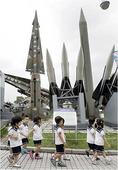

White House officials have been discussing sites as far-flung as Singapore and Mongolia for the planned meeting between Trump and Kim.

At some stage this fall in the quality of life will begin to hurt anybody's popularity, observes Shekhar Gupta.

This is one of those crises where it does not only matter that you do something, but how you do it, suggests Mihir S Sharma.

Relaxation of restrictions on Internet access and content has helped India register the biggest improvement in Internet freedom this year compared to its global counterparts, a report said.

Not with standing the Western nations' zeal to wage a war against the group, unless its source of funding is known and curbed, its rampage will likely continue.

Mobile Internet, of course, helped Burhan Wani to spread his message. And some rumour-mongers at the inception of the current unrest spread falsehoods at least on two occasions, but why ban all mobile communication including cellular network and cable TV when deep-seated alienation among youth has shaped their ideology which is now playing out in the form of massive protests, asks Athar Parvaiz.
