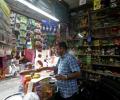
The FMCG industry in India achieved a 10.6% growth in value terms in the December quarter of 2024, driven largely by rural markets, which have surpassed the large urban markets in growth for the fourth consecutive quarter. Festive demand and consumption-driven growth played a key role, with overall volume up 7.1% despite inflationary pressures. However, the industry also saw a "preference shift of consumers towards smaller packs" due to high food inflation. Local manufacturers continue to outperform larger FMCG companies, fueled by consistent volume growth.

Finance Minister Pranab Mukherjee termed the rise in food inflation as an area of 'grave concern'.

Among the 30 Sensex firms, Asian Paints, Infosys, JSW Steel, UltraTech Cement, Power Grid, Larsen & Toubro, HCL Technologies and Tata Steel were the biggest laggards. Tata Motors, HDFC Bank, Bharti Airtel, ITC, IndusInd Bank and Axis Bank were the gainers.

With a sub-normal monsoon looming, the government is worried about spiralling food inflation and its debilitating impact on the nascent economic recovery.
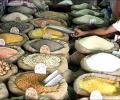
This is the second consecutive week when the rate of price rise of food items has gone up after a period of moderation in February and March.

Expressing confidence, Food Minister K V Thomas said on Friday the government is not 'worried' about food inflation, which is showing a decline trend and may come down to 7 per cent soon.
Snapping the five week rising trend, food inflation softened to 16.91 per cent for the week ended January 1, 2011.

Food inflation, as measured by the Wholesale Price Index, stood at 9.01 per cent in the previous week, while it was over 21 per cent in the first week of June last year.

Food inflation increased in the week ended September 18 as the prices of cereals, fruits, select vegetables and milk rose on account of supply disruptions caused by heavy rains and floods.

Inflation stood at 13.99 per cent in the corresponding period last year.

RBI in its monetary policy review on Friday is expected to suck out liquidity from the system to prevent spread of inflation to manufactured items.

The food inflation, which was over 20 per cent in December 2009, slipped to single digit figure in the third week of July. The overall inflation, which include change in prices of manufactured goods, was 10.55 per cent during June.
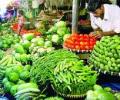
Economists forecast the benchmark food price indicator to slip to 12 per cent in near future

Among the 30-share Sensex blue-chip pack, Bharti Airtel, ITC, Kotak Mahindra Bank, Hindustan Unilever, Titan, UltraTech Cement, HCL Technologies, and Power Grid, were the biggest gainers. Tata Steel, IndusInd Bank, JSW Steel and Bajaj Finserv were the laggards.
India's fast-moving consumer goods (FMCG) sector grew 5.7 per cent by value and 4.1 per cent by volume in the July-September quarter driven by rural demand, consumer intelligence firm NielsenIQ said in its quarterly update on Thursday. Price-led growth stood at 1.5 per cent. According to NielsenIQ data, rural volume growth outpaced urban markets for the third straight quarter despite consumption softening in both regions.

The Reserve Bank on India on Thursday said that high inflation, primarily driven by food prices, has begun to spread to the broader economy now, but it is likely to ease in the coming months on the back of an expected moderation in food prices with the arrival of fresh crops.

Potato prices remained high recording an increase of 115 per cent on a year-on-year basis, followed by pulses whose prices jumped by 41.61 per cent. Vegetables as a whole turned expensive by 37.97 per cent.

The paint sector is seeing heightened competition with the entry of deep-pocketed groups like Aditya Birla and JSW. However, some brokerages see an opportunity in select stocks.
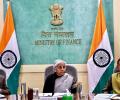
The Budget assumes significance as it comes on the back of lower-than-expected growth numbers during the second quarter and geopolitical uncertainty.
Food inflation, which remains remarkably high at over 12 per cent, could be tamed through innovative agriculture business models, a KPMG report said.
This is the first time in almost six years, for which data with base year 2004-05 is available, that food inflation has shown a decline on an annual basis.
Overall, vegetables were 47.06 per cent cheaper during the week under review, from the same period last year.
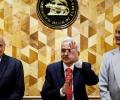
'The central bank has highlighted that the slowdown in growth has been limited to a few sectors and overall growth is expected to pick up in the second half of the year.'
Food inflation is back in double digits after a gap of a month-and-a-half and stood at 10.60 per cent for the week ending October 8 on the back of costlier vegetables, fruits, milk and protein-based items.
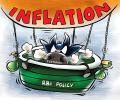
The Reserve Bank on Wednesday retained the retail inflation projection at 4.5 per cent for fiscal 2024-25, with Governor Shaktikanta Das stressing that the central bank will have to closely monitor the price situation and keep the "inflation horse" under tight leash lest it may bolt again. Unveiling the October bi-monthly monetary policy, the Governor also said the flexible inflation targeting (FIT) framework has completed 8 years since its introduction in 2016 and is a major structural reform of the 21st century in India.
Driven by high vegetable prices, the food inflation is in double digit for the past two months and even crossed 18 per cent in the last week of December 25.
India's food inflation was the second lowest among all emerging economies in the 2010.

The time is ideal for a 'Dream Budget' akin to the 1991 reforms that sparked high growth and unlocked significant gains in productivity, points out Rajeswari Sengupta.
Food inflation surged to a four-and-a-half month high of 9.90 per cent during the week ended July 30 on the back of costlier onions, fruits, vegetables and protein-based items.

'The RBI's MPC will maintain the current policy rates (6.50%) at the policy meeting, given ongoing inflationary pressures.'

In May 2019, the food inflation was 1.83 per cent as per the full CPI data released for that period.
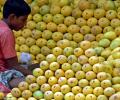
The RBI must first deal with the adverse turn of events in the CPI.

The October-December quarter (Q3FY25) results of fast moving consumer goods (FMCG) major Hindustan Unilever (HUL) indicated weak demand, with urban growth muted and rural showing recovery. Consolidated revenue grew by 1.6 per cent (volume was flat) to Rs 15,818 crore, due to price hikes. Prices of key raw materials such as palm oil and tea remained elevated, leading to compression of gross margin.
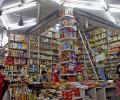
Hit by inflation, higher input costs and pricing measures, fast-moving consumer goods companies are expected to see a contraction in their gross margin and a modest-to-flat operating profit in the October-December quarter. Several FMCG makers are likely to log a low single-digit rise in their revenue, returning to the cycle of value-driven growth.

The government said on Monday food inflation has started easing and will fall to an acceptable level of 5-6 per cent in due course, even as the Bharatiya Janata Party-led National Democratic Alliance and Left Parties went ahead with a nationwide strike to protest against rising prices.

This was the fifth consecutive week in which the rate of food prices has risen, after a spell of moderation in July and the first half of August.
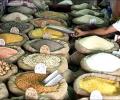
The rate of price rise of food items has fallen to a single-digit figure for the first time since the week ended December 4, 2010, when it was 9.46 per cent.
The blame for the relentless ascent rests largely with the misguided agricultural marketing policies of the Centre and state governments.
Inflation in food articles category in January stood at 8.8 per cent.

'The finance minister has done as much as she can when you look into the fiscal constraints she had.'
 © 2026 Rediff.com - Advertise with us - Disclaimer - Privacy Policy - Sitemap - Feedback - About us - Terms of use - Grievances