
Digital payments provider Paytm is all set to make its market debut as early as this year, with an aim to raise $3 billion (around Rs 22,000 crore). If successful, this could be the biggest initial public offering (IPO) by an Indian company, breaking Coal India's 2010 record of Rs 15,475 crore. According to media reports, the board of One97, parent company of Paytm, is all set to meet this Friday to formally approve the IPO plan.
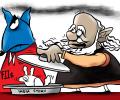
Foreign portfolio investors (FPIs) turned net buyers in October after being net sellers in the previous month. In October, FPIs bought shares worth nearly Rs 8,430 crore ($1 billion) against net selling of Rs 13,405 crore ($1.6 billion) in September. Positive flows during three of the previous four months have pushed the domestic markets towards fresh all-time highs. At present, the Sensex and Nifty are less than 2 per cent shy of breaching record highs logged in October 2021. A rally in equity markets in the US and Europe is in hopes that the Federal Reserve may go soft on rate hikes after its November meeting.

It is imperative that young aspirants consider career options that will guarantee job security -- roles that are centred around technology.

Mihir Tanna, Associate Director, S K Patodia & Associates, answers your tax queries.

Auto-debit payment bounces have gone up for the second consecutive month in May, emphasising the stress building up due to a halt in economic activities as authorities lock down various parts of the country to stop the spread of the virus in the second wave. According to the National Automated Clearing House (NACH) data, in May, of the 85.7 million transactions initiated, 35.91 per cent, or 30.8 million transactions, failed.

Systematic investment plans (SIPs) of mutual funds (MFs) have seen a spike in demand with new registrations touching a five-year high already this year. Around 19.5 million new SIPs have been registered till December end, as against 14.1 million in the whole of financial year 2020-21 (FY21). Market participants say increasing investor awareness and positive experiences have spurred this increase.

Paytm had received the approval for brokerage services from market regulator Sebi in January this year.

India has 50 startups with the potential to achieve the coveted 'unicorn' status in 2022 and by the end of the year, the list of the new-age companies valued at over $1 billion will be at least 100, a report by a consultancy firm said on Monday. In 2021, which witnessed a huge spike in company valuations in the listed and unlisted space driven by ample liquidity, according to some watchers, India added 43 startups to the list and the number of unicorns shot up to 68 by the end of the year. Over $10 billion was invested in the Indian startup ecosystem in the October-December quarter alone, according to the report by PwC India.

Borrowers should be careful if the app promises too-quick disbursal, and doesn't provide adequate information on the terms of the loan, such as interest rate, repayment schedule, etc.

The launch of e-RUPI, a person- and purpose-specific digital payment solution, by the government is expected to completely negate any pilferage and will ensure full benefit to intended beneficiaries, India Inc said on Monday. Prime Minister Narendra Modi has launched e-RUPI, which is aimed at improving transparency and targeted delivery of benefits. PHD Chamber of Commerce and Industry president Sanjay Aggarwal said that the move is a significant step to enhance the digitisation process of the country.

In August, domestic equity markets garnered one of the highest foreign portfolio investor (FPI) flows since the outbreak of the pandemic in 2020, despite the US Federal Reserve standing firm on unwinding its stimulus measures to control inflation. FPIs pumped in over Rs 51,000 crore ($6.4 billion) in August, the most since December 2020 and the third-highest tally since March 2020-the month the Covid-19 pandemic roiled global markets. This was the second consecutive month of positive foreign flows. In the preceding nine months, FPIs had yanked out over $32 billion or Rs 2.2 trillion.

Within days of announcing mega investments for building in Hyderabad its second data centre cluster in India, Amazon Web Services (AWS) on Monday said it is excited about the India market, where cloud adoption offers massive headroom for growth. Pledging its long-term commitment to the India market, AWS, Amazon's cloud computing unit, said it expects global uncertainties to accelerate the decisions by companies to opt for flexible, on-demand cloud infrastructure to pare costs, gain efficiencies and drive business innovation. "Cloud reacts well to uncertainty," Puneet Chandok, president - commercial business, AWS India and South Asia, Amazon Internet Services Pvt Ltd (AISPL) told PTI.

In a major crackdown on Chinese mobile companies, the Income Tax department is conducting searches on leading Chinese mobile companies across the country. Mobile companies including Oppo, Xiaomi and One Plus are being covered in this search, sources told ANI on Wednesday. More than two dozen premises are covered in the search which started on Tuesday. "Raids are ongoing in Delhi, Mumbai, Bengaluru, Greater Noida, Kolkata, Guwahati, Indore and some other places," sources told ANI.

It was their first conversation since Indian-origin Sunak took charge as British prime minister on Tuesday.

Chief Economic Adviser V Anantha Nageswaran on Thursday said cryptocurrencies are akin to 'a world of Caribbean pirates' in the absence of a centralised regulatory authority and are yet to pass the test of a fiat currency. He said that the government is pursuing a 'high-wire balancing act' to ensure that the gains in growth, inflation, and rupee stability of the last four years are not frittered away. He said the recent development in Terra-Luna cryptocurrency, which witnessed a massive meltdown last month, is a 'very important cautionary tale'.

India is currently home to 52 unicorn startups and one of the fastest-growing startup ecosystems.

BharatPe co-founder Shashvat Nakrani has accused Ashneer Grover, with whom he had co-founded the payment startup, of creating a false narrative about the company, and said the board acted quickly and decisively in unseating him after receiving finds of a PwC report. BharatPe, which allows shop owners to make digital payments through QR codes, last week stripped Grover of all titles and positions over his alleged "misdeeds" and may take further legal actions, including clawing back of some of his shareholding. In a letter to employees, Nakrani said the Grover episode was an aberration and not the norm at BharatPe, and went on to defend the board who he said were celebrated names in the banking and financial services industry.

'The company's transition from an individuals-driven private firm to a board-driven listed public one will be carried out in a well-thought-through and well-executed manner.'

Investors of online brokerage house Zerodha on Monday said its users might face some problem while executing sell orders due to "an issue" related to depository CDSL. It tweeted, "You may face an issue with authorizing the sale of your stocks due to an issue with CDSL. "We are in touch with CDSL to have the issue resolved at the earliest."
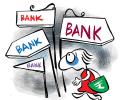
In the new decade, the scene will change because the banks till recently had been challenged by the fintechs, but the techfins have now entered the arena, observes Tamal Bandyopadhyay.

The Unique Identification Authority of India (UIDAI) is looking to collaborate with foreign countries and international organisations to build digital identity systems across the world, a top official said on Friday. UIDAI CEO Saurabh Garg during a panel discussion with Paytm founder Vijay Shekhar Sharma at the Infinity Forum said the authority is also exploring emerging technology to enhance security and increase the number of transactions that can be done by using Aadhaar. "We think going forward we will be happy to collaborate with other nations...We would like to collaborate with international organisations also in building international institutions for standards for national identity.

The drying up of funds for a number of start-ups is affecting the firms' unicorn status across the globe. The past six months have seen the valuations of 147 unicorns drop, of which 71 were from the US and 29 from China, according to the latest Hurun Global Unicorn Index 2022. Eighty-one unicorns from across the globe saw their valuations drop below $1 billion-the threshold for a start-up to be labelled unicorn-from last year.

Of the 1,145 offers made this year, consulting firms made up 34 per cent, followed by banking, financial services and insurance, pharma/healthcare, IT/ITeS and FMCG/retail.

The 'buy-now, pay-later' (BNPL) juggernaut continued to roll on during the festive season with multiple players seeing disbursals grow by more than 100 per cent compared to Diwali last year. LazyPay, the BNPL platform of Prosus-owned payments major PayU, witnessed a credit demand increase of 300 per cent over the festive season last year, especially in segments like travel, food & beverages and entertainment. "We also saw an uptick of 70 per cent in user acquisition in the last two months.

Unlike the race to buy airwaves by telecom companies, airports by infrastructure companies and city gas networks by energy companies, the race to develop super apps by consumer-facing companies in India has not brushed up against any regulatory issues. Officials at the ministry of electronics and information technology and at other regulators are happy they do not have to meddle in who among the Tata group, Reliance Industries Ltd, Flipkart or Paytm will manage to build an app that sweeps in customers. Unlike separate apps a customer uses on her mobile to order groceries, buy food or airline tickets or just make payments, a super app can perform all these functions.

At the 45th Annual General Meeting of Reliance Industries (RIL) in August, chairman and managing director (CMD) Mukesh Ambani described the company as an "unputdownable book" with never-ending chapters of success. "Reliance grew from strength to strength because we internalised the founder's mindset of purpose, philosophy and passion," he said. Wednesday marked the 90th birth anniversary of RIL founder Dhirubhai Ambani.

The Securities and Exchange Board of India (Sebi) is working on a new payment system for the secondary market, which could prevent brokers from accessing their client funds. It will be on the lines of the Application Supported by Blocked Amount (ASBA) process used for subscribing to initial public offerings (IPOs), where funds move out of an investor's bank account only after the trade is confirmed. Sebi chairperson Madhabi Puri Buch on Wednesday said that despite the challenges, the new system would be ready in a few months.

Amid the ongoing festival season in the country, the hiring of gig workers has zoomed across sectors as the businesses have begun opening up leading to an uptick in consumer sentiments and rising pent-up demand, according to experts. "In the third quarter, with the onset of festive season, we are witnessing a 400 per cent spike in the hiring for gig workers. Earlier, in the first quarter of this year, as many businesses and companies were not operating at full strength, growth was muted. "However, things began picking up and became more promising from the second quarter, as the demand for gig workers across sectors grew," Taskmo, a subsidiary of Quess Corp, co-founder Prashant Janadri told PTI.

MobiKwik employees exercised their ESOPs (Employee stock ownership) in a recently opened window by selling part of their shares in a secondary sale. "The secondary round was led by ex-Blackstone India head, Mathew Cyriac, who topped up his holding at almost double of his previous price," the sources said.

According to the new proposals, resident promoters or a foreign promoter from a FATF jurisdiction can set up a market infrastructure institution.

PB Fintech, the parent of Policybazaar and Paisabazaar, has set a price band of Rs 940-950 apiece for its initial public offering (IPO), which will open on November 1 and close on November 3. The company may be valued at around Rs 44,000 crore, and looking to raise an amount of around Rs 5,826 crore. The IPO comprises a fresh issue of Rs 3,750 crore, along with an offer for sale (OFS) of Rs 1959.72 crore by existing promoters and shareholders.

Experts say companies wanting to launch IPOs will have to scale back their expectations given the fall in valuations.

Microsoft India on Tuesday said it has collaborated with Invest India to support tech startups in the country. As part of the partnership, the Microsoft for Startups programme will work closely with Accelerating Growth of New India's Innovations (AGNIi Mission) - a programme of the Office of the Principal Scientific Adviser to the Government of India, a statement said. Housed and executed by Invest India, AGNIi Mission helps startups become enterprise-ready.

Having grown swiftly since the acquisition of Flipkart by Walmart in 2018, it was looking at a valuation of $10 billion. However, factors such as lack of diversification, new e-commerce and data policies, as well as the overall investment environment, have slowed the process.

HDFC Bank on Monday said it aims to regain the two per cent market share in the credit card market it ceded to rivals during a recent ban, within a year by aggressively tapping into its existing depositor base. The bank will also focus on forging new partnerships to sell more cards and will not deviate from its conservative approach on taking credit risks as it goes aggressive in the market, its group head for payments and consumer finance, digital banking and IT, Parag Rao, told reporters. On August 17, RBI lifted the ban on HDFC Bank which had prevented it from issuing new credit cards from December 2020.
The Indian startup ecosystem recently celebrated the 100th unicorn milestone. It came after a month of no big fund announcements. Compare this to 2021, when three to four unicorns were being added every month. Nevertheless, the 100th unicorn needs to be celebrated since the first unicorn was announced in 2011 - 11 years ago.

'We are receiving a steady stream of interest from well-established foreign universities.'
BharatPe co-founder and managing director Ashneer Grover, who was recently embroiled in a controversy over purportedly using abusive language against Kotak Mahindra Bank staff, has taken a voluntary leave till March-end. Grover informed the company's Board about his decision to proceed on leave earlier in the day, as per a statement issued by the fintech company on Wednesday. "For now, the Board has accepted Ashneer's decision which we agree is in the best interests of the company, our employees and investors, and the millions of merchants we support each day," it said. It added that the company will continue to be led by its CEO Suhail Sameer and its management team.

Indian startups have raised $42 billion in 2021, up from $11.5 billion in the previous year, a report by Orios Venture Partners said. The report titled 'The Indian Tech Unicorn Report 2021' said India saw 46 unicorns (companies with $1 billion valuations) in 2021 alone, more than doubling the total number of unicorns to 90. These include ShareChat, Cred, Meesho, Nazara, Moglix, MPL, Grofers (now Blinkit), upGrad, Mamaearth, GlobalBees, Acko, Spinny and others. India - with 90 unicorns - is the third-largest unicorn hub behind the US (487) and China (301), and ahead of the UK (39).

Finance Minister Nirmala Sitharman on Friday met her counterparts in Singapore and Canada and discussed various issues, including economy, health and opportunities for collaboration. Sitharaman met UK Chancellor of the Exchequer Rishi Sunak, Singapore Finance Minister Lawrence Wong and Canada's Deputy Prime Minister & Finance Minister Chrystia Freeland on the sidelines of the G-20 Joint Finance and Health Ministers' meeting. "Finance Minister Smt. @nsitharaman had an engaging discussion with @cafreeland Dy. Prime Minister & Finance Minister of Canada on the sidelines of #G20 Finance & Health Ministers Meeting in #Rome. The Ministers discussed various issues, including economic and health cooperation," a Finance Ministry tweet said.
