
Widespread use of crypto assets, including stablecoins, can have a negative impact on the macroeconomic and financial stability of a country, the Reserve Bank of India (RBI) said on Monday. In its Financial Stability Report (FSR), the banking regulator highlighted that excessive use of crypto assets can reduce effectiveness of monetary policy, worsen fiscal risks, circumvent capital flow management measures, divert resources available for financing the real economy and threaten global financial stability.

User protection and a proposal for a licensing framework for companies seeking to operate in the cryptocurrency area will be part of an upcoming consultation paper on the sector, said a senior industry executive. Even as specific regulations around crypto are yet to take shape, companies are setting up baseline user protection processes, including a redressal mechanism, fraud detection, regular filing of suspicious transaction reports (STRs), among others.

The Financial Intelligence Unit-India (FIU-India), the national agency responsible for analysing suspicious financial transactions, has received requests from four more offshore crypto exchanges to operate in India again, said a senior government official familiar with the matter. In the beginning of 2024, India had banned nine crypto exchanges - Binance, Kucoin, Huobi, Kraken, Gate.io, Bitstamp, MEXC Global, Bittrex, and Bitfenix - for non-compliance with anti-laundering law in the country.

The securities regulator's approval for the first US-listed exchange traded funds (ETF) to track bitcoin has given Indian cryptocurrency companies hope that the move would create domestic support for the digital assets. The US Securities and Exchange Commission (SEC) on Thursday approved 11 ETFs for bitcoin, perhaps the most popular virtual currency. It would enable investors to access bitcoin without challenges such as setting up wallets or accounts with crypto exchanges that have previously suffered cyberattacks or implosion.

'India's emergence as a top crypto market comes despite a regulatory and tax environment that can be challenging for the industry to navigate.'

The message is clear: The 60-year-old wise uncles need to handhold the 40-year-old entrepreneurs when, obsessed with ambition and greed for growth, they become a victim of hubris, points out Tamal Bandyopadhyay.

Crypto assets should not be granted official currency or legal tender status, the much-awaited synthesis paper by the International Monetary Fund (IMF) and Financial Stability Board (FSB) has said ahead of the G20 leadership summit under India's presidency. However, the report has argued against a blanket ban on activities linked to crypto assets, explaining that such a move can be costly as well as technically demanding to enforce. Central banks should avoid holding crypto assets in their official reserve as they pose a risk to monetary and global financial stability, according to the synthesis paper.

Prime Minister Narendra Modi on Saturday announced the adoption of the New Delhi Leaders Declaration, a significant victory for India's G20 presidency that came amid increasing tensions and divergent views over the Ukraine conflict.

RBI Governor Shaktikanta Das kept the red flag on cryptocurrencies flying, warning that the next financial crisis can be triggered by private cryptocurrencies if such speculative instruments are allowed to grow.

The Reserve Bank of India's proposed guidelines on bank executives' compensation will be extended beyond just CEOs to all senior executives in private and foreign banks, especially those involved in treasury functions.

The Reserve Bank of India (RBI) will set up a "financial stability unit" for drawing upon inter-disciplinary expertise from across various departments for carrying out periodic stress testing and preparing financial stability reports.

The World Bank's executive board unanimously selected 63-year-old Malpass, who is currently Under Secretary of Treasury for International Affairs, as the bank's 13th President for a five-year term beginning April 9.

A host of factors including the reform measures taken by the government and decline in global oil and commodity prices have led to lower inflation, the Finance Ministry said on Wednesday.
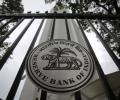
The regulator said if the variable pay is up to 200 per cent of the fixed pay, at least 50 per cent of it should be in non-cash, and if the variable pay is above 200 per cent, 67 per cent of it should be paid via non-cash instruments.

The task force will look at emerging markets, technology, regulatory and monetary policies, loss of trust in financial services, and financial inclusion.

Moody's Investors Service on Thursday downgraded subordinated debt ratings of 11 Indian banks, including SBI, ICICI Bank and HDFC Bank.

The total value of assets held by India's financial institutions touched nearly $2.8 trillion, the third largest among BRICS nations, in 2013.
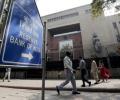
RBI proposed that at least half of the compensation of a CEO should be variable. It also said that stock options should be part of the variable pay, against the extant practice of keeping it beyond and above the scope of the official compensation package.

Chinese Premier Premier Li Keqiang said world economic recovery should not be driven by mainly China, but in concert with many countries.

The prime minister said a stable global economic and financial system is imperative for growth as it promotes inclusive and sustainable growth.

Why do we need a cure here for peculiarly Western diseases when we don't have those diseases, and which the West itself is not trying to cure, asks Debashis Basu.

PS banks need to pull up their socks to improve cash flows.

It further said India is facilitating external commercial borrowings by startups in order to encourage innovation and promote ease of doing business.

Indian regulators have identified certain groups as 'financial conglomerates' and they are being monitored closely for any systemic risks they may pose.

It is surprising that central bankers around the world have cautioned the US Federal Reserve against raising rates.
 © 2026 Rediff.com - Advertise with us - Disclaimer - Privacy Policy - Sitemap - Feedback - About us - Terms of use - Grievances