
ITC, Sun Pharma, Maruti, M&M, Tata Motors, HCL Tech, Wipro, Infosys, HUL, Bharti Airtel and Reliance were among the major losers. Kotak Bank rose the most by 1.59 per cent, followed by IndusInd Bank, Bajaj Finance and Bajaj Finserv. L&T, SBI, TCS and HDFC Bank also closed higher.

Tata Steel was the top loser in the Sensex pack, shedding over 2 per cent, followed by Sun Pharma, ICICI Bank, SBI, Kotak Bank and Dr Reddy's. NSE Nifty dropped 151.75 points to 15,727.90.
Benchmark indices fell for the third straight day on Tuesday, with the Sensex falling over 153 points amid largely weak global markets as investors remained cautious ahead of the crucial Federal Reserve meeting outcome. Unabated foreign fund outflows also continued to weigh on the domestic equity markets. The 30-share BSE benchmark dropped 153.13 points or 0.29 per cent to settle at 52,693.57.

Despite markets turning volatile, share sale activity at India Inc has surged to its highest level in five months. So far in March, promoters, strategic investors and other large shareholders have been able to offload shares worth more than Rs 33,000 crore-the most since November-defying uncertain market conditions. Both the Sensex and the Nifty are on course to post their fourth straight monthly loss amid headwinds, such as interest rate tightening by the US Federal Reserve and the global banking crisis.

From the Sensex pack, State Bank of India, ICICI Bank, IndusInd Bank, Axis Bank, Kotak Mahindra Bank, HDFC Bank, Reliance Industries were among the major laggards. Bucking the trend, auto stocks Tata Motors and Mahindra & Mahindra closed with gains.

Equity markets will be driven by the outcome of the US Federal Reserve's interest rate decision this week, analysts said. Moreover, equity benchmarks will also continue to be guided by foreign fund movement and trend in Brent crude oil, they added. "The global markets are looking nervous after the US inflation numbers, which have caused the dollar index to hover around 110," said Santosh Meena, head of research, Swastika Investmart Ltd. Now everyone is eyeing the outcome of the upcoming US Federal Open Market Committee (FOMC) meeting.

'We are not entirely out of the woods.' 'The broader trajectory remains tentative.' 'However, we may expect some near-term bounce.'

Benchmark Sensex trimmed early gains to close marginally higher while Nifty settled flat in choppy trade on Tuesday as gains in auto shares were offset by selling pressure in banking and energy shares. The 30-share BSE barometer closed marginally up by 37.08 points or 0.06 per cent to 60,978.75 with 15 of its stocks ending in green and the rest in red. The index opened higher and gained over 300 points to a high of 61,266.06 in early trade.

Historically, March has been a volatile month for Indian equity markets. To begin with, it marks the end of a financial year, wherein there is some compulsive portfolio rebalancing trade by large funds - domestic and foreign. Retail investors, too, prefer to 'cash in' on their gains and losses before the financial year runs out.

PowerGrid was the top laggard in the Sensex pack, shedding around 2 per cent, followed by IndusInd Bank, Reliance, L&T, UltraTech Cement and Bajaj Finance.

Foreign investors pumped in Rs 11,119 crore in the Indian equities in December, making it the second consecutive monthly inflow, despite increasing concerns over the re-emergence of Covid-19 cases in some parts of the world. However, foreign portfolio investors (FPIs) have turned cautious in recent days. The inflow in December was much lower compared to Rs 36,239 crore invested by FPIs in the month of November, data with the depositories showed.

Gold prices hit record high in the third week of March as fears of bank collapses and high inflation led investors to the traditional safe haven. Gold prices are often inversely correlated to dollar strength because the international price is dollar-denominated. The Federal Reserve's (Fed's) stance indicates that the dollar may appreciate further since it is prepared to keep pushing up policy rates. But demand for gold is also up - the World Gold Council claims central banks are buying in addition to private demand.
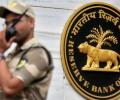
A day after the RBI raised the benchmark lending rate by 35 basis points, Kotak Mahindra Bank Managing Director Uday Kotak on Thursday said the central bank may go for one more rate hike to bring inflation below its upper tolerance level of 6 per cent. Yesterday, the RBI indicated that it wants inflation to be within the band first and then move towards the target of 4 per cent, Kotak said at the CII Global Economic Policy Summit 2022. "My sense is that there could be one more rate hike and that may be the time for thinking about a pivot, but we got to watch very closely the data, and maybe around 6.5 per cent as it looks today, subject to what happens to the world, subject to what happens to oil, subject to what happens to many other things," he said.
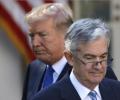
In a drastic measure to stem any major disruption to the US economy as a result of the coronavirus outbreak, the Federal Reserve has cut its benchmark interest rate to almost zero and said it would buy USD700 billion in bonds. The covid-19 pandemic has sickened more than 156,000 people worldwide and left more than 5,800 dead. The death toll in the US stands at 68, while infections neared 3,700.

The demand for gold is expected to take a hit if the price of the yellow metal - which has been hovering around Rs 60,000, a level never seen before - remains elevated. Due to a sharp increase in price in a very short time and the flow of smuggled gold continuing, gold price in Mumbai is quoted at around Rs 59,000 per 10 gram. Typically, overall demand in the January-March and July-September quarters is moderate-to-dull, which is the case in the ongoing period.

The re-opening of the Chinese economy, as it moves away from its zero-Covid policy, could help stabilise commodity prices, according to some of the country's top metal companies. They view this as a positive for demand, at a time when markets such as the US and Europe have been largely weighed down by slowdown concern now. "Most of us in the metals business are hoping the Chinese economy picks up because half of any metal demand, including demand for aluminium, comes from China.

Elevated food price-led inflation could become a sore point for markets, which they seem to be ignoring at current levels, observe analysts. Retail inflation in India - as measured by the Consumer Price Index (CPI) - came in at a three-month high of 6.52 per cent in January 2023, compared with 5.72 per cent in December and 5.88 per cent in November 2022. The inflation print for February, according to Madan Sabnavis, chief economist at Bank of Baroda, will be critical for the Reserve Bank of India's monetary policy committee.

Amid fast-depleting forex reserves, the Finance Ministry on Wednesday signalled that it was not in favour of selling the dollar to defend any particular level of the rupee. "Let it (rupee) reach whatever levels it has to reach. We can't fritter away reserves on defending some artificial, imaginary rate of exchange," a senior finance ministry official told Business Standard. Forex reserves declined to a near two-year low of $545.65 billion as on September 16, down $85.88 billion from the level that existed on February 25, a day after Russia invaded Ukraine.

The filing of offer documents with the capital markets regulator - Securities and Exchange Board of India - has more than halved this financial year (2022-23, or FY23) as the outlook for new share sales has worsened, following correction in the secondary market. So far in FY23, 66 companies filed their draft red herring prospectus (DRHP), as opposed to 144 in the preceding financial year (2021-22, or FY22).

Benchmark indices fell on Monday with the BSE Sensex declining 306 points, mainly dragged down by Reliance Industries. Foreign funds outflow also added to the overall bearish trend in equities on Monday. The 30-share BSE benchmark fell 306.01 points or 0.55 per cent to settle at 55,766.22. During the day, it declined 535.15 points or 0.95 per cent to 55,537.08. The broader NSE Nifty dipped 88.45 points or 0.53 per cent to 16,631.

Equity indices faced a heavy drubbing on Thursday after an initial rally, with Sensex tanking 1,045.60 points amid a largely bearish trend overseas after the US Federal Reserve hiked rates by 75 basis points.

The rupee has depreciated 9.7 per cent against the US dollar over a year and with the RBI stemming the rupee's weakness through dollar sales, its reserves have dropped to their lowest levels since October, 2020. The fall in reserves has widespread implications.

An aggressive rate hike by the US Fed and the possibility of a recession can trigger a slide in these stocks, which will be a good opportunity to buy from a long-term perspective.

The collapse of Silvergate Bank, Silicon Valley Bank (SVB) and Signature Bank in the US might create temporary liquidity issues but will not have any significant impact on the Indian crypto market in the long run, officials from several exchanges told Business Standard. All three banks are considered crypto-friendly. SVB offered services such as cryptocurrency custody and lending.

FPIs have turned net sellers in 2022 after being net buyers in the last three years.

ONGC was the top loser in the Sensex pack, declining around 5 per cent, followed by NTPC, Sun Pharma, SBI, IndusInd Bank, Bajaj Auto, PowerGrid and RIL. NSE Nifty slumped 189.15 points to 14,721.30.

Benchmark Sensex declined 224 points on Wednesday, snapping its four-session winning streak, mainly due to sell-off in IT and pharma counters amid rising concerns over possible aggressive interest rate hikes to tame high inflation. The 30-share index rebounded more than 1,200 points from the early lows before settling at 60,346.97 points, a total loss of 224.11 points or 0.37 per cent compared to Tuesday's closing level. The broader NSE Nifty closed lower 66.30 points or 0.37 per cent at 18,003.75 points.

The rupee depreciated by 37 paise to close at 79.62 against the US dollar on Thursday despite sustained foreign capital inflows and a positive trend in equities. At the interbank foreign exchange market, the local currency opened at 79.22 and saw an intra-day high of 79.22 and a low of 79.94 against the American currency. It finally ended at 79.62, down 37 paise over its previous close of 79.25.

HCL Tech was the top loser in the Sensex pack, skidding over 4 per cent, followed by Tech Mahindra Dr Reddy's, Wipro, TCS, Titan and Infosys. NSE Nifty plunged 167.80 points to 17,110.15.

The International Monetary Fund (IMF) on Tuesday said it is expecting some slowdown in the Indian economy next fiscal year and projected the growth to 6.1 per cent from 6.8 per cent during the current fiscal ending March 31. The IMF on Tuesday released the January update of its World Economic Outlook, according to which the global growth is projected to fall from an estimated 3.4 per cent in 2022 to 2.9 per cent in 2023, then rise to 3.1 per cent in 2024. "Our growth projections actually for India are unchanged from our October Outlook.

'The government is trying to kickstart the investment cycle in India and while the corporate investments are yet to gather momentum, there are early signs of the same.'

After three consecutive years of infusing huge funds, foreign portfolio investors retreated from the Indian equity markets in a big way in 2022 with the highest-ever yearly net outflow of nearly Rs 1.21 lakh crore. The huge outflow, which surpasses by a big margin the previous record of Rs 53,000 crore net withdrawal in 2008, came amid aggressive rate hikes by central banks globally but 2023 is expected to be better on positivity about overall macroeconomic trends in India, experts said. Apart from global monetary tightening, volatile crude, rising commodity prices along with Russia and Ukraine conflict led to an exodus of foreign money in 2022.

The rupee on Wednesday declined by 16 paise to close at its fresh lifetime low of 77.60 against the US dollar amid unabated foreign fund outflows and a stronger greenback in overseas markets. At the interbank foreign exchange market, the rupee opened lower at 77.57 and later hit the day's low of 77.61 as the dollar rebounded in global markets following hawkish comments from US Federal Reserve chief Jerome Powell. Crude oil prices also surged over 1 per cent, which weighed on the rupee.
Equity investors became poorer by over Rs 8 lakh crore in five days of market plunge. The BSE benchmark has lost 2,062.99 points or 4 per cent in five trading sessions. On Thursday, the 30-share BSE benchmark tanked 585.10 points or 1.17 per cent to close at 49,216.52. Following the bearish trend, the market capitalisation of BSE-listed companies declined by Rs 804,216.71 crore to Rs 2,01,22,436.75 crore in five days.

At interactions last week with senior officials from the Reserve Bank of India, select banks gave feedback on two key bond market concerns, namely, recent volatility in the rupee-dollar exchange rate and heavy losses incurred on floating rate government bonds due to a demand-supply mismatch, sources told Business Standard. The discussions were held ahead of the RBI's next monetary policy statement, scheduled on August 5. Indian banks are large holders of government securities because of a regulatory mandate to set aside a certain percentage of deposits in sovereign bonds.
Foreign investors have pulled over Rs 6,400 crore from the Indian equity market in the first four trading sessions of the ongoing month when the Reserve Bank of India (RBI) and US Federal Reserve raised interest rates. Given the headwinds in terms of elevated crude prices, inflation, tight monetary policy among others, FPIs' flows in India are expected to remain volatile in the near term, Shrikant Chouhan, Head - Equity Research (Retail), Kotak Securities, said. Foreign Portfolio Investors (FPIs) remained net sellers for seven months to April 2022, withdrawing a massive amount of over Rs 1.65 lakh crore from equities. This was largely on the back of anticipation of a rate hike by the US Federal Reserve and due to the deteriorating geopolitical environment following Russia's invasion of Ukraine.

The Sensex pull-back was mainly staged by constant selloffs in banking shares, led by ICICI Bank, Axis Bank and IndusInd Bank. Of the Sensex constituents, 19 shares suffered losses.

ITC was the top loser in the Sensex pack, shedding nearly 3 per cent, followed by Bajaj Finance, Kotak Bank, Bharti Airtel and Reliance Industries. Nifty fell 43.35 points to 17,324.90.
The rupee appreciated 7 paise to 79.74 against the US dollar in early trade on Thursday as a positive trend in domestic equities supported the local unit. However, a strong American currency overseas and forex outflows restricted the rupee's gain, dealers said. At the interbank foreign exchange, the rupee opened at 79.72 against the American dollar, then went lower to trade at 79.74 against the greenback in early deals, registering a gain of 7 paise over the last close.

'Markets could face uncertainty in the short to medium term.' 'It would be prudent to invest in alternative asset classes, especially debt, for about a year.' 'Bank fixed deposits are offering rates as high as 9 per cent per annum and these can be used as a great hedging tool until equity markets stabilise.'
