
It also aims to reduce the powers of the Supreme Court, with some authorities shifted to the proposed Constitutional Court, and immunity to the president from criminal proceedings for life.
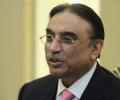
Swiss authorities cannot open graft cases against Pakistan President Asif Ali Zardari under an order from the supreme court, Law Minister Farooq Naek has said.

After weeks of wrangling, Pakistan Supreme Court on Wednesday approved a third draft of a letter that will ask Swiss authorities to revive graft cases against Asif Ali Zardari, with the government making it clear that any proceedings in that country would be conditional to the immunity available to the president.
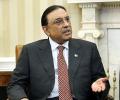
Pakistan appears headed for another political crisis as the ruling Pakistan Peoples Party has decided not to exclude the clause of presidential immunity from a letter to be sent to Swiss government on reopening graft cases against President Asif Ali Zardari despite the supreme court's objection to it.
Pakistan Supreme Court on Wednesday warned that it would resume contempt proceedings against Premier Raja Pervez Ashraf if the government does not finalise by October 5 a letter to be sent to Swiss authorities for reopening graft cases against President Asif Ali Zardari.
The apex court, hearing a contempt case against Premier Raja Pervez Ashraf over reopening of graft cases against Zardari, adjourned the matter for a day after the government sought time to make changes to the draft.
Pakistan Prime Minister Raja Pervez Ashraf on Tuesday informed Pakistan's supreme court that the government would revoke a former attorney general's letter to Swiss authorities for the closure of graft cases against President Asif Ali Zardari.

The Pakistan Supreme Court on Friday objected to contents of a fresh draft of a letter to be sent to Swiss authorities over graft charges against President Asif Ali Zardari and gave government time till October 10 to finalise it in accordance with its order that sought revival of the cases.
Ignoring India's assertions that Islamabad should not interfere in its affairs, Pakistan's Parliament decided on Tuesday to set up a panel to monitor human rights situation in Jammu and Kashmir and mobilise world opinion in support of the 'right of self-determination' for Kashmiri people.
Pakistani Law Minister Farooq Naek on Monday met Indian death-row prisoner Sarabjit Singh at the Lahore's Kot Lakhpath Jail to review his case following the Indian government's appeal for clemency for him.
Pakistani Law Minister Farooq Naek will meet Indian death row prisoner Sarabjit Singh on Monday to review his case, following the Indian government's appeal for clemency for him, official sources said, raising hopes of his release. Sarabjit, 42, has been on death row since he was convicted for alleged involvement in four bomb attacks that killed 14 people in Punjab province in 1990. His family insists that he was wrongly convicted for the bombings.
The Pakistan government is giving finishing touches to a sweeping constitutional amendment package that will clip President Pervez Musharraf's powers and pave the way for reinstating judges sacked by him last year, an issue that has imperiled the fragile ruling coalition. The package, which will be tabled in parliament as the 18th Constitution Amendment Bill before the forthcoming budget session, would balance the powers between the President and the Prime Minister.
Signalling that it was ready for a showdown with President Pervez Musharraf, Pakistan's new government has said that the 'extra-constitutional steps' taken by him during emergency rule last year are not part of the Constitution, as Parliament is yet to endorse them. Naek said the coalition government led by the Pakistan People's Party is committed to reinstating the judges sacked by Musharraf, including former Chief Justice Iftikhar Muhammad Chaudhry.
A Swiss investigation officer gave a six-month suspended sentence and fined each US $50,000 after a five-year inquiry into a corruption case.

The petitioner argued that the people of Pakistan had a right of retribution.
 © 2026 Rediff.com - Investor Information - Advertise with us - Disclaimer - Privacy Policy - Sitemap - Feedback - About us - Terms of use - Grievances