
'The prohibition regime has been accompanied by concerns regarding the expansion of the illicit liquor trade, increased enforcement challenges and corruption, and the growing use of alternative intoxicants, including illicit drugs.'

A research paper by the National Council of Applied Economic Research (NCAER) recommends that Bihar revoke its alcohol ban, citing its failure to reduce violence against women and a rise in illicit drug and alcohol consumption. The report suggests that reinstating the liquor excise tax would significantly increase state revenues and decrease enforcement costs.

The government maintained a strong pace of capital expenditure, which jumped nearly 24 per cent to Rs 3.40 trillion in April-June.

ITC reported a 16.2 per cent year-on-year drop in consolidated net profit to 4,394.13 crore in Q1 FY27, primarily due to a significant increase in taxes on its cigarette business. Consolidated net revenues also declined by 11.1 per cent to 19,114 crore, missing analyst estimates.

An intensified DVAC probe into a multi-crore liquor scam, allegedly involving former DMK Minister V Senthil Balaji, has led to a suggestion to privatise retail liquor sales in Tamil Nadu. The investigation targets alleged collusion in TASMAC bar licences, transport tenders, and procurement, with the Madras High Court dismissing Balaji's anticipatory bail plea. The FIR details systemic corruption, significant revenue loss, and illicit fund generation, prompting political reactions.

Reliance Industries (RIL) delivered a better-than-expected operational performance in Q1FY27, driven by a recovery in its oil-to-chemicals (O2C) business and robust gains in the telecom (Jio) segment, though its retail arm missed estimates. Analysts highlight the upcoming Jio Platforms IPO and execution in new energy and consumer businesses as key triggers for the stock's future growth.

The Comptroller and Auditor General (CAG) of India has criticized the Maharashtra state excise department for operational lapses that led to a significant revenue shortfall. The report cites incorrect fee assessments, failure to implement revised rates, and other irregularities.

Fitch Ratings has affirmed India's sovereign credit rating at 'BBB-' with a stable outlook, acknowledging robust growth prospects and strong external finances. However, the agency highlighted concerns over elevated government debt, lagging structural metrics, and potential fiscal spending pressures due to rising youth unemployment.

Indian liquor brands are increasingly focusing on Hindi heartland states like Uttar Pradesh, Rajasthan, and Haryana as the next major growth engine for premiumisation, driven by expanding luxury portfolios, craft spirit launches, and upgraded retail experiences, as state governments embrace reforms.

State-owned refiners Bharat Petroleum Corporation Ltd (BPCL) and Hindustan Petroleum Corporation Ltd (HPCL) have reported substantial losses for the first quarter of financial year 2026-27 (Q1FY27), primarily driven by a sharp increase in crude oil prices exacerbated by the ongoing West Asia crisis and suppressed marketing margins on petroleum products.

The government has sharply reduced excise duty on petrol to 3 and diesel to zero, offering major relief to consumers. Here's how the price cut will impact fuel rates and inflation.
The Indian government has reduced excise duty on petrol and diesel to mitigate the impact of rising global crude prices, triggered by geopolitical tensions in the Middle East. This move aims to provide relief to consumers and oil companies amidst volatile international oil markets.
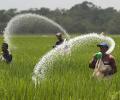
India's Central government is likely to see its fertiliser subsidy bill double to a record 3.4 trillion in FY27, up from the Budget estimate of 1.7 trillion, due to surging global fertiliser prices exacerbated by the West Asia war. This significant increase, coupled with revenue losses from excise duty cuts for oil-marketing companies, is straining the government's fiscal space, though capital expenditure plans remain unchanged.

Divestment has emerged as a priority for the government following a moderation in direct tax collections.

Ladakh Lieutenant Governor Vinai Kumar Saxena on Sunday approved a new Excise Policy, permitting the sale of hard liquor through retail vends, reducing documents to obtain a licence from 16 to six and extending the liquor availability to four more districts.

The Indian government is accelerating its sale of minority stakes in state-owned companies, including a significant offer for sale (OFS) in Life Insurance Corporation of India (LIC) expected "very soon," to meet its 80,000 crore mobilisation target and reduce its holdings to 75 per cent in most listed PSUs by year-end.
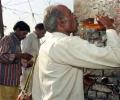
Since Bihar implemented its liquor prohibition law in April 2016, over 1.7 million people have been arrested for offences related to alcohol consumption and sale. The state's Prohibition, Excise and Registration Department reports high conviction rates and significant revenue collection despite the ban.
ITC reported a 6.1 per cent year-on-year growth in its consolidated adjusted net profit from continuing operations, reaching ~5,469.74 crore in the January-March quarter (Q4FY26), primarily fuelled by strong performances in its cigarettes and non-cigarette fast-moving consumer goods (FMCG) businesses.

The Indian central government has reduced its total expenditure by approximately 60,000 crore in FY26, below its revised estimate, to successfully achieve the fiscal deficit target of 4.4 per cent of gross domestic product (GDP), according to the latest data from the Controller General of Accounts (CGA).

Union Finance Minister Nirmala Sitharaman has warned that the ongoing West Asia crisis is not merely a geopolitical issue but will directly lead to higher fuel costs for common people and businesses, impacting shipping, input availability, and export orders.
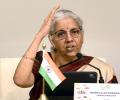
Union Finance Minister Nirmala Sitharaman has urged an increased focus on '3Fs'-fuel, fertiliser, and forex-to maintain India's economic resilience amidst the West Asia crisis, while also criticising those who spread pessimism.

Not a single retail outlet ran dry. Every household that wanted a cylinder got one. India faced neither a 1991 moment nor a 2013 one. Macroeconomic stability held. This was not an accident, and it was not luck alone. It was the work of a government that chose to act as it had during the pandemic -- deliberately and gradually, building one measure upon another rather than reaching for a single dramatic lever, explains V Anantha Nageswaran, chief economic advisor to the Government of India.
The World Bank has increased India's economic growth projection for FY27 to 6.6 per cent, citing resilient domestic demand, while simultaneously cutting its global economic growth outlook due to the conflict in West Asia.

Kerala Home Minister Ramesh Chennithala announced that parole would not be granted or extended on political grounds, assuring that eligible prisoners' legitimate rights would be protected. He highlighted ongoing prison reforms aimed at improving rehabilitation, welfare measures, and administration, including plans to amend the prison manual and strengthen security.

The Indian government is set to accelerate reforms, including measures to enhance foreign direct investment, speed up divestment, and boost asset monetisation, to maintain economic growth despite rising fuel and fertiliser import costs driven by the West Asia crisis.

The Indian government has marginally exceeded its indirect tax collection target for fiscal year 2025-26, with strong performances in customs, excise, and GST revenues.
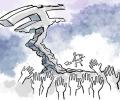
Bank of Baroda economists project India's GDP to grow 6.5-6.8 per cent in FY27 but warn that the fiscal deficit could overshoot the budgeted 4.3 per cent target, potentially reaching 4.7-4.8 per cent of GDP due to subsidy overruns, excise duty cuts, and oil marketing company losses.

Finance Minister Nirmala Sitharaman on Monday introduced two bills in the Lok Sabha to levy excise duty on tobacco and tobacco products, and a new cess on manufacturing of pan masala, which will replace the GST compensation cess on such sin goods.

The conflict may disrupt Budget 2026-2027 projections, squeezing revenues and raising subsidies, prompting fiscal adjustments and potential reforms, echoing lessons from the Covid-era shock, points out A K Bhattacharya.
State-owned Indian Oil Corporation (IOC), Bharat Petroleum Corporation Ltd (BPCL), and Hindustan Petroleum Corporation Ltd (HPCL) are reportedly incurring losses of Rs 18 per litre on petrol and Rs 35 per litre on diesel, as they continue to absorb rising crude oil costs without increasing retail prices. This situation is leading to expectations of a fuel price hike after upcoming state elections.
The leader of the opposition in the Jharkhand Assembly has urged the Governor to direct the Anti-Corruption Bureau to file a charge sheet in connection with the alleged liquor scam and requested a CBI probe.

India has no plans to ration fuel supplies despite ongoing disruptions in global energy markets, according to a top oil ministry official. The country has maintained adequate inventories of crude products and LPG while diversifying imports to manage supply risks.

Reliance Industries Ltd (RIL) has expressed caution regarding 'extreme volatility' risks stemming from the West Asian conflict, which could impact global oil demand and the company's margins, while also noting that near-term retail consumption demand may remain sensitive to macro conditions. Chairman Mukesh Ambani, in the annual report, remained silent on the timeline for Jio Platforms' anticipated public listing, stating the group will 'continue to evaluate strategic pathways'.

Even if there is an early agreement on a cessation of hostilities in West Asia, the price shock will not go away easily, points out A K Bhattacharya.

Elevated global crude oil and natural gas prices, driven by geopolitical developments in West Asia, could significantly influence the Government of India's fiscal position for 2026-27, according to a report by ratings agency Icra.

The Election Commission has deployed 432 counting observers across all 294 assembly constituencies in West Bengal to ensure transparent and smooth counting of votes. Several districts have been assigned additional observers in view of their sensitivity and electoral significance. Enforcement agencies have carried out extensive seizure drives during the election period to curb illegal inducements, with total seizures valued at approximately Rs 561 crore.

Insights from behavioural economics suggest that an ambitious nudge can be effective if three conditions are met, points out Ram Singh Insights from behavioural economics suggest that an ambitious nudge can be effective if three conditions are met, points out Ram Singh, director, Delhi School of Economics.
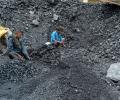
After spending 31 months in Chennai's Puzhal prison, Ahmed Buhari is finally breathing free, as courts across the country quashed proceedings linked to his group company Coastal Energy.

A Hindu temple caretaker was found dead in Bangladesh, sparking outrage and demands for justice from minority groups. The caretaker had been missing for three days before his body was discovered.
'At the first sign of real trouble, that money will move. There will be a run.'
