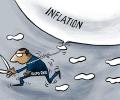
'As the Budget has taken some measures to spur growth, similar action from the MPC may be expected.'

India's manufacturing sector growth fell to a 14-month low in February amid softer increase in new orders and production, a monthly survey said on Monday. The seasonally adjusted HSBC India Manufacturing Purchasing Managers' Index (PMI) registered 56.3 in February, down from 57.7 in January, but remained firmly within the 'expansionary' territory. In PMI parlance, a print above 50 means expansion, while a score below 50 denotes contraction.

India's flexible (flex) office segment, having breached pre-pandemic levels, is thriving as corporates, startups, multinational corporations, and global capability centres (GCCs) expand in India, seeking low-capital yet Grade A plug-and-play facilities. In the first quarter (Q1) of 2025, the flex office segment continued to grow, with flex space leasing rising by 22 per cent to 2.2 million square feet (msf), according to Colliers.

From the Sensex pack, Adani Ports, Tata Steel, Power Grid, Mahindra & Mahindra, NTPC, Tech Mahindra, Tata Motors, ITC, Nestle India, HCL Technologies, Bharti Airtel, State Bank of India, Asian Paints and Kotak Mahindra Bank were the gainers. Bajaj Finance, IndusInd Bank, HDFC Bank, and Zomato were the laggards.

Farmer leader Jagjit Singh Dallewal, who was on an indefinite hunger strike in support of various demands, has broken his fast after the Punjab government intervened and dispersed protesting farmers at Khanauri and Shambhu borders. The Supreme Court lauded Dallewal's efforts and acknowledged the government's action, while also asking for a status report on the situation. Contempt proceedings against the Punjab chief secretary and Director General of Police for not complying with the court's order of providing medical aid to Dallewal were dropped.

'April 9 announcement of slapping a 125% tariff on Chinese goods has brought the focus back to China, making this new phase feel like a repeat of the original conflict.'

The RBI added roughly 3 tonnes in 2025, taking its gold reserves to 879 tonnes as of January 31, 2025.

The sweeping tariffs proposed across sectors by US President Donald Trump are scheduled to be imposed starting April 2, with most analysts worried about their impact on companies, and in turn the financial markets. Recently, the US administration signaled that it will impose sectoral tariffs on energy, pharmaceuticals, semiconductors, agriculture, copper, and lumber.
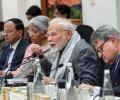
Job creation, improving farm productivity, and mobilising public funds for infrastructure development were some of the issues that figured during the interaction between Prime Minister Narendra Modi and economists ahead of the 2025-26 Union Budget. The prime minister on Tuesday met eminent economists and sectoral experts at NITI Aayog to hear their views and suggestions for the upcoming Budget. Union Finance Minister Nirmala Sitharaman is scheduled to present the Budget for 2025-26 in the Lok Sabha on February 1, 2025.

Intuitively solving a problem like multiplying 43 by 11, they might first multiply 43 by 10, and then add 43, reaching the final answer of 473.

The repo rate cut by 25 basis points by the monetary policy committee (MPC) of RBI announced Friday will give a long-awaited relief on interest rates and also be supportive of economic growth, according to experts. Repo rate is the interest rate at which the RBI lends money to commercial banks.

India's services sector activity witnessed a sharp uptick in February boosted by improving domestic and international demand, which resulted in a quicker expansion in output and a substantial increase in employment, a monthly survey said on Wednesday. The seasonally adjusted HSBC India Services PMI Business Activity Index rose from January's 26-month low of 56.5 to 59.0 in February, indicating a sharp rate of expansion.
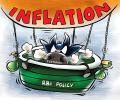
Retail inflation slipped to seven-month low of 3.61 per cent in February mainly due to easing prices of vegetables, eggs, and other protein-rich items, creating space for the RBI to go for another cut in interest rate next month.

One fact is irrefutable: Nepal's recent political history tells us that the route to a return of monarchy cannot go through India despite friends in high places, asserts Aditi Phadnis.

The Centre's fiscal deficit touched 74.5 per cent of the annual target at the end of January 2025, according to the data released by Controller General of Accounts (CGA) on Friday.
India needs another shot of difficult reform, of the kind only possible at gunpoint. Mr Trump holds that gun to our heads now. A drastic reduction in tariff protection, other elements of sarkari wet-nursing will force entrepreneurial India to become competitive again, argues Shekhar Gupta.

Given the possibilities that next year's assembly elections could throw up, Stalin told the state assembly that an interim report had to be submitted by January 2026. The outcomes may well find its way into the DMK's poll manifesto, thus seeking to keep the electoral focus still on the BJP-ruled Centre and Prime Minister Modi, observes N Sathiya Moorthy.

Unless something changes, Mr Trump is a huge threat right now, which is perhaps not being recognised fully, cautions Debashis Basu.

From the Sensex pack, Reliance Industries, Bajaj Finserv, HDFC Bank, Adani Ports, Maruti Suzuki India, Axis Bank, Hindustan Unilever, Sun Pharmaceuticals and Asian Paints were among the laggards. Reliance Industries fell the most by 2.38 per cent to close at Rs 1,171.10 apiece.

The government's capital expenditure in the April-November period of financial year 2024-25 (FY25) continued to contract with a 12.3 per cent decline year-on-year (Y-o-Y), according to data released by the Controller General of Accounts on Tuesday.

Unemployment rate in urban areas during the third quarter (October-December) of FY25 remained unchanged at 6.4 per cent compared to the preceding quarter, according to the latest quarterly Periodic Labour Force Survey (PLFS) data released by the Ministry of Statistics on Tuesday. While the unemployment rate for men worsened marginally to 5.8 per cent in Q3 from 5.7 per cent in Q2, for women, it improved to 8.1 per cent from 8.4 per cent.

India's manufacturing sector growth started the year 2025 on a strong footing and touched a six-month high in January, fuelled by the steepest upturn in exports in nearly 14 years, a monthly survey said on Monday. The seasonally adjusted HSBC India Manufacturing Purchasing Managers' Index (PMI) rose from December's one-year low of 56.4 to 57.7 in January supported by the fastest upturn in new export orders since February 2011.

The government may save over Rs 70,000 crore (Rs 700 billion) on capital and revenue expenditure allocated towards new schemes in the FY25 Budget that are yet to be implemented.

Trump's sweeping tariffs and penalties on China-built ships have turned global shipping into the front line of economic war, observes Shyam G Menon.

Manmohan Singh, a two time former prime minister from 2004 to 2014, passed away on Thursday.

India's services sector activity expanded at the slowest pace in over two years in January amid softer increases in sales and output, a monthly survey said on Wednesday. The seasonally adjusted HSBC India Services PMI Business Activity Index fell from 59.3 in December to 56.5 in January -- its lowest level since November. In the Purchasing Managers' Index (PMI) parlance, a print above 50 means expansion, while a score below 50 denotes contraction.
Despite gross domestic product (GDP) growth being lower-than-expected for the July-September quarter, the six-member Monetary Policy Committee (MPC) may not cut the policy repo rate in the review meeting scheduled for next week due to high inflation in October, according to experts. "Consumer Price Index (CPI) inflation breaching the upper limit of the RBI's tolerance band in October (6.2 per cent year-on-year) is not a favourable backdrop for the MPC to commence the easing cycle, even as the growth outcome disappointed the MPC's expectations," said Shreya Sodhani, regional economist at Barclays, who expects the policy repo rate to be kept unchanged in the December meeting.

Amid low growth elsewhere, gross value added (GVA) growth in agriculture and allied activities recovered during the second quarter of the current financial year (Q2FY25) to 3.5 per cent year-on-year (Y-o-Y) due to strong monsoon. Experts feel that the rains have laid the foundation of an even better GVA performance in subsequent quarters. GVA growth in the first quarter of FY25 was 2.0 per cent.
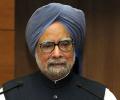
Singh, who opened up the economy as finance minister and served as prime minister for two consecutive terms, died on Thursday at the age of 92. "History will forever honour his pivotal role in the transformative 1991 reforms that reshaped India and opened its doors to the world.

A day after his appointment as the 26th governor of the Reserve Bank of India (RBI), outgoing Revenue Secretary Sanjay Malhotra on Tuesday said one must understand the economic landscape and do what was best for the economy. "Let me first go, join, understand the turf ... Here it is a different role," Malhotra said, speaking to reporters in front of North Block.

Foreign policy expert C Raja Mohan has said that the recent disengagement of troops with China in eastern Ladakh has given a small opening to India, but the "big issues" remain. He also stressed the importance of strengthening India's ties with the US for technological and economic growth.

Continuing the downward trend, retail inflation fell to a five-month low of 4.31 per cent in January, mainly due to a decline in the prices of vegetables, eggs, and pulses. The Consumer Price Index-based retail inflation was 5.22 per cent in December and 5.1 per cent in January 2024. The previous low inflation was in August 2024 at 3.65 per cent.

Led by a sharper-than-expected deceleration in industrial activity, economic growth in India slowed more than anticipated and is projected to remain at 6.5 per cent till 2026, the International Monetary Fund said on Friday. "Growth in India slowed more than expected, led by a sharper-than-expected deceleration in industrial activity," the IMF said in its latest update of the World Economic Outlook, according to which the global economy is holding steady. In 2023, India's growth rate was 8.2 per cent, which dropped to 6.5 per cent in 2024.

Nobel laureate economist Abhijit Banerjee has said the current situation in Bangladesh is unlikely to trigger a fresh round of exodus of minority Hindus into India. He believes that migration is primarily driven by social networks and economic opportunities rather than persecution. Banerjee, known for his work in poverty alleviation, further emphasized that India's overt preference for Hindu migrants from Bangladesh in the past has been a significant factor in their migration, rather than attacks on the community.

The country's real GDP growth in the first quarter will be better than the Reserve Bank's estimate of 8 per cent, economists said on Tuesday. Economists at the country's largest lender SBI pegged the growth at 8.3 per cent while domestic rating agency Icra estimated it to come even higher at 8.5 per cent. The Reserve Bank of India (RBI), which expects the GDP to grow at 6.5 per cent in FY24, has estimated a growth of 8 per cent in the April-June period.

Economists at the country's largest lender SBI on Wednesday said they see Q2 real GDP growth slowing down further to 6.5 per cent in the September quarter of this fiscal year. Amid concerns over the country's economic growth rate and if it is slowing down, the analysts said they expect FY25 growth to come "closer to" 7 per cent. It can be noted that the April-June period saw the real GDP expanding by 6.7 per cent, the lowest in 15 quarters.

The Real Effective Exchange Rate (REER) of the rupee moderated in December to 107.20 after hitting a peak of 108.14 in November, latest data released by the Reserve Bank of India (RBI) showed. The REER was 103.66 in January 2024. The rupee depreciated around 3 per cent against the dollar in 2024.

'If we truly wish to understand and apply Marx's insights today, we must reject the rigid dogmas that later 'Marxists' imposed in his name.'

The government, in the forthcoming Budget, could consider levying higher tariffs on imports to check the significant decline in rupee value witnessed in the past few months, said EY Chief Policy Advisor DK Srivastava. The noted economist argued that higher import duties would curb the demand for dollars from importers and help arrest the sliding value of the rupee, which touched a historic low of 86.70 to a dollar on January 13.

The Centre's fiscal deficit at the end of the eighth month of financial year 2024-25 touched 52.5 per cent of the full-year target, government data showed on Tuesday. In absolute terms, the fiscal deficit -- the gap between the government's expenditure and revenue -- was about Rs 8.47 lakh crore during the April-November period, according to the data released by the Controller General of Accounts (CGA).
 © 2026 Rediff.com - Investor Information - Advertise with us - Disclaimer - Privacy Policy - Sitemap - Feedback - About us - Terms of use - Grievances