
India is not a full democracy but a flawed one, according to the Economist Intelligence Unit's 2008 Democracy index. The conclusion is drawn on the basis of the country's performance on 60 indicators which measure electoral process and pluralism, civil liberties, the functioning of government, political participation and political culture.The Democracy index ranks India 35th out of 167 countries, among other nations considered 'flawed democracies'.

According to Korn Ferry Global Salary Forecast, India's salary growth for 2020 stood at 9.2 per cent. down from 10 per cent last year, while real-wage after adjusting inflation may remain constant at 5 per cent in 2020.

Executives in India and China are the most optimistic about sustainability of economic recovery, with six out of ten people reposing their faith on the turnaround in the economy, says a survey.
The world's second-fastest growing economy may also see negative inflation for the next 3-6 months triggering expectation of rate cuts by banks, the research arm of London-based Economist added.
The Economist Intelligence Unit survey, commissioned by Dubai Holding, found that almost 60 per cent respondents believe that capitalism is entering a new era of lower risk tolerance, higher regulation and slower growth.
India ranks 44th in the world in the IT industry competitiveness index 2008, moving 4 notches up from its 2008 ranking of 48 in the index.

'It is becoming clear that we will no longer see declines in GDP growth for the next few quarters.'
A recent study has revealed that companies must focus on staff to improve performance.

Despite the relaxation of the one-child policy in 2016, the number of live births per 1,000 people fell to a record low of 10.48 in 2019, down from 10.94 in 2018.
Anjalika Bardalai, senior economist and editor at Economist Intelligence Unit says fiscal deficit is the biggest downside risk to India's growth story.
Asia Pacific countries are giving a tough competition to the US and Europe when it comes to attracting and nurturing talent says the Index developed by executive search firm Heidrick and Struggles and the Economist Intelligence Unit.
India's economic growth rate is expected to moderate to 7.8 per cent in 2008-09, mainly on account of a global slowdown, says the Economist Intelligence Unit (EIU), an arm of London-based magazine Economist.Despite moderation in growth, India would continue to remain the second-fastest growing economy in Asia, said senior economist and Asia Editor of the EIU Anjalika Bardalai while briefing reporters ahead of the 13th business round table with government officials.
Americans are ahead at developing world-class teams.
India has been categorised as one of the 'flawed democracies' in the world and figures 35th in the democracy rankings unveiled in the prestigious magazine The Economist.
Human capital management is now part of all managers' performance reviews.
Commodities prices will witness a major upheaval in the coming couple of years with demand for food going up.
China and India are Asia's top two targets for merger and acquisitions in the financial services space.
What can be the easiest and best way to know a company inside out? Those saying 'befriending the company's Chief Executive Officer' might be in for a shock as a survey has found that most CEOs are in the dark about the health of their companies.
Ahmedabad's Indian Institute of Management and four other business schools from Asia have figured amongst the world's top 100 management schools in a survey published by the prestigious London-based weekly Economist's Intelligence Unit.
The countries hit hardest by the devastating tidal wave that lashed the Indian Ocean will experience slower economic growth in 2005, but the effects will not be severe, a new report has said.
Mumbai and New Delhi are among the world's cheapest cities while Tokyo and Osaka-Kobe in Japan continue to remain the most expensive, the annual Economist Intelligence Unit's Worldwide Cost of Living Survey said.

Singapore retains the title of the world's most expensive city.
Take the Rediff Biz Quiz and find out how much you know about India and its topmost B-schools.\n\n

The Economist Intelligence Unit (EIU) ranked Singapore as the priciest ahead of Zurich, Hong Kong, Geneva and Paris.

Melbourne is the world's best city to live in.

Water shortage is likely to lead to political tensions and instability in the future, warns Simon George, President, Cargill India.

The results are likely to please the Indian government, which has been trying to impress on domestic and foreign investors about its efforts to improve the ease of doing business.

Singapore retained its title as the world's most expensive city for the fourth consecutive year, while Hong Kong remained second, closely followed by Zurich at the 3rd place.

The Austrian capital is famous not only for its grand architecture, music and art, but also for its open spaces and excellent public transport, points out Uttaran Das Gupta.

Karachi is the world's cheapest cities to live in.

India has moved down from 32nd place last year and remains classified among 'flawed democracies'.

The findings revealed the biggest threat to firms comes from within.

But it scores high on firm dynamics - which is partly accidental, as it benefits from high labour turnover.

Bengaluru has been ranked among top 20 technology-rich cities in the world in a survey done by Jones Lang LaSalle.

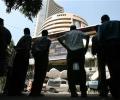
The 30-share Sensex ended down 224 points at 28,442 and the 50-share Nifty ended down 101 points at 8,606.

Qatar is the world's richest country in terms of per capita income.

India has one thing that China has - the potential to be of interest as a huge market in its own right.
 © 2026 Rediff.com - Advertise with us - Disclaimer - Privacy Policy - Sitemap - Feedback - About us - Terms of use - Grievances