
The Economic Survey on Thursday prescribed reforms in the subsidy regime in oil, food and fertiliser sectors and asked the government to review the possibility of direct cash transfer to the targeted people.

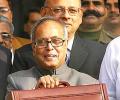
A day before unveiling the Budget, Finance Minister Pranab Mukherjee will table the Economic Survey in Parliament on Thursday which will take stock of the economy and also the impact of stimulus on industry.
India's economic revival also depends on the government's capacity to push through some critical policy reforms in the coming months, says the Economic Survey 2008-09, which was\npresented by Finance Minister Pranab Mukherjee in Parliament on Thursday.

Principal economic advisor, Ila Patnaik, is coordinating the work on Economic Survey 2013-14.

S&P in November ruled out an upgrade in the country's rating for some considerable period, citing India's low per capita GDP and relatively high fiscal deficit.

Slamming the Budget, senior Congress leader P Chidambaram on Saturday said the Modi government was in complete denial that the economy faces a "grave macro economic challenge" and it has given up on reviving the economy, accelerating growth or creating jobs. There is nothing in the Budget that leads one to believe that growth will revive in 2020-21 and the claim of 6 to 6.5 per cent growth next year is "astonishing and even irresponsible", the former finance minister said at a press conference.
The report said in the first year of Raman Singh government in 2004-2005 the food grain production registered a negative growth of 21.67 per cent from 2003-2004.

Finance Minister Pranab Mukherjee on Thursday tabled the Economic Survey for 2009-10 that says that economic recovery is weak and the high double-digit food inflation in 2009-10 is a matter of great concern.
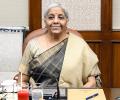
While the capital spending is being maintained at 3.1 per cent of the GDP, a little more would have boosted economic growth even further, suggests Rajiv Memani.
Finance Minister Pranab Mukherjee on Thursday tabled the Economic Survey for 2008-09 that prescribes doing away with cess, surcharges on taxes, including fringe benefit tax, and sweeping refroms in areas like petrol pricing and financial sector.

The most striking features of this Budget was its focus on simplification and improving the ease of doing business in India, asserts Kaku Nakhate.

Finance Minister Arun Jaitley on Friday tabled the pre-Budget Economic Survey in the Lok Sabha.
In recent years, as the number of government economic reports coming out in the weeks and months before the Survey has increased, its utility has diminished as a source of data and as the ministry's assessment of the state of the economy.

The Indian government's announcement of 10,000 additional seats in medical colleges next year, part of a plan to add 75,000 seats over five years, has been welcomed by education experts and stakeholders. The move aims to address the shortage of medical professionals and reduce the outflow of Indian medical students to other countries. The budget also includes infrastructure expansion at five new IITs to accommodate 6,500 more students and an allocation of Rs 500 crore to set up a Centre of Excellence in Artificial Intelligence for education.
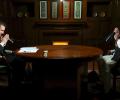
'Unsurprisingly, Trump shared Modi's podcast with Fridman on his Truth account.' 'The intentions of Trump, a transactional president, are never easy to tell.' 'We will know in the next fortnight if and when he unfolds reciprocal tariffs on Indian goods, whether Modi's flattering words made any significant difference to Trump's compass,' notes Ambassador M K Bhadrakumar.
Claiming that the "downturn is more or less over", the pre-Budget Economic Survey today projected an optimistic 6.1 to 6.7 per cent growth in the next fiscal and made a strong call for cutting subsidises.
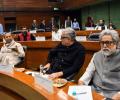
India's Parliament is set to begin its Budget session on Friday, with opposition parties poised to demand a discussion on the alleged mismanagement of the Maha Kumbh festival in Prayagraj, where 30 pilgrims died in a stampede. The opposition also accused the government of politicising parliamentary committees and pushing its agenda through its majority. The session will start with President Droupadi Murmu addressing both houses of Parliament. Finance Minister Nirmala Sitharaman will present the Union Budget on Saturday for the eighth consecutive time.

Tax administration could be improved to reduce discretion and improve accountability
Overall, the Survey warned that unless shifts in the vision of development were articulated and embraced, the Indian economy would lose the chance to move to a high-growth trajectory.
Outlining the roadmap to achieve 7-8 per cent economic growth on sustained basis, the Economic Survey on Wednesday indicated major initiatives in the Union Budget to overhaul tax system, slash deficit, contain prices and boost agriculture.
Pre-Budget Economic Survey tabled in Parliament.

The Economic Survey was tabled in the Parliament on Friday.

The Survey adopts an unfettered approach in thinking about the appropriate economic model for India. This endeavour is reflected in the sky blue cover of the Survey, Chief Economic Adviser Krishnamurthy V Subramanian said.

Of the seven surveys presented under Modi govt, predictions of three were quite close to the actual GDP growth rate, one saw the base year change in between, but the last three were way off the mark.
The robust performance of the Indian economy during the ongoing fiscal is likely to prompt the government to peg GDP growth in the 2011-12 fiscal at 9 per cent, as well as withdraw stimulus measures in the forthcoming Budget.

'I am optimistic about the Budget because of the fiscal discipline the government has committed to.'
The Finance Minister Pranab Mukherjee on Monday tabled the Economic Survey for 2008-09 that prescribes doing away with cess, surcharges on taxes, including Fringe Benefit Tax, and sweeping refroms in areas like petrol pricing and financial sector.
Ahead of the Budget 2009-10, the economic survey on Thursday suggested tax cuts and increase in government expenditure as part of another stimulus package to help the economy overcome the global shock.

The Economic Survey on Monday said the advent of Artificial Intelligence (AI) casts a "huge pall of uncertainty" with regard to impact on workers across all skill levels. The Economic Survey 2023-24 tabled in Parliament predicted that the new-age technology, while turbocharging productivity, has the potential to disrupt employment in certain sectors. The Survey described AI as "phenomenal in its rapid pace of innovation and ease of diffusion" but also cautioned that the the future of work will be reshaped by it.

'There's a misconception that all Rs 1 lakh crore will be spent immediately, leading to higher consumption of FMCG goods, travel, and vehicle purchases.' 'While some of this money will go toward consumption, not all of it will.' 'The impact depends on where people deploy their savings.'
India needs to recognise and address challenges posed by its dependence on China for critical minerals and examine the implications of phasing down coal on bank balance sheets as it accelerates its green transition, the government's Economic Survey 2023-24 tabled in Parliament on Monday said. As part of its national plan to contribute to meeting the global goal of limiting the average temperature rise to 1.5 degrees Celsius, India has committed to reducing emissions by 45 per cent below 2005 levels by 2030, achieving 50 per cent cumulative electric installed capacity from non-fossil fuel-based energy resources, and creating a carbon sink of 2.5 to 3 gigatons of CO2 equivalent through additional forest and tree cover.

Enhanced revenue generation is a priority for the government.

For the first time, Subramanian said, "the Economic Survey has embraced Big Data, and we mine this data to shed new light on the flow of goods and people within India."

This will be the first full-year Budget of the BJP-led National Democratic Alliance government since it came to power for a third consecutive term in July last year.
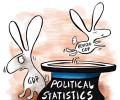
The Economic Survey 2022-23 (FY23), to be presented a day before Union Budget 2023-24 (FY24), is likely to project India's real gross domestic product (GDP) growth between 6 per cent and 7 per cent for FY24, Business Standard has learnt. The broader theme of the Survey could be on how India has dealt with two years of a global pandemic and the ongoing geopolitical disturbance, the strengths and weaknesses that emerged, and what lessons may be learnt. The much-awaited Survey will be the first one by Chief Economic Advisor V Anantha Nageswaran and his team in the finance ministry's economic division.

The production linked incentive scheme (PLI) for automobile and auto components has so far attracted a proposed investment of Rs 67,690 crore, said Economic Survey 2023-24 tabled in Parliament on Monday. A capital of Rs 14,043 crore has been invested till end-March 2024, it stated. Applicants have proposed employment generation of 1.48 lakh, against which 28,884 of jobs have been generated till March 31, 2024, the Economic Surevy 2023-24 stated.

Unlike the Advance Estimates which missed the impact of demonetisation, CEA's survey is likely to have a better take on Indian economy.
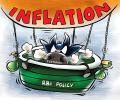
Amid a debate on the basis of a monetary policy stance, one may be curious enough to know how non-food retail inflation has behaved over the years in India. Let the eager souls catch a glimpse of facts. In the past 10 years, non-food inflation came down below 4 per cent on two occasions - pre-Covid period of 2019-20 and now in the first four months of the current financial year (FY25).
 © 2026 Rediff.com - Investor Information - Advertise with us - Disclaimer - Privacy Policy - Sitemap - Feedback - About us - Terms of use - Grievances