
Finance Minister Nirmala Sitharaman announced that India's real GDP grew by 7.8 per cent in the April-June quarter, surpassing the RBI's forecast. She attributed this strong performance to government reforms and agile economic management, reaffirming the government's commitment to expanding economic opportunities.

The Union finance ministry has constituted a high-level committee, chaired by former Central Vigilance Commissioner Suresh N Patel, to recommend structural, regulatory, and legislative reforms for India's banking sector, aiming to make banks globally competitive and support the financing needs of a developed economy.
Union Finance Minister Nirmala Sitharaman expressed strong confidence in India achieving over 10 per cent economic growth, advocating for increased technology adoption and innovation. She urged overcoming scepticism and highlighted technology's transformative role in agriculture and public sector reforms, while also launching a new fund and book at an IIT Madras event.

'Pranab-ji, had developed serious differences with P Chidambaram, and on one occasion, in 2010, I think, after expressing his frustration, he shocked me with the suggestion that perhaps it was time for a change at the top, which I understood as a hint of his long-held desire to become prime minister.'

External Affairs Minister S Jaishankar stated that India's border with China has become "more alive," necessitating a greater and sustained commitment of Indian troops. He highlighted India's enhanced military capabilities along the LAC since the 2020 Galwan Valley clashes and the significant infrastructure development in border areas over the last decade. Jaishankar also discussed the economic asymmetry between India and China, attributing it to India missing industrialisation opportunities in the 1980s and outlining India's current strategy to address this imbalance.
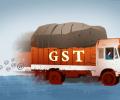
India's Goods and Services Tax (GST) collections soared by 23 per cent year-on-year to over Rs 2.31 lakh crore in October, marking the second-highest monthly mop-up ever, primarily driven by robust festive buying and strong domestic demand.

Economists highlight that resolving domestic policy bottlenecks, particularly through land reforms and improving the ease of doing business, will be critical for Prime Minister Narendra Modi's 'next-generation reforms' and India's economic transformation towards its 'Viksit Bharat' vision for 2047.

Prime Minister Narendra Modi has challenged Indian industry leaders to increase job creation and employee salaries, arguing that government tax concessions and income tax relief should translate into greater employment and economic activity. He also urged businesses to improve product quality for the domestic market and leverage new trade agreements for global competitiveness.


Finance Minister Nirmala Sitharaman announced that the Goods and Services Tax (GST) Council's October 7 meeting will focus on 'GST 2.0' process reforms, including e-invoicing and input tax credit rules, while also addressing complex issues surrounding the taxation of the digital economy and cryptocurrency.
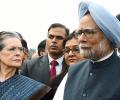
Former Indian Prime Minister Manmohan Singh passed away on Thursday night at the age of 92. He was brought to the emergency department of AIIMS Delhi in critical condition after "sudden loss of consciousness."
Singapore's Fullerton Fund pumps more into China, cuts exposure in India

The Finance Ministry is set to commence its pre-budget meetings on October 12, initiating preparations for the Union Budget 2027-28, which will be the fourth budget of the Modi 3.0 government and the tenth for Finance Minister Nirmala Sitharaman.

'It is very significant that she mentioned that the issue of her foreign origin was not restricted to the BJP or Sangh Parivar, but was also very much alive in her own party.'

'The day we start making rules purely along caste lines, we only divide society further. That's the conversation the government needs to have, and soon.'
His statement comes in the wake of a Supreme Court order halting divestment in two oil PSUs.

Educationists and policy experts at the Indian Statistical Institute (ISI) in Kolkata emphasised the critical need for developing a robust database, leveraging modern technology and artificial intelligence, to enhance effective policymaking. The two-day conclave, featuring prominent speakers like Prof S Mahendra Dev, highlighted the ongoing transformation in official statistics and the importance of public trust and research.

NITI Aayog has called for a fundamental overhaul of urban governance in India, advocating for empowered city governments, directly elected mayors with five-year terms, and greater financial autonomy for urban local bodies to manage the country's rapidly growing urban population.
The International Monetary Fund (IMF) has increased India's growth forecast to 7 per cent for 2026-27, up from 6.4 per cent, attributing this robust outlook to resilient domestic demand and strong services activity, positioning India as one of the fastest-growing major economies.
A CII white paper released Thursday outlines a strategy for India's media and entertainment sector to achieve a USD 100 billion valuation by the early 2030s, requiring an annual growth rate of 15 per cent and significant policy reforms. The paper identifies key areas for growth, including broadcasting reform, anti-piracy measures, and investment in regional markets.
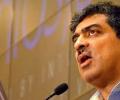
Nandan Nilekani, head of the task force on exam reforms, stated on Tuesday that technology and a systematic approach can solve the issue of question paper leaks. He suggested generating exam papers from a large question bank at the last minute to remove economic incentives for leaks and also proposed moving towards computer-based testing.
Britain hopes that after the forthcoming Lok Sabha elections the next government will carry forward the economic reforms process that should see India emerging as the third biggest economy in the world over the years to come.
India's Finance Minister P Chidambaram has described the country's banking sector as the driving force of economic reforms, though New Delhi is still to fully open the sector to foreign financial institutions.

India's Next-Gen GST reforms are proving instrumental in driving robust economic growth, simplifying tax compliance, and fostering a more inclusive business environment across the nation, aligning with the vision of a 'Viksit Bharat', writes Finance Minister Nirmala Sitharaman.
After Congress, the United Progressive Alliance on Thursday endorsed government's recent tough economic decisions and discussed the need "to do more reforms".
Hindutva is being conflated with good governance and economic performance in a determined bid to promote Narendra Modi, says Sonali Ranade

If the new MDR regime is rolled out from the middle of this month, as scheduled, it should count as one of the boldest political actions by the Modi government on an economic-policy issue, and a signal that it is less worried about erosion of political capital it draws from one of its key constituencies, notes A K Bhattacharya.

France is preparing for fresh demonstrations on October 24 with a "massive" police deployment and extended curfews, following days of violent unrest. The protests, initially sparked by school conditions, have broadened into a nationwide campaign against rising living costs and declining public services, leading to over 2,500 arrests and significant damage.
Ministry of Information and Broadcasting Secretary Chanchal Kumar outlined the critical factors for the media and entertainment sector's next growth phase, including robust intellectual property, sustainable revenue models, and disciplined investments. Speaking at the CII Big Picture Summit, he emphasised the government's role in fostering an environment for creative enterprises and addressing challenges posed by digital platforms and AI. The CII White Paper also projected a USD 100 billion Indian M&E sector, advocating for stronger IP and regulatory reforms.

Chinese state media on Wednesday said Prime Minister Narendra Modi's economic reforms have achieved "little progress" and asserted that the Chinese economy was five times bigger than the Indian economy.

Shriram Finance, a leading Indian NBFC, is aggressively expanding its gold loan and electric vehicle (EV) financing segments, targeting a Rs 20,000 crore gold loan portfolio within two years and expecting significant growth in EV disbursements.

Popular anguish over the slow pace of economic reforms has grown more intense in the last few weeks even as Congress President Sonia Gandhi takes charge as the head of the National Advisory Council and Prime Minister Manmohan Singh's grip on the policy-making apparatus of the United Progressive Alliance (UPA) government appears to get weaker.
Asking the state finance ministers to resolve the pending issues expeditiously, the Centre on Thursday said introducing Goods and Services Tax was critical for economic reforms.

Union Finance Minister Nirmala Sitharaman announced the government's plan to establish a high-powered committee to examine reforms for the banking sector, aligning it with the vision of a 'Viksit Bharat' (Developed India) and India's next phase of growth.

Russian Foreign Minister Sergey Lavrov has publicly supported India's bid for a permanent seat on the United Nations Security Council. He stated that any reform of the UNSC should not grant additional seats to Western countries like Germany and Japan, citing their "militarism and revanchism." Instead, Russia advocates for increased representation from Asia, Africa, and Latin America, specifically backing India and Brazil, while also emphasizing the need to address African interests.

Chief Economic Advisor V Anantha Nageswaran stated that the second half of the current fiscal year (FY27) is expected to be challenging due to increased downside risks to global growth and rising interest rates worldwide.

The Insurance Brokers Association of India (IBAI) has warned that the IRDAI's proposed overhaul of insurance distribution practices could lead to a 70 per cent fall in revenues for intermediaries and result in 10 lakh job losses, citing concerns over the tight feedback deadline and the global uniqueness of the proposed architecture.
