
Companies are investing heavily in complex injectables, respiratory therapies and biosimilars to improve margins and diversify portfolios.

The launch highlights the growing maturity of India's nuclear medicine ecosystem.
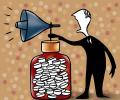
For decades, multinational pharmaceutical companies and Indian drugmakers worked in ways that supported each other: MNCs brought innovation and brands, while Indian companies built scale through generics and cost efficiency. There was an important overlap - generic drugs - but this is shrinking fast. And the consequences are reshaping India's gigantic pharmaceutical market.

Indian pharmaceutical companies are strategically increasing investments in the US market, focusing on specialty drugs, complex generics, respiratory products, and local manufacturing, despite a nearly 10 per cent fall in exports to the US in FY26 due to pricing pressure and competition in traditional generics.

'While higher prices may create some financial burden for patients and caregivers in the short term, uninterrupted access to treatment remains the greater priority.'

Hospital stocks have emerged as a strong theme in 2026, outperforming benchmark indices due to robust earnings growth, improved occupancy, higher average revenue per occupied bed, and aggressive expansion plans by major chains.

Dr Reddy's Laboratories has received approval from Health Canada to sell a generic version of the diabetes drug semaglutide, making it the first company to get market authorisation for a generic semaglutide injection in Canada and the first in a G7 country.
At present, there is no provision under Drugs Rules, 1945 to address issues of wrong information to obtain regulatory approvals.

Inspections conducted across 49 entities including pharmacies, wholesalers, and clinics to detect violations and misleading marketing practices.

India's pharmaceutical industry is experiencing increased bulk drug prices, particularly for APIs from China, following the escalation of the West Asia crisis in March. While current inventories provide a temporary buffer, concerns are mounting over the availability of key solvents and feedstocks, potentially leading to manufacturing disruptions and shortages in specific drug categories.
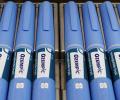
The fast-growing GLP-1 market, propelled by lower-cost generics following patent expiry, is widening availability beyond patients with obesity and diabetes -- but also driving unsupervised, appearance-led demand, according to doctors.

Indian drugmakers Eris Lifesciences, Wockhardt and Lupin are prepping to cash in when Danish company Novo Nordisk bows out of the human insulin pen market by the end of this year and creates an opportunity estimated to be worth Rs 600-800 crore in the domestic market. Some self-use disposable pens are pre-filled with insulin and others can be reused with new cartridges.

At the heart of this debate is Section 3(d) of the Patents Act, a safeguard designed to prevent drugmakers from extending monopoly protection through trivial modifications to existing medicines.

'Any promotional activity carried out under the pretext of disease awareness, influencer engagement, corporate campaigns, or similar activities that create brand recall/product visibility of the prescription shall also be treated as violations.'

Novak Djokovic suggested that Serena Williams could see Wimbledon as the ideal venue to return to tennis.

While the introduction of branded generics is likely to accelerate volumes for GLP-1 agonists, value growth may moderate because of price erosion.

For patients, the immediate impact is a reduction in the final cost of therapies that often run into lakhs per month.

Hyderabad is rapidly emerging as a strategic hub for multinational companies (MNCs) deepening their focus on artificial intelligence (AI), life sciences, and global capability centres (GCCs), supported by the city's strong pharmaceutical (pharma) base, deeptech talent pool, and a policy environment that encourages high-value investment.
The semaglutide patent expiry next year could unleash a wave of generic versions from Indian drugmakers, with prices expected to go lower -- at least 80 per cent.

Pharma major Dr Reddy's Laboratories (DRL) reported a 14 per cent year-on-year (Y-o-Y) drop in consolidated net profit to Rs 1,210 crore in the December quarter of FY 2025-26 (Q3FY26) on low sales of cancer drug Lenalidomide in the North American market. The firm's revenue from operations grew to Rs 8,727 crore in Q3FY26, a 4.4 per cent Y-o-Y increase from Rs 8,357 crore recorded for the same quarter last year.

'India is clearly moving toward more targeted treatment pathways in high-burden cancers.'

After completion of its mandatory tender offer in Fortis Healthcare and Fortis Malar Hospitals, Malaysian health care giant IHH Healthcare is aiming to add 2,000 beds in a bid to double down on value creation in India. IHH, which is Asia's largest multinational private healthcare provider, currently has over 5,000 beds across a combined network of 35 hospitals and 11 states.
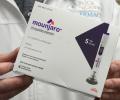
'As more patients are prescribed these drugs, intolerance due to gastrointestinal and other side effects will become more visible, leading to higher discontinuation rates.'

Delhi-based pharma major Mankind Pharma on Wednesday announced a collaboration with OpenAI to institutionalise artificial intelligence (AI) across its value chain, making it one of the first few Indian pharmaceutical companies to fully integrate advanced AI into its core operations.

The bumper rise is due to the rising demand for the drug and patients' gradual shift towards its higher dosage.
Any potential tariffs on pharmaceutical imports into the US are unlikely to impact the credit profiles of Indian firms except for a short-term pricing blip, according to a report by India Ratings and Research (Ind-Ra). The report stated that the US generics market contributes around 35 per cent to the total revenue of the leading Indian pharma firms.
Indian Pharmaceutical Alliance (IPA) on Friday said US President Donald Trump's move to impose 100 per cent import tariffs on pharmaceutical drugs from October 1 will impact only patented and branded products, not generic medicines.

Tennis legend Monica Seles on Tuesday revealed that she was diagnosed with myasthenia gravis -- a neuromuscular autoimmune disease -- three years ago.
Concerns over weakening demand for Indian pharmaceutical (pharma) drugs in the US - their largest export market - have weighed heavily on investor sentiment this year. While the Nifty 50 has gained 6.02 per cent year - to - date (as on September 15), the Nifty Pharma index has declined 5.18 per cent, National Stock Exchange data shows.
The Indian pharmaceutical industry is likely to benefit from a major wave of patent expiries in the US, as small-molecule drugs worth $63.7 billion are expected to go off-patent between 2025-29, a 65 per cent rise over the previous five years, according to a report by Antique stock broking limited.
Prices for Indian consumers are expected to come down significantly from the current Rs 17,000-Rs 26,000 monthly.

Indian drugmakers supply 47 per cent of the generic medicine requirements in the US, and tariffs would have increased prices in the US domestic market for patients, who are already dealing with drug shortages.
'Gift-giving' - from free dinners and drug samples to promotional merchandise - seems to be driving drugmakers' marketing - a marketing prescription deeply entrenched in the industry. This is a well-oiled racket that sees pharmaceutical (pharma) companies 'gifting' doctors to push their respective drugs under the guise of marketing. But is there a cure in sight to end this unhealthy alliance? The recent controversy following the income-tax raids on Bengaluru-based drugmaker Micro Labs, makers of popular paracetamol brand Dolo-650, has brought this to the fore, again.

After Chennai, it is Coimbatore, Madurai, and Tiruchirappalli, that are emerging as manufacturing hubs. Coimbatore is India's top Tier-II city in terms of the number of GCCs, according to a report by Cushman & Wakefield.

According to industry experts, there are more than 10,000 drug manufacturers in the country and most of them are small-sector units operating in the generic segment. With a large number of drugs going off-patent in developed markets like the US and Europe, Indian companies are expected to garner a lion's share in the segment.

India rejects patent on Pfizer's arthritis drug

Among the commonly used analgesic formulations (painkillers) found NSQ are combinations of paracetamol with ibuprofen, diclofenac and mefenamic acid. Medications using these combinations are commonly used to treat fever, mild migraine, period and muscle pain.
Credit Suisse analysts cut their rating on Sun Pharma stock to 'neutral' from 'outperform

And when an inspector asked about the contents of unlabelled vials in the laboratory glassware washing area, a plant worker dumped them down a sink and said the contents could not be determined, according to a July 18 letter from the US Food and Drug Administration to Wockhardt, which makes sterile injectable drugs and various forms of insulin.
Around six weeks ago, Sun Pharmaceutical Industries, India's largest drugmaker, suffered a setback, which led to a selloff in the share. The US District Court of New Jersey granted Incyte's request for a preliminary injunction against Sun Pharma's launch of Leqselvi, a drug that treats alopecia.
