
Electric two-wheeler (e2W) maker Ather Energy has submitted preliminary papers to the Securities and Exchange Board of India to raise funds through an initial public offering (IPO). According to the draft red herring prospectus (DRHP), the IPO will comprise a fresh issue of equity shares valued at Rs 3,100 crore, alongside an offer for sale of 22 million equity shares by its promoters and investor shareholders.

US-based private equity firm Blackstone and Bengaluru-based real estate developer Sattva Group filed the draft initial public offer (IPO) papers for India's biggest real estate investment trust (Reit) named Knowledge Realty Trust to raise ?6,200 crore. The Reit will be the largest in India in terms of net operating income (NOI) and gross assets value (GAV).

Food and grocery delivery major Swiggy on Thursday filed its updated draft papers with capital markets regulator Sebi to raise funds through its much anticipated initial public offering (IPO). The proposed IPO comprises a fresh issue of equity shares worth Rs 3,750 crore and an offer-for-sale (OFS) of 18.52 crore equity shares by existing shareholders, according to the updated draft red herring prospectus (UDRHP). Market sources have pegged the company's IPO size at over Rs 10,000 crore.
For food aggregator platform Swiggy, quick commerce (qcom) is proving to be a better growth opportunity than food delivery. Its qcom arm Instamart is rapidly outpacing its core food delivery vertical across several key financial metrics, the company's recently filed draft red herring prospectus (DRHP) shows.

In a bid to expedite the processing of initial public offerings (IPOs), the markets regulator will now seek additional information from lead managers (LMs) when they file draft documents. Last week, the Securities and Exchange Board of India (Sebi) sent a letter to bankers, listing over two dozens of new disclosure requirements. The average time Sebi takes to clear the draft red herring prospectus (DRHP) - a document companies must file before accessing public funds - has dropped to less than three months in 2024 (until May 31).

India's healthcare and pharmaceutical sectors raised Rs 14,811 crore through initial public offerings (IPOs) in 2024, the largest since 2019, driven by strong domestic demand amid expanding global opportunities. According to data, key contributors to the record fundraising included Sai Life Sciences (Rs 3,043 crore), IKS Health (Rs 2,498 crore), and Sagility India (Rs 2,107 crore).

The growing complexity of E2Ws and the evolving threat landscape make it challenging to guarantee complete immunity from attacks.

During the first eight months of CY24, 50 IPOs mobilised Rs 53,453 crore.

The IPO filing-to-approval lapsing ratio this year is the best in three years, underscoring the improvement in the IPO market's buoyancy.

Hyundai Motor India Ltd, the Indian arm of South Korean automaker Hyundai, has received capital markets regulator Sebi's approval to float an initial public offering (IPO), people familiar with the development said on Wednesday. This development marks a significant milestone for the Indian industry, as it is the first automaker initial share-sale in over two decades, following Japanese automaker Maruti Suzuki's listing in 2003.

The Securities and Exchange Board of India (Sebi) has intervened in the matter concerning alleged irregularities by Trafiksol ITS Technologies, which had come out with a Rs 45 crore initial public offering (IPO) last month. In an ex-parte order, the market regulator has said it will undertake a detailed examination into the disclosures made by the small and medium enterprise (SME) company in its draft offer document. BSE had halted the listing of Trafiksol, a software provider for traffic systems, amid complaints around use of the issue proceeds and wrongful disclosures.
The IPO market is set to be bustling next week, with 11 companies like Vishal Mega Mart, TPG Capital-backed Sai Life Sciences and fintech firm One Mobikwik Systems gearing up to launch their initial share sales, collectively aiming to raise nearly Rs 18,500 crore. Other mainboard IPOs to be launched during this period are Inventurus Knowledge Solutions Ltd and Blackstone-owned diamond grading firm International Gemmological Institute (India) Ltd.
The primary market is expected to remain vibrant, with at least 10 companies, including supermart major Vishal Mega Mart and Blackstone-owned diamond grading firm International Gemmological Institute (India) Ltd expected to raise a combined Rs 20,000 crore in the next month, merchant bankers said. Education-focused NBFC Avanse Financial Services, TPG Capital-backed Sai Life Sciences, hospital chain operator Paras Healthcare, and investment bank DAM Capital Advisors are also among the companies planning to launch their IPOs in December, they added. The companies aim to raise a total of Rs 20,000 crore through their public offerings.

In a step towards investor awareness, the Securities and Exchange Board of India (Sebi) has directed companies planning to launch initial public offers (IPOs) to release a 10-minute video containing key information related to the issue. The initiative is to make it easier for investors to understand the features of the public issue and the company.

Lithium-ion cells, primarily imported from China, are likely to become cheaper following punitive tariffs imposed by the US on Chinese battery cells.
The primary market will remain abuzz with more than half a dozen companies, including Hyundai Motor India, Swiggy, and NTPC Green Energy, lined up initial public offerings over the next two months to raise around Rs 60,000 crore, merchant bankers said. Apart from these three firms, Afcons Infrastructure, Waaree Energies, Niva Bupa Health Insurance, One Mobikwik Systems, and Garuda Construction are among the companies planning to launch initial public offerings (IPOs) during October-November, they added. Together, these firms are looking to raise Rs 60,000 crore through their IPOs.
Draft Red Herring Prospectus (DRHP) filing continued to be robust in October, signifying the optimism in the initial public offer (IPO) market despite the recent turbulence in equities. In October, 17 companies filed their offer documents for IPOs. The rush in filings has made August-October 2023 the best three-month period for DRHP filings since July-September 2021.

IPOs worth Rs 50,000 crore including Hyundai, NTPC Green Energy and Swiggy are set to hit the market in late October or early November.

As there is a moderation in car sales, dealer stock levels across the entire industry have surged to alarming heights. However, the situation is under control at HMIL.
Pre-initial public offering (IPO) allotments have lost favour amid buoyancy in the market and increase in average float size this year. After hitting a record high in 2023, they have come to a halt, with just three companies opting for such placements totalling Rs 235 crore. This compares to eight deals worth Rs 648 crore during the same period of the previous year.

Ola Electric, the SoftBank-backed electric vehicle (EV) maker, is likely to pursue a valuation of approximately $4.5 billion in its upcoming initial public offering (IPO), marking about 18 per cent decrease from its last funding round valuation of around $5.5 billion, according to industry sources. The Bhavish Aggarwal-founded firm aims to file for the IPO by next month, according to people familiar with the matter. "The strategy is to price the IPO attractively for investors, fostering long-term growth and wealth creation," said a source.
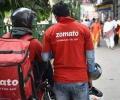
The filing of Swiggy's DRHP has led to direct comparisons with Zomato, which is a direct competitor in food delivery and the fast-growing quick-commerce segment where Blinkit (owned by Zomato) faces off against Instamart (and Zepto). In Q-commerce, Flipkart, Amazon, Reliance and Big Basket are all entering the space. All of them have deep pockets, hence competitive intensity will rise going forward.

Veteran industrialist and former Tata Group chairman Ratan Tata is looking to sell all 77,900 shares of Brainbees Solutions Ltd, which owns omnichannel baby and mother-care product platform FirstCry, in the upcoming IPO. Tata became an investor in the company in 2016 by infusing Rs 66 lakh initially. He was allotted preference shares of the company.

'Many do not have robust business models, and their prospects of survival and long-term growth are poor.'

Oravel Stays Ltd, which operates travel tech firm and brand OYO, on Wednesday said it will refile its draft public listing application by the middle of next month. Earlier this month capital markets regulator Sebi had asked the company to refile the draft initial public offering (IPO) papers with certain updates. "We are working on updating all key sections simultaneously.

The Indian entrepreneurship success story will soon see one more company debuting on the public markets. Ola Electric, the electric vehicle (EV) company, has become the first such firm that has filed its draft red herring prospectus (DRHP) with the Securities and Exchange Board of India for its initial public offering (IPO). This is a fresh issue of equity shares of up to Rs 5,500 crore and an offer for sale (OFS) of more than 95 million equity shares at a face value of Rs 10.
The filing of offer documents with the capital markets regulator - Securities and Exchange Board of India - has more than halved this financial year (2022-23, or FY23) as the outlook for new share sales has worsened, following correction in the secondary market. So far in FY23, 66 companies filed their draft red herring prospectus (DRHP), as opposed to 144 in the preceding financial year (2021-22, or FY22).
Ola Electric's initial public offering (IPO), of Rs 5,500 crore, is essentially aimed at ensuring the company maintain its top position in the electric two-wheeler segment, with incumbent players TVS and Bajaj Auto giving a fight to the number one player in market share. Most experts and competitors say the amount being raised is in line with the investment required to expand the electric-vehicle (EV) business. There are two discernible trends in the competitive electric two-wheeler market.

As the political uncertainty settles down, investors are reviewing their assumptions about the power sector. Demand here is likely to continue to grow strongly in the long-term at around 5-6 per cent CAGR (compounded annual growth rate) during the next 6-7 years. Given policy continuity, several trends will persist.
SoftBank-backed hospitality major OYO is planning to reduce the number of shares it aims to sell through public listing because of reduced capital requirements and technology headwinds. This comes at a time when valuations of start-ups, including that of OYO, have taken a hit. "OYO earlier filed papers for its IPO (initial public offering) based on its funding requirements at the time.

'The success of one or two IPOs does not dictate whether the upcoming IPOs will be successful or not, but it certainly indicates that the markets and investors are enthusiastic about startup IPOs.'
The move might delay the Gurugram-based hospitality unicorn's initial public offering (IPO). OYO filed preliminary documents with the Securities and Exchange Board of India (Sebi) in September 2021 for a Rs 8,430 crore IPO.

Layoffs, corporate restructuring, governance and most importantly profitability: The 14 Indian startups that plan IPOs this year are pulling out all the stops to ensure successful market debuts.
The success of recent IPOs and the stability in the secondary market are propelling many firms and investment bankers to remove their IPO plans.

Zaggle Prepaid, Cyient DLM, Healthvista India, Rashi Peripherals and Vishwaraj Sugar Industries have obtained the green signal to launch their initial public offerings (IPOs). The approvals come at a time when capital raising by way of IPOs has slowed to a crawl, with only four issues hitting the market so far this calendar year. Recently, the Securities and Exchange Board of India (Sebi) issued final observation letters on their draft red herring prospectuses (DRHPs), which is akin to getting approval to hit the markets.

Japanese investment giant SoftBank is looking to partially exit from three startups which are aiming at an IPO next year - Ola Electric, Swiggy and First Cry. But its decision will depend on the size of the offer for sale pool in each of the companies. According to sources aware of the strategy, Softbank invested over $850 million collectively in these companies whose value conservatively would go up more than 4.3 times to around $3.7 billion, based on preliminary estimates of their projected valuation when they go public next year.
The government is planning to soon file the final papers for LIC IPO with market regulator Sebi, which will provide details about the price band, discount for policyholders and retail buyers, and the actual number of shares to be put on the block, an official said. The government is presently in the wait-and-watch mode because of the market volatility induced by the Russia-Ukraine war and will decide on the timing of the initial public offering (IPO) of Life Insurance Corporation (LIC). "We have got the approval of the DRHP and the next step would be to file the RHP, which will give details of the price band and the actual number of shares.

Companies, which missed out on listing earlier, are giving it another shot but with significantly-reduced issue sizes. In the recent past, companies such as TVS Supply Chain Solutions, Suraj Estate Developers, and ESAF Small Finance Bank have re-filed their draft red herring prospectuses (DRHPs) with the Securities and Exchange Board of India (Sebi). This came after they slashed their issue sizes by 20-60 per cent.

The Securities and Exchange Board of India (Sebi) has mulled introduction of confidential initial public offering (IPO) filings and "pre-filing" of offer documents, a move aimed at giving issuers flexibility and alleviating concerns around privacy. Industry players said the concept, if implemented, would give a fillip to the domestic capital markets, ease the process and encourage more companies to go public. To be sure, the proposals are still at a discussion stage with Sebi just floating a consultation paper seeking public feedback.
IPO-bound hospitality major Oyo's India Chief Executive Officer (CEO) Ankit Gupta and the head of its Europe business Mandar Vaidya have resigned. A company spokesperson told Business Standard that the two had moved on from their roles six months ago in March 2023. During the same period, Oyo had rejigged its top management, where the company's COO Abhinav Sinha was reassigned as Chief Product and Technology Officer, while Chief Business Development Officer Anuj Tejpal was reappointed as Global Chief Merchant Officer.
