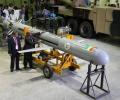
This was the fifth experimental test of the homegrown missile system.

India's long-criticised Akash anti-aircraft missile is now blazing towards success. After years of rejection from the military, the Akash is being accepted as a world-class missile.

Some parties complained to the Election Commission alleging violation of the model code.

'She must first change the Rules of Business 1961 that makes the defence secretary and not the defence minister responsible for the defence of the country!' says Colonel Anil A Athale (retd.)

Dhanteras, the prime minister said, has become even more special.
"Agni-1, surface-to-surface single stage missile with 700 km range, will be taken up for test on Sunday," sources said, adding that Defence Research Development Organisation and operational strategic units of army and naval forces would jointly conduct the operation.
K Santhanam, former Defence Research and Development Organisation scientist, who has rubbished the nuclear test at Pokhran in 1998 told journalists that he believed India neede to conduct two more tests to perfect the thermo-nuclear technology required to make a Hydrogen bomb. Santhanam maintained that simulations or computer-based tests were not enough to perfect thermo-nuclear technology. His statements are an antithesis of the Indian governments' position on this issue.
India's ranking in the Competitive Industrial Performance (CIP) index of the United Nations Industrial Development Organisation (Unido) has slipped by three notches, even as the country's rapid export growth made South Asia the fastest growing region in exports of manufactured goods.
India on Sunday test-fired the 290-km range BrahMos cruise missile from the Integrated Test Range at Chandipur off the Orissa coast. "It was a user's trial by the defence forces," said a Defence Research and Development Organisation official. "User's trial of BrahMos conducted by the Indian Army was successful," ITR Director S P Dash said after the missile blasted off from a mobile launcher at nearly 11.35 am from the launch complex-3 of the test range.

The surface-to-surface Prithvi-II missile is capable of carrying 500 kilogram to 1,000 kg of warheads and is thrusted by liquid propulsion twine engines
Dismissing a top nuclear scientist's contention that Pokharan II was not a complete success, Atomic Energy Commission chief Anil Kakodkar on Friday said the tests in 1998 achieved '100 per cent desired results'.Speaking at a function organised by the Raja Ramanna Centre for Advanced Technology in Indore, Kakodkar said, "Pokhran II tests were a complete success and they achieved 100 per cent desired results."
Ajai Shukla presents an action plan for Defence Minister Rajnath Singh to fix the systemic weaknesses in defence.
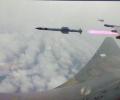
India joins exclusive club of US, Europe, Russia and China.
In the midst of the controversy over the success of the 1998 thermonuclear test, nuclear scientist P K Iyengar has said the views of former Defence Research and Development Organisation scientist K Santhanam on the issue are the 'clincher'. There is a "strong reason to believe that the thermonuclear device had not fully burnt and, therefore, further testing was called for," Iyengar, a former Atomic Energy Commission chairman, said.

The missile hit a sea-based target in the Bay of Bengal from the combat jet.
K Santhanam, a retired Defence Research and Development Organisation scientist, on Monday accused former Atomic Energy Commission chief Anil Kakodkar of 'ignoring facts' about the yield of the nuclear tests done at Pokhran in May 1998, calling him 'a liar' motivated by institutional loyalties.

The massive exercise code-named Iron First 2016 would involve the participation of 181 aircraft departing from multiple bases, and demonstrate a synchronized aerial ballet that would showcase its deadly combat capability over the entire spectrum of aerial operations.

The tests were conducted by the Indian Air Force, which will be the first service to induct the Akash missiles in its inventory.

The defence ministry on Thursday rejected senior Defence Research and Development Organisation scientist K Santhanam's assertion that the 1998 Pokhran II nuclear tests were not fully successful, adding that India has a meaningful number of nuclear weapons and an effective delivery system to go with it.
Defence Minister A K Antony called upon the private and public sector on Tuesday to join hands to help India achieve self-reliance in defence production, asking them to set up a large, modern manufacturing base in the country.
"We will be embarking on UCAV, which will be an unmanned aerial vehicle with weapons. This will not only do surveillance but fire on identified targets," Dr V K Saraswat, Scientific Advisor to Defence Minister and DRDO Director General, told media-persons in Bengaluru.

Senior BJP leader L K Advani on Thursday seemed to echo the sentiments of Congress President Sonia Gandhi on the attitude of leaders when he said there was a need to change the image of "the ugly Indian politician".

The vessel will be used to carry out technical trials of underwater weapons and systems.
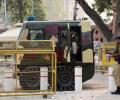
The vehicle can attain a maximum speed limit of 25 km per hour and is the first of its kind in the small variants of bullet proof vehicles.

A noted defence scientist on Wednesday rejected suggestions that China's new missile Chaoxun-1 (CX-1) was a copy of Indian supersonic cruise missile BrahMos. The technology used in CX-1 and BrahMos, an Indo-Russian joint production, was completely different, said A Sivathanu Pillai, who formerly served as Chief Controller of Research and Development at Defence Research and Development Organisation.

Santhanam also sought to counter claims by Narayanan and others in the establishment that he was not privy to the test measurements and information on Pokhran-II tests.
Former Defence Research and Development Organisation scientist K Santhanam, who had questioned the success of the thermonuclear device during the Pokhran-II tests, has favoured an inquiry to determine the results of the 1998 experiments, saying creation of nuclear power could not be based on myths.

If you really want to benefit from Digital India, you have to first change your mindset, says Sam Pitroda
The indigenous Kaveri aircraft engine, soon to make its debut flight, lacks the muscle needed by India's Tejas light combat aircraft, which the engine was designed to power. In its present form, the Kaveri will never power a modern fighter. The Indian Navy is snapping up the Kaveri for powering its growing fleet of warships.
India does not need to carry any more nuclear tests, Atomic Energy commission chief Anil Kakodkar said on Wednesday in the backdrop of the controversy over whether the 1998 Pokhran thermo-nuclear explosion was a fizzle.
'There is a change in the administration in the United States of America. They are bound to further pressurise India to sign the CTBT. In such an event it was necessary to make such a statement or speak the truth on the issue so that India does not rush into signing the CTBT.'
The government, in the wake terror threats, is planning to set up a centralised system to monitor communications on mobile phones, landlines and the Internet.

In 2013, India had displayed the Inter Continental Ballistic Missile Agni V during the Republic Day Parade. The chief guest at that time was Bhutanese King Jigme Khesar Namgyel Wangchuck.
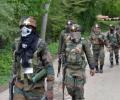
Army can detect terrorists who might be hiding in wall cavities or false ceilings.
DRL, Tezpur is harnessing all this spice into military applications, such as high-effectiveness tear gas. Meanwhile, the World Wildlife Fund asked DRL to explore the possibility of using Naga chilli to keep wild elephants away from villages and fields.

Suspense over the multi-billion dollar Rafale fighter plane deal continued on Friday as French Ambassador Francois Richier said a "complex negotiation" is going on, just two days ahead of the visit of his President Francois Hollande to India.
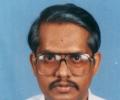
Eminent scientist S Christopher was on Thursday appointed as the director general of the Defence Research and Development Organisation for a two-year term.

The warship is equipped with surface-to-surface missiles, surface-to-air missiles and anti-submarine rocket launchers. It is also capable of carrying two anti-submarine warfare helicopters.

Inducted into Indian armed forces in 2003, the nine-metre-tall, single-stage liquid-fueled Prithvi II is the first missile to be developed by DRDO under India's prestigious Integrated Guided Missile Development Program.

Santhanam recently stirred a controversy claiming that the nuclear tests done in 1998 were not successful as projected at that time.
 © 2026 Rediff.com - Investor Information - Advertise with us - Disclaimer - Privacy Policy - Sitemap - Feedback - About us - Terms of use - Grievances