
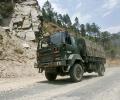
Chinese troops are maintaining an aggressive posture and showing no signs of retreating from the Daulat Beg Oldie sector where they have pitched their five tents and are getting regular supplies through trucks. According to reports sent to the Union home ministry, the Chinese side was patrolling the DBO sector, 19 km deep into Indian territory, refusing to end the face-off which has entered the third week.

A day after rejecting any incursion by its troops in India's Ladakh region, China said both countries should work together to resolve the boundary dispute to "create good conditions for the sound development of bilateral relations".

India raised the issue with China last week immediately after the incident of Chinese incursion came to light.

If China's White Paper figures are authentic, the Indian Army, with 1.2 million soldiers, is 50 per cent larger than the PLAA.Ajai Shukla reports

The chief was also briefed extensively about the air maintenance operations in support of the Indian Army and the paramilitary troops there.

Could some frustrated Chinese generals have decided to teach India a lesson to sink Xi Jinping's world dream, asks Claude Arpi.

After the pullout by Chinese troops from Daulat beg Oldi area of Ladakh, infrastructure development programme along the Line of Actual Control is expected to be stepped up besides beefing up of the presence of Indian army there.

Showing no signs of withdrawing from the Indian territory after their incursion in Ladakh two weeks ago, Chinese troops have erected an additional tent in the Daulat Beg Oldi sector raising to five the number of such structures in the area.
The military gap between India and China is growing steadily. Clearly, China's negotiating strategy is to resolve the dispute when the Chinese are in a much stronger position in terms of comprehensive national strength so that they can dictate terms, says Brigadier Gurmeet Kanwal (retd).
The military gap between India and China is growing steadily. Clearly, China's negotiating strategy is to resolve the dispute when the Chinese are in a much stronger position in terms of comprehensive national strength so that they can dictate terms, says Brigadier Gurmeet Kanwal (retd).
We have seen greater Chinese activism in the South and East China seas, but not across the Sino-Indian border. If the Chinese troops stay put in the Burthe area and construct defensive structures, that will be an indicator of their deciding to follow a similar policy of activism across the Sino-Indian border, says B Raman.
India and China are in touch to resolve the situation arising out of the 'deep incursion' by Chinese troops, who entered the Indian territory in Daulat Beg Oldi sector in eastern Ladakh and erected a tented post. According to government sources, the issue was raised by India after the incident came to light some time ago.

India and China made progress in five-six friction points along the Line of Actual Control in eastern Ladakh through talks in the last three years and efforts are underway to resolve the remaining issues, External Affairs Minister S Jaishankar said on Monday.
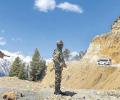
China and India have agreed to work to maintain peace along the Line of Actual Control and resolve the border standoff through talks while implementing the consensus reached between the two countries' leadership that 'differences' do not escalate into 'disputes', a top Chinese official said.
The Chinese intrusion into Indian territory in Ladakh seemed to be a trial balloon for dealing with troublesome Indian positions
'The supreme art of war is to subdue the enemy without fighting' said the famed ancient Chinese military strategist Sun Tzu. That seems to be the ploy behind the Chinese intrusion in Ladakh, says Colonel (retd) R Hariharan

India is likely to send an army contingent to Daulat Beg Oldi area in Ladakh amid the failure of the flag meeting to end the impasse on the incursion issue with the Chinese side refusing to leave, claiming it to be a part of their territory.
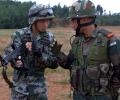
The Indian side is expected to present specific proposals at the talks to deescalate tension in Pangong Tso, Galwan Valley and Demchok -- the three areas in eastern Ladakh where the two sides have been on a bitter standoff for last one month, the sources said.

Defence Minister Rajnath Singh on Saturday asserted that the government will not allow India's pride to be hurt under any circumstances even as he said bilateral talks were on at military and diplomatic levels to resolve the row.
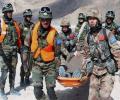
This is the first such incident along the border with China that Indian armed forces personnel have been killed after a gap of nearly 45 years.

The delegations were led by Brigadier JKS Virk from the Indian side and Senior Colonel Chen Zheng Shan from the Chinese side
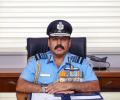
Air Chief Marshal Bhadauria was at the Leh IAF base on Wednesday where he reviewed operational preparedness of the force in effectively guarding the sensitive border areas in eastern Ladakh where Indian and Chinese armies have been on a nearly six-week standoff.

Until last month more than two-thirds of the Indian Army was deployed against Pakistan. Of 14 army corps, just four-and-a-half faced China, while more than twice that number was ranged against Pakistan.
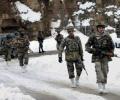
Within the army, there is growing concern that New Delhi will allow the Chinese to retain the territory they have occupied in the last month.

Sources said the Indian delegation was warmly greeted by senior officials of the Chinese Army before the talks began.
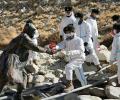
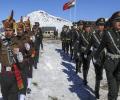
India and Chinese troops on Saturday exchanged sweets and greetings at 10 border posts along the Line of Actual Control (LAC) including in eastern Ladakh to mark the New Year, officials said.
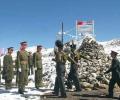
The two sides have already held at least 12 rounds of talks between local commanders and three rounds of talks between major general-rank officials but no positive outcome came out from the discussions, they said.
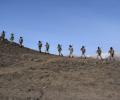
The enhancement of combat capability by the two armies in the region came even as both the countries continued their efforts to resolve the dispute through talks at military and diplomatic levels.

The paper suggests the strategy needs to be area-specific eg, border tourism can be promoted aggressively in the Turtuk or Siachen sector, and Daulat Beg Oldi or Depsang plains.
Responding to Conservative Party MP Flick Drummond on the implications for British interests of a dispute between a 'Commonwealth member and the world's largest democracy on the one side, and a state that challenges our notion of democracy on the other,' he described the escalation in eastern Ladakh as "a very serious and worrying situation", which the UK is "monitoring closely".

Monday's clash was the biggest confrontation between the two militaries after their 1967 clashes in Nathu La when India lost around 80 soldiers while over 300 Chinese Army personnel were killed in the confrontation.
It is learnt that Defence Minister Rajnath Singh has conveyed to top military brass that there was no need for reviewing the implementation of any of the key projects along the Line of Actual Control (LAC) in Ladakh, Sikkim, Uttarakhand or in Arunachal Pradesh in view of the aggressive behaviour by Chinese troops in several sensitive areas.
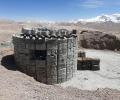
In a major technology push, Indian Army has envisioned construction of "permanent defences" along the Line of Actual Control in eastern Ladakh using cutting-edge 3D printing technology, a move that will save time and improve its defence preparedness, sources said on Tuesday.
Indian military sources said no firearms were used in the clashes and that most of the injuries were sustained following stone-pelting and use of rods by the Chinese side.

India on Wednesday delivered a strong message to China that the 'unprecedented' incident in the Galwan Valley will have a 'serious impact' on the bilateral relationship and held the 'pre-meditated' action by Chinese army directly responsible for the violence that left 20 Indian Army personnel dead.
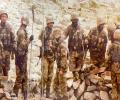
The Chinese numbers had surged significantly during the summer season as they brought in a large number of troops for summer training. They have now gone back to their rear locations.

The forward airbase near the PoK-China border, which from where Pakistan is around 50 kilometres and the strategic Daulat Beg Oldi is around 80 kilometres, the activity of fighter, transport aircraft and helicopters is going on during both day and night.

In a subtle show of strength to China, the Indian Air Force on Tuesday landed its C-130J Super Hercules transport plane at the world's highest and recently-activated Daulat Beg Oldie airstrip in Ladakh near the Line of Actual Control, the scene of a stand-off with Chinese troops in April.

DoT is even considering measures to urge private telecom operators to bring down their dependence on Chinese-made telecom equipment.
Asked about the reports of the troops on both sides disengaging and moving back to their previous positions, Chinese foreign ministry spokesperson Hua Chunying told a media briefing in Beijing that both sides are taking steps to ease the situation along the borders.
