
Hospital chain Fortis Healthcare has filed a special leave petition in the Supreme Court against a Delhi High Court order directing a forensic audit into the alleged erosion of assets by its former promoters, Malvinder and Shivinder Singh, during enforcement proceedings initiated by Japanese drugmaker Daiichi Sankyo.

The Delhi High Court has mandated a six-month forensic audit into the alleged dissipation of assets by former Fortis promoters Malvinder Mohan Singh and Shivinder Mohan Singh, stemming from enforcement proceedings by Japanese drug major Daiichi Sankyo.

Initially, the domestic firm will market Cravit (levofloxacin) used for treating severe bacterial infections in the Malaysian market from January 1, 2012.

Earlier in February, Daiichi Sankyo had announced it would launch an open offer for Zenotech to acquire 68.85 lakh shares or a 20 per cent stake. Daiichi had said it would pay up to Rs 78.23 crore (Rs 782.3 million), at Rs 113.62 a share, to Zenotech shareholders for the stake in the open offer, which was scheduled to begin on July 15 and close on August 3.

Daiichi won't remain a major shareholder in Sun Pharma.
The company is working on a synergy plan with Ranbaxy under which Daiichi Sankyo's product will be introduced in emerging markets through Ranbaxy, he said, declining to give further details.
Both the companies intend to integrate their business operations in Thailand to leverage and maximise the synergies of hybrid business model, which is expected to commence business on April 1, 2013, Ranbaxy said in a statement on Wednesday.
Commenting on the closure of the deal, Ranbaxy CEO Malvinder Mohan Singh said, "The deal has been closed successfully. This puts us well on the path to creating a hybrid business model that will unlock the strengths of both companies to bring unprecedented value to all stakeholders." In June, Japanese firm Daiichi Sankyo had entered into an agreement to buy out the promoters' stake of 34.8 per cent and subsequently made open offer for a 20 per cent stake at Rs 737 per share.
Apart from a five per cent share of the Indian pharmaceutical market, the purchase of Ranbaxy will take Daiichi Sankyo way ahead of others in the race among Indian companies for patent-protected drugs. A recent paper on 'Patenting Landscape in India' by Evalueserve shows that Ranbaxy alone accounts for over 23 per cent of the total medicine patent applications filed by major domestic companies in India.

The company sold over 21 crore (210 million) shares in Sun Pharma.
While 22 per cent of the promoters' stake in Ranbaxy was sold through an off-market transaction, the remaining came from a preferential share allotment. Daiichi Sankyo had earlier picked up more than 20 per cent of Ranbaxy's shares through an open offer. Ranbaxy Chairman and Managing Director Malvinder Mohan Singh said the remaining 12-13 per cent promoter shareholding will change hands in the coming weeks, thereby taking Daiichi's share in Ranbaxy to over 60 per cent.
The Singh family sold their 22 per cent holding to the Japanese firm, besides issuing 4.62 crore shares on preferential basis. Daichii Sankyo has already acquired 20 per cent stake in the Gurgaon-based firm, and with today's acquisitions, Ranbaxy has become a subsidiary of the Japanese firm, which would now control 52.5 per cent in the domestic pharma major.
After completion of its mandatory tender offer in Fortis Healthcare and Fortis Malar Hospitals, Malaysian health care giant IHH Healthcare is aiming to add 2,000 beds in a bid to double down on value creation in India. IHH, which is Asia's largest multinational private healthcare provider, currently has over 5,000 beds across a combined network of 35 hospitals and 11 states.
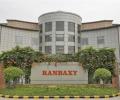
The FDA actions eventually led to a $500-million fine for Ranbaxy as well as the effective mothballing of many of its Indian factories.
Says former Ranbaxy owners concealed critical information on probe by US agencies.

In 2008, Daiichi Sankyo had bought the entire 34.82 per cent stake in Ranbaxy from its promoters, Malvinder Mohan Singh and family, for $4.2 billion. Currently, Singh is executive chairman of Fortis Healthcare.
Ranbaxy Laboratories on Thursday launched a generic version of Prasugrel, used in treating heart diseases, from Daiichi Sankyo portfolio in India as part of strategy to launch drugs from the parent company's stable.

Singh says Japanese pharma giant's allegations false.
On Wednesday, Daiichi Sankyo's lawyers argued for a stay on stake sale by Fortis, which was opposed by counsels of the hospital chain and promoter entities.
For Sun Pharma, it is an astute purchase that it hopes will not only boost its position in India but also globally.

In 2014, Sun Pharma agreed to buy Ranbaxy -- which was then controlled by Daiichi.
The 2008 deal agreement contains provisions of arbitration to be held in that country.
Daiichi Sankyo, Japan's third-largest drug maker, has transferred six of its early drug discovery programmes in inflammatory and infectious diseases from its Japanese research & development (R&D) facilities to India.

Daiichi Sankyo had entered into a licensing agreement with Sanofi-Aventis in 1993 for marketing levofloxacin (Tavanic) in Europe, Africa, South America and in some countries in Asia. Sanofi-Aventis is currently selling the drug in more than 90 countries under the brand 'Tavanic'.

"This is the first time in Europe that Daiichi Sankyo and Ranbaxy are leveraging synergies generated through the hybird business model," Ranbaxy Laboratories said.
The government on Friday approved the acquisition of drug company Ranbaxy Laboratories by Japanese pharma major Daiichi Sankyo envisaging foreign investment of around Rs 21,500 crore (Rs 215 billion).
A bench comprising Justice Aftab Alam and Justice R M Lodha set the open offer price for Zenotech Labs at Rs 113.62 per share, as against Rs 160 per share fixed by the SAT for Daiichi-Sankyo to acquire an additional 20 per cent stake in the company.
Japanese drug major Daiichi Sankyo on Saturday deferred its proposed open offer to acquire an additional 20 per cent stake in Ranbaxy Laboratories, citing a delay in approvals from market regulator Securities & Exchange Board of India.
A day after Ranbaxy Laboratories accused corporate rivals for the recent stock slump, the pharma major on Thursday said its deal to sell promoters' stake to the Japanese firm Daiichi Sankyo is 'binding and final.'
In 2013, Daiichi had launched the arbitration proceedings in Singapore.
In October 2007, Ranbaxy Laboratories picked up a 38 per cent additional stake in the company, taking its shareholding in the Hyderabad-based firm to 45 per cent. However, Ranbaxy had made it clear that it is not interested in taking over the company.
While Daiichi Sankyo acquired a majority share in the country's biggest drug-maker Ranbaxy, Eisai and Astellas have chosen to set up wholly-owned subsidiaries to promote their patented medicines in the country. In a communication to the Nikkei Stock Exchange on November 18, Astellas said its subsidiary Astellas Pharma India in Mumbai was set up as a marketing arm to sell its immunology and urology medicines.
Investors in Ranbaxy Laboratories got richer by over Rs 1,900 crore (Rs 19 billion) in a single day as the scrip surged by a little over 20 per cent on the Bombay Stock Exchange on Monday, a day after the pharma major announced a change of guard at its top management level.
Ranbaxy's shares rose by 0.65 per cent on Thursday to close at Rs 493.55 a share, below the offer price of Rs 737 a share. Two days ago, it had been reported that institutional investors Life Insurance Corporation and General Insurance Corporation, which between them hold 16.43 per cent in Ranbaxy, offered to sell their stake.
Since Malvinder Mohan Singh announced last week that he would sell leading Indian generic drug maker Ranbaxy to Daiichi Sankyo of Japan, incredulous friends have deluged him with messages.
Japan's Daiichi Sankyo makes Ranbaxy Laboratories an offer it can't refuse -- $4.6 billion for a 50.1% stake in India's largest drugmaker.
As India's largest drugmaker unveiled a deal worth up to $4.6bn to sell control to Daiichi Sankyo of Japan, the disbelief at the press conference was palpable.
The US Congressional Committee's move to probe approvals by the USFDA of the company's drug is a part of the larger game by an MNC -- 'trying to scuttle its deal with Daiichi Sankyo', Ranbaxy CEO Malvider Mohan Singh said in New Delhi. Recently, the department of justice has filed a motion in the US court against Ranbaxy alleging systematic fraudulent conduct and supplying fabricated information to the USFDA.

Under terms of the agreed deal, Ranbaxy shareholders will get 0.8 of a Sun Pharmaceutical share for each Ranbaxy share they own.

The Ranbaxy experience has made multinational corporations more cautious about Indian acquisitions in general
