
Benchmark stock indices Sensex and Nifty fell for the third day running on Friday due to weak trends in global markets and soaring crude oil prices. Foreign fund outflows also weighed on investor sentiments amid strengthening US bond yields which are nearing 5 per cent for the first time since 2007. The 30-share BSE Sensex fell 231.62 points or 0.35 per cent to settle at 65,397.62.

Among the Sensex firms, ICICI Bank and SBI led the index with the maximum gains of 4.68 per cent and 3.99 per cent, respectively. Other major gainers were Larsen & Toubro, Kotak Mahindra Bank and HDFC Bank. On the other hand, Wipro and Tata Motors defied the trend and traded in negative.

Benchmark indices Sensex and Nifty settled with gains for the third straight session on Monday, helped by buying in auto, banking and capital goods shares despite a spike in crude oil prices. The 30-share BSE Sensex rose 114.92 points or 0.19 per cent to close at 59,106.44 points with 22 of its components ending in the green and eight closing lower. It moved in a range of 58,793.08 points to 59,204.82 points during intra-day trade.

The rise in consumer price index (CPI) inflation could see the Reserve Bank of India (RBI) in an extended pause mode as regards interest rates, and in turn, keep the market rally in check, believe analysts. Signs of inflation cooling off in the US, however, is likely to provide some cushion as the expectations of a change in stance by the US Fed as regards interest rates is likely to aid sentiment. Back home, CPI inflation surged for the first time in five months to 4.81 per cent in June 2023, and was higher than the street's expectations of 4.58 per cent.

A combination of strong earnings and economic growth, and hopes of the Federal Reserve ending the rate-hike cycle have pushed gross buying of Indian equities by foreign portfolio investors (IPO) to a new high. In 2023, FPIs have been gross buyers of shares worth Rs 25.5 trillion, the highest ever in a calendar year. FPIs also sold shares worth Rs 23.9 trillion. On a net basis, they were net buyers to the tune of Rs 1.6 trillion, the highest since 2020.

'Given that the situation is quickly escalating, such attacks will affect the flow of crude in the short term from West Asia' Subhayan Chakraborty and Dhruvaksh Saha report.

The ongoing second quarter earnings, movement of oil benchmark Brent crude and the uncertainty in the Middle East would dictate terms in the domestic markets this week, analysts said. Furthermore, the activities of Foreign Institutional Investors (FIIs) will also influence trading in the markets. "A slew of earnings reports from heavyweights expected this week will significantly impact market direction.

According to officials, the Indian Navy has opened an investigation into whether the drone used to attack the vessel was launched from long range or from a nearby vessel.

'Elections are fought to win.' 'In our party, the leadership takes the final decision, and our leaders are very clear about it.'

The sharp rally in the midcap stocks has made valuations expensive, and there is room for a correction, wrote Christopher Wood, global head of equity strategy at Jefferies in his latest note to investors, GREED & fear. The midcap index, Wood said, now trades at 24.1x 12-month forward earnings compared with 18.7x for the Nifty. Rising crude oil prices, he believes, are another worry for India, which imports nearly 80 per cent of its annual crude oil requirement.

Macroeconomic data announcements, the Covid situation in China and global market cues would guide Dalal Street in the first week of trading in the New Year, analysts said. Markets would also keep a track on rupee movement, Brent crude oil prices and foreign fund investment trends. "As market players attempt to understand the Fed's stance, Indian markets may respond in lockstep with their international counterparts when the Federal Open Market Committee (FOMC) minutes are made public later this week.

Benchmark interest rate hiked by 50 basis points to 3-year high at 5.90 per cent. Economic growth projection for FY23 cut to 7% from 7.2% estimated in August. GDP expected to grow at 6.3% in September quarter, 4.6% each in December and March quarters.

India's import of discounted crude oil from the Russian Federation hit an all-time high in May, with state-run refiner IOC becoming the biggest importer of Russian oil, relegating Reliance Industries to the second place, trade and shipping data show. Indian imports of Russian oil, accounting for over 46 per cent of its total crude oil imports in May, have grown after strong backing by New Delhi, with state-run refiners powering imports of discounted crude. Discounts on Russian oil average around $10 a barrel, said an official from a state-run refiner. IOC's May purchases rose by 64 per cent on the month, and accounted for half of its total crude imports last month, ship tracking data show.

The Cabinet Committee on Economic Affairs on Wednesday approved seven multi-tracking projects of Indian Railways at an estimated cost of around Rs 32,500 crore, Union minister Ashwini Vaishnaw said. The proposed projects, which will be fully funded by the Centre, will help increase the existing line capacity, smoothen train operations, reduce congestion and facilitate ease of travelling and transportation. The projects covering 35 districts in nine states -- Uttar Pradesh, Bihar, Telangana, Andhra Pradesh, Maharashtra, Gujarat, Odisha, Jharkhand and West Bengal -- will increase the existing network of Indian Railways by 2,339 km and provide employment of an estimated 7.06 crore man-days to the people of the states.

From the Sensex pack, Bharti Airtel, HDFC Bank, Titan, UltraTech Cement, ITC, Sun Pharma, Bajaj Finserv, Bajaj Finance, Hindustan Unilever and Kotak Mahindra Bank were among the major gainers. Tata Steel, Axis Bank, NTPC, ICICI Bank and IndusInd Bank were the major laggards.

While India won't be immune to global spillovers, we need to create the macro preconditions for sustained growth. Policy agility, prudence, and resilience will be key, suggests Sonal Varma.

A merchant vessel, with around 20 Indian crew, was hit by a suspected drone about 217 nautical miles off the Porbandar coast in the Arabian Sea on Saturday but there was no report of any casualties in the incident, Indian military sources and a maritime security agency said.

The Union Cabinet on Thursday approved a revision in the formula for pricing of natural gas and imposed cap or ceiling price to help cut CNG and piped cooking gas prices by up to 10 per cent. Natural gas produced from legacy or old fields, known as APM gas, will now be indexed to the price of imported crude oil instead of benchmarking it to gas prices in four surplus nations such as the US, Canada and Russia, Union I&B Miniser Anurag Thakur told reporters after a meeting of the Cabinet. APM gas will be priced at 10 per cent of the price of basket of crude oil that India imports (Indian basket of crude oil).

Petrol and diesel prices were hiked by 80 paise a litre each on Saturday, the fourth increase in five days as oil firms passed on to consumers the spike in cost of raw material. Petrol in Delhi will now cost Rs 98.61 per litre as against Rs 97.81 previously while diesel rates have gone up from Rs 89.07 per litre to Rs 89.87, according to a price notification of state fuel retailers. All the four increases since the ending of a four-and-half-month long hiatus in rate revision on March 22, have been of 80 paise a litre.

Uttam Ghosh offers his take on the exit polls against the backdrop of increasing crude oil prices.

Economics and politics both have major roles in determining oil prices.

Led by healthy growth in coal, crude oil, fertilisers, cement and electricity production, output of eight core industries grew to a 13-month high of 18.1 per cent in May this year, according to official data released on Thursday. The growth of core infrastructure sectors expanded by 16.4 per cent in the year-ago period and 9.3 per cent in April this year. The last high growth was recorded in April 2021 when it was 62.6 per cent.

Growth of eight key infrastructure sectors slowed down to 8.2 per cent in June 2023 compared to the year-ago month due to a decline in the production of crude oil, according to the official data released on Monday.

The output of eight core infrastructure sectors grew 3.3 per cent in August -- the lowest in nine months -- as against 12.2 per cent in the year-ago period, according to official data released on Friday. The previous low was in November 2021 at 3.2 per cent.

As stringent sanctions imposed by the European Union and US are crippling business and trade, desperate Russian oil companies are offering huge discounts to India, provided a payment mechanism to bypass the SWIFT ban is quickly approved by the government. According to sources familiar with the development, Russian oil firms are offering 25-27 per cent discount to the dated Brent crude prices. State-run Rosneft is one the biggest oil companies that supply crude to India.

'We are in a sweet spot.' 'Equity, on a standalone basis, will continue to remain the asset class to stay invested in.'

The unexpected missile attack on a second India-bound ship carrying Russian crude, just three weeks after the first, has complicated matters for domestic refiners. India now counts the Vladimir Putin-led nation as its biggest oil supplier, according to Paris-based market intelligence agency Kpler, and these attacks come on top of US sanctions since December, where vessels that bring crude to India are facing heightened scrutiny. Panama-registered Pollux, which loaded crude at the Sheshkaris oil terminal in the Russian port of Novorossiysk on January 24, was scheduled to deliver the medium, sour Urals grade to Paradip port on February 28.

The economy may grow by around 7 per cent this financial year as estimated by the Monetary Policy Committee (MPC) of the Reserve Bank of India (RBI), say economists with various organisations. The first advance estimates for 2023-24 will be released on Friday by the National Statistical Organisation (NSO), an exercise done for calculating ratios such as the fiscal deficit. The interim Budget will be presented on February 1.

On the back of rising crude oil purchases, India's bill for imports from sanctions-hit Russia jumped 3.5 times in a year in April to $2.3 billion, showed data from the commerce ministry. In April, India's crude oil imports from Russia were valued at $1.3 billion, 57 per cent of India's total inbound shipments from Russia. Other major imported items during the month included coal, soybean and sunflower oil, fertilisers, and non-industrial diamonds. That month, Russia was also the fourth-largest crude petroleum supplier to India, after Iraq, Saudi Arabia, and the United Arab Emirates (UAE).

Lower crude oil prices and a rally in domestic equities restricted the losses to some extent, forex dealers said. At the interbank foreign exchange market, the domestic currency opened weak at 79.50 per dollar.

Jet fuel or ATF price on Wednesday was cut by almost 6 per cent after four rounds of monthly increases since July, while commercial cooking gas (LPG) rates were raised by a steep Rs 101.5 per 19-kg cylinder in line with international benchmarks. However, the price of domestic LPG - used in household kitchens for cooking purposes - remained unchanged at Rs 903 per 14.2-kg cylinder. Aviation turbine fuel (ATF) price was cut by Rs 6,854.25, or 5.79 per cent, in the national capital to Rs 111,344.92 per kl from Rs 118,199.17, according to a price notification of state-owned fuel retailers.

Production of eight infrastructure sectors expanded by 7.9 per cent in September -- the highest in three months -- on account of better show by coal, fertiliser, cement and electricity segments, according to official data released on Monday. In September last year, the growth rate stood at 5.4 per cent. It was 4.1 per cent in August. The previous high was in June when the output expanded by 13.1 per cent.

Capital expenditure by Indian companies is likely to see an uptick in the upcoming quarters as capacity utilisation has surpassed the critical threshold of 75 per cent, and numerous companies have deleveraged their balance sheets, according to analysts. The first quarter of the current financial year has shown improved profitability, driven by a decrease in input prices. This, according to analysts at Care Ratings, should stimulate a revival in the private capex cycle.

Notwithstanding the windfall tax placing a cap on profits, oil and gas producers like Oil India (OIL) and Oil and Natural Gas Corporation (ONGC) have done well in the October-December quarter (third quarter, or Q3) of 2022-23 (FY23). ONGC faces the drag of poor results from its subsidiary Hindustan Petroleum Corporation, and in comparative terms, OIL is better off. Standalone net sales in Q3FY23 stood at Rs 5,900 crore - up 57 per cent year-on-year (YoY), up 2 per cent quarter-on-quarter (QoQ).
The output of eight core infrastructure sectors contracted to six-month low of 4.5 per cent in July against 9.9 per cent in the year-ago period, according to official data released on Wednesday. The output of these infrastructure sectors expanded by 13.2 per cent in June, 19.3 per cent in May, 9.5 per cent in April, 4.8 per cent in March, 5.9 per cent in February and 4 per cent in January. The production growth of eight infrastructure sectors -- coal, crude oil, natural gas, refinery products, fertiliser, steel, cement and electricity -- was 11.5 per cent in April-July this fiscal against 21.4 per cent a year ago.

Production of eight infrastructure sectors expanded by 3.8 per cent in December 2021 against a 0.4 per cent contraction in the same month last year on better show by coal, cement and refinery products, according to the official data released on Monday. Barring crude oil and steel, all sectors recorded positive growth in December 2021. The core sector industries had grown by 3.4 per cent in November 2021.
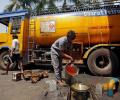
After a spike in crude oil and gas prices in October following the Hamas terror attack, prices eased down 9 per cent month-on-month in November. The Organization of the Petroleum Exporting Countries (Opec) and Opec+ agreed to a further voluntary production cut in January-March 2024 to try and support global crude prices. The best guess here is that crude prices (currently at $75/barrel, or bbl) will not likely cross significantly above $80, and gas prices are also likely to remain subdued unless there's a further escalation in the Israel-Hamas conflict.

The Indian equity market valuation has been moving in tandem with the US 10-year treasury yield. While the benchmark US bond yield has witnessed a nearly 70 basis point decline since the end of October this year, dropping from 4.93 per cent to 4.23 per cent on Friday, the Sensex earnings yield has slipped by nearly 45 basis points - from 4.5 per cent to 4.05 per cent. Previously, Indian equities' earnings yields rose in sync with the US bond yields.

Benchmark BSE Sensex rose by about 322 points to close above the 60,000 level on Monday tracking gains in banking, IT and energy stocks amid positive global equities. The 30-share barometer closed higher by 321.99 pts or 0.54 per cent at a three-week high of 60,115.13, as 21 of the index constituents closed in the green. After a strong opening, the index touched a day's high of 60,284.55 and a low of 59,912.29.
 © 2026 Rediff.com - Advertise with us - Disclaimer - Privacy Policy - Sitemap - Feedback - About us - Terms of use - Grievances