
Foreign flows into Indian equities are expected to pause in the short to medium term, say analysts. The outlook is influenced by multiple factors, including rising oil prices, actions from global central banks, climbing bond yields, and the dollar index gaining prominence. "Valuations appear rich with the markets at record highs.

Whether this remains under control in the coming months will depend on the future intensity and spread of the Russia-Ukraine war, and the effectiveness of the Indian government's response, points out A K Bhattacharya.

Rising crude oil prices and muted passenger traffic in the July-September quarter (second quarter, or Q2) of 2023-24 (FY24) have raised concerns about the profitability of listed aviation players. These two concerns have caused the stock of InterGlobe Aviation (IndiGo), the largest player in the sector, to slip by 11 per cent since its highs at the end of July. Nuvama Research expects yields to cool down in the near term due to seasonality, rising crude oil prices, and higher capacity.

Mahindra & Mahindra was the top laggard in the Sensex pack, sliding 2.05 per cent, followed by Bajaj Finance, Tata Steel, SBI, Asian Paints, Kotak Mahindra Bank and Titan. However, IT majors HCL Technologies and TCS defied the trend and gained 1.02 per cent and 0.47 per cent, respectively. FMCG firm Hindustan Unilever rose 0.32 per cent.

Major laggards among Sensex constituents included Bharti Airtel, Hindustan Unilever, Tata Steel and ITC. Power Grid, UltraTech Cement, NTPC and Titan emerged as winners.

India's imports from Russia rose 64 per cent to $36.27 billion during the April-October period this fiscal on higher shipments of crude oil and fertiliser, according to the commerce ministry data. With this, Russia has become India's second-largest import source during the first seven months of this fiscal. The imports were $22.13 billion during April-October 2022.

The RBI's policy decision would be the major event driving trading sentiment in the equity market this week, while global cues, foreign funds movement and crude oil prices will be the other key factors to watch out for, analysts said. Markets have been witnessing a rebound recently. However, the move lacks decisiveness amid lingering challenges like global policy tightening due to soaring inflation and geopolitical tensions, they added. "RBI policy, global macro numbers and crude oil prices will set the trend for this week.

There is no near-term respite for the country's largest fast-moving consumer goods maker, Hindustan Unilever (HUL), which is facing multiple challenges on the growth front. With demand showing no signs of improvement, especially in the rural segment, the October-December quarter (Q3) of 2023-24 (FY24) is likely to be similar to the previous quarter, with volume growth in the low single digits. The stock, which is down 7 per cent over the past year compared to the 11 per cent jump for the S&P BSE Sensex, could underperform the benchmark in the near term as well.

Russian traders have started asking for payments in ruble for their exports to India in a move that could derail trade between the two countries which gathered pace after the war in Europe. This is because Indian importers are unable to pay in ruble. The India-Russia trade gathered pace after Vladimir Putin invaded Ukraine in February this year. In the April-June quarter, India's imports from Russia were valued at $9.27 billion, up 369 per cent year on year.

India is back on the diplomatic table pushing oil producing countries to raise production in a bid to cool down runaway oil prices. Brent crude oil prices traded above $90 a barrel, on Thursday, for the first time since 2014. Brent is the most popular marker for crude oil trade. It is used as a benchmark for two-thirds of the world's internationally traded crude oil.

'We see mid-and small-caps as a real pot of gold.' 'From a 10-15 years perspective, mid-and small-cap are likely to outperform the larger index, as they have done in the past.'

A potential risk to the rupee's appreciation trajectory lies in the event of a delay in the Federal Reserve's rate cut cycle, particularly if core inflation in the US remains elevated.

India's crude oil import bill is set to exceed $100 billion in the current fiscal year ending March 31, almost double its spending last year, as international oil prices trade at seven-year highs. India spent $94.3 billion in the first 10 months (April-January) of the ongoing financial year that started April 1, 2021, according to data from the oil ministry's Petroleum Planning & Analysis Cell (PPAC). It spent $11.6 billion in January alone when oil prices had started to surge.

The Reserve Bank on Wednesday projected retail inflation to ease to 5.3 per cent in next fiscal from 6.5 per cent this year on assumptions of lower imported inflation, even though core inflation remains sticky. The RBI's inflation outlook for current fiscal has improved from 6.8 per cent projected earlier, to 6.5 per cent, on the back of steeper than expected decline in vegetable prices and Indian basket of crude at $95 a barrel. "Looking ahead, while inflation is expected to moderate in 2023-24, it is likely to rule above the 4 per cent target.

The men with guns tend to know little finance, and establishing such a conspiracy then involves leakage of information, which is also dangerous, Ajay Shah points out.

Among the Sensex firms, HDFC Bank emerged as the biggest loser, falling 4 per cent. JSW Steel, Reliance Industries, UltraTech Cement, Maruti, Tata Steel, Wipro, Tech Mahindra, Bharti Airtel and Larsen & Toubro were the other major laggards. Power Grid, Asian Paints, Sun Pharma, Axis Bank, NTPC, ITC and Infosys were among the gainers.

Among major Sensex movers, ITC rose the most by 1.70 per cent, Wipro by 1.43 per cent, Tech Mahindra by 1.36 per cent and Nestle India by 1.27 per cent. Other gainers included HCL Tech, Asian Paints and Reliance. On the other hand, ICICI Bank, NTPC, UltraTech Cement and Tata Steel traded with a loss of up to 0.82 per cent.

The government on Friday approved an electric-vehicle policy, under which duty concessions will be given to companies setting up manufacturing units in the country with a minimum investment of $500 million, a move aimed at attracting major global players like US-based Tesla. According to an official statement, the companies setting up manufacturing facilities for e-vehicles will be allowed to import a limited number of cars at lower customs duty. The policy seeks to promote India as a manufacturing destination for EVs and attract investment from reputed global EV manufacturers, it added.

Among the Sensex firms, UltraTech Cement, Reliance Industries, ICICI Bank, HDFC Bank, Bharti Airtel, IndusInd Bank, State Bank of India, Tata Consultancy Services, Larsen & Toubro, Kotak Mahindra Bank and State Bank of India were the major gainers. In contrast, Tata Motors, Maruti, Axis Bank, Mahindra & Mahindra, ITC, NTPC, Tata Steel and Bajaj Finserv were the major laggards.

The country's imports from Russia almost doubled to $25.69 billion during the April-August period this fiscal due to increasing inbound shipments of crude oil and fertiliser, according to the commerce ministry data. With this, Russia has become India's second-largest import source during the first five months of this fiscal. The imports were $13.77 billion during April-August 2022.

By driving a hard bargain with Russia in procuring crude oil at the lowest price possible, India is furthering the policy of G7 and Washington is "comfortable" with New Delhi over its approach in addressing issues relating to energy security, a top Biden administration official said.

The government on Friday cut the windfall profit tax on locally produced crude oil in line with a fall in international rates, and reduced the levy on export of diesel and jet fuel (ATF). At the fifth fortnightly review, the government reduced tax on domestically-produced crude oil to Rs 10,500 per tonne from Rs 13,300 per tonne. The levy on the export of diesel was reduced to Rs 10 per litre from Rs 13.5. Also, the tax on Aviation Turbine Fuel (ATF) exports was cut to Rs 5 a litre from Rs 9 with effect from September 17, according to a finance ministry notification issued late Friday night.

Brokerages lowered their earnings estimates following muted results in Q1FY24. While analysts remain optimistic about the stock's medium-term prospects, they highlight near-term concerns stemming from lower realisations due to changes in the product mix and margin pressures resulting from new plane additions.

Six non-BJP ruled states -- West Bengal, Tamil Nadu, Andhra Pradesh, Telengana, Kerala and Jharkhand -- have not reduced the VAT on petroleum products, leading to higher prices of petrol and diesel there, Petroleum Minister Hardeep Singh Puri said on Thursday. Puri said in Lok Sabha that the central government has reduced excise duty on petroleum products and some other states, following cues, reduced their Value Added Tax (VAT). Six states -- West Bengal, Tamil Nadu, Andhra Pradesh, Telengana, Kerala and Jharkhand -- have not reduced the VAT, he said amidst vocal protests by the opposition members.
The windfall taxes on domestic crude oil production and fuel exports will generate close to $12 billion (Rs 94,800 crore) for the government in the remainder of the current fiscal while trimming profits of firms such as Reliance Industries Ltd and ONGC, Moody's Investors Service said Tuesday. On July 1, the government imposed windfall gain taxes on the export of petrol, diesel and aviation turbine fuel (ATF), and on the domestic production of crude oil. It has also mandated exporters to meet the requirements of the domestic market first.

Global trends and the Covid situation in China would drive the equity markets this week, which may also see volatility amid the scheduled derivatives expiry on Thursday, said analysts. According to analysts, investor sentiment remained subdued last week amid surging Covid cases in China and a few other nations. Also, stronger US growth data has cemented expectations of the Federal Reserve continuing with its hawkish stance, which added to the muted trend.

Outside Saudi Arabia, there is no spare capacity. Sanctions on Iran have meant that no new outside funds have come to bolster the current production of around 4 million barrels a day. Outside Saudi Arabia, there is no spare capacity. Sanctions on Iran have meant that no new outside funds have come to bolster the current production of around 4 million barrels a day.

India's top fuel retailers IOC, BPCL and HPCL together lost around $2.25 billion (Rs 19,000 crore) in revenue for keeping petrol and diesel prices on hold during elections in five states, including Uttar Pradesh, Moody's Investors Services said on Thursday. State fuel retailers did not revise petrol and diesel rates for a record 137 days despite prices of crude oil (raw material for producing fuel) rising to $120 per barrel compared to around $82 in early November when the hiatus began. "Based on current market prices, the oil marketing companies are currently incurring a revenue loss of around $25 (over Rs 1,900) per barrel and $24 per barrel on sale of petrol and diesel, respectively," Moody's said in a report.
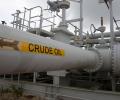
India's imports from Russia rose by about 67 per cent to $30.42 billion during the April-September period this fiscal on higher shipments of crude oil and fertiliser, according to the commerce ministry data. With this, Russia has become India's second-largest import source during the first half of this fiscal. The imports were $18.24 billion during April-September 2022.

Irregular rainfall and a pick-up in commodity costs are expected to weigh on the demand and margins of fast-moving consumer goods (FMCG) companies. Most companies reported a sharp expansion in gross margins in the April-June quarter (first quarter, or Q1) of 2023-24 (FY24), given the lower prices of key raw materials and earlier price hikes. Furthermore, there were expectations that cost savings being passed on could reflect in volume growth going forward. However, these hopes could be dashed if demand recovery, especially in the rural segment, stalls, and gains on the raw material front start to recede.

Investors shunned shares of oil marketing companies (OMCs) on Friday as they feared that the government's decision to cut retail prices of petrol and diesel could hurt the companies' profit margins in the near term. On Thursday, the government announced that OMCs will reduce pump prices of petrol and diesel after a record 22 months, making them cheaper by Rs 2 per litre in the national capital. The changes were effective from Friday.

Officials from State-run refiners contend that savings from purchase of Russian oil are used to offset a part of the losses in revenues from selling transport fuels and LPG at State-set rates.

The US Federal Reserve's interest rate decision, global cues, macroeconomic data announcements and the ongoing quarterly earnings are the major triggers that will dictate trends in stock markets this week, analysts said. Besides, the trading activity of foreign investors and the movement of global oil benchmark Brent crude will also be tracked. "All eyes are on the outcome of the US Federal Reserve meeting scheduled for November 1, particularly due to the multi-year high levels of the US bond yields.

Oil imports are a third of India's total import bill.

India's production of crude oil, which is refined to produce petrol and diesel, continued to decline in November, with lower output from state-owned firms leading to an over 2 per cent drop, official data released on Tuesday showed. Crude oil production in November was 2.43 million tonnes, down from 2.48 million tonnes a year back and 2.5 million tonnes in October 2021. Oil and Natural Gas Corporation (ONGC) produced 3 per cent less crude oil at 1.6 million tonnes in November due to delays in mobilising equipment at western offshore fields.
The arrival of the Atlantic Hurricane season marks an exciting time for futures and options traders. June 1st is the official start to the season.

Foreign policy is always a work in progress and ups and downs are built into foreign policy process. What is permanent is national interest. Hopefully, this year, which will also witness general elections in the country, will also clear clouds in the foreign policy horizon, observes Rup Narayan Das.
Industrial production and inflation data, quarterly earnings from IT majors and global trends would drive the equity markets in a holiday-shortened week, analysts said. Moreover, foreign fund trading activity, movement of the rupee and global crude oil prices would also dictate terms in the market, they added. Equity markets would remain closed on Friday for 'Dr Baba Saheb Ambedkar Jayanti'.

India's crude oil imports are coming in from a changing mix of countries, with the top three accounting for around 60 per cent of total imports. Russia emerged as the largest source of crude oil imports for India in June, as per the latest available data from the Organization of the Petroleum Exporting Countries (OPEC). The data which is released with a lag, showed that Russian imports accounted for 24 per cent of the total crude imports into the country.

The rupee depreciated further by 13 paise to hit a new life-time closing low of 82.30 against the US dollar on Friday as a firm American currency and risk-averse sentiment among investors weighed on the local unit. Moreover, a negative trend in domestic equities and elevated crude oil prices sapped investor appetite, forex traders said. At the interbank foreign exchange market, the local currency opened at 82.19, then fell further to 82.43. It finally settled at an all-time low of 82.30 against the American currency, registering a decline of 13 paise over its previous close.
 © 2026 Rediff.com - Advertise with us - Disclaimer - Privacy Policy - Sitemap - Feedback - About us - Terms of use - Grievances