
Average monthly GST collection rose from Rs 90,000 crore during the first year of its implementation -- 2017-2018 -- to Rs 1.68 trillion during 2023-2024, representing an 87 per cent rise.

"In principle, the ask in return is that India should not support the G7 (Group of Seven) proposal. "A decision on this issue will be taken later following talks with all the partners," an official with the Ministry of External Affairs (MEA) said.These "substantial discounts" will be steeper than those offered by Iraq in the past two months, officials said.

Equity markets this week will be largely guided by trends in global stocks, foreign funds' trading activity and progress of monsoon, analysts said. Investors will also track the movement of rupee against the US dollar and crude oil prices. Benchmark indices Sensex and Nifty closed at fresh lifetime highs on Friday.

Many individual states experienced higher inflation than the all-India figures during the financial year 2023-24 (FY24). Retail inflation figures in Telangana, Haryana, Rajasthan and Dadra and Nagar Haveli have been higher than national numbers every month of this financial year, shows a Business Standard analysis of state-wise figures, after the March inflation data was released on Friday. Experts noted that persistent high food inflation along with differences in the weights of rural and urban indices plays into the regional variation in inflation rates.

Among the Sensex firms, NTPC, Mahindra & Mahindra, Power Grid, Nestle, Tata Motors, ITC, Bharti Airtel and Kotak Mahindra Bank were the major gainers. In contrast, Larsen & Toubro, Wipro, JSW Steel, UltraTech Cement, and Asian Paints were among the laggards.
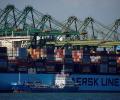
Buoyed by higher demand for crude oil and imported coal, Indian ports recorded a growth of 11 per cent in traffic during the April-June quarter of 2022-23. This shows that the economy is opening up, a report by DAM Capital said. The volume increase assumes significance since both prices of crude oil and imported coal have been soaring this year. Indian coal companies were pressed for supply amid a thermal coal crisis earlier in the year.

From the Sensex basket, Tata Motors, State Bank of India, Tata Steel, Power Grid, NTPC, Bajaj Finserv, Bajaj Finance and Asian Paints were the major laggards.

Macroeconomic data announcements, global trends and trading activity of foreign investors would guide momentum in the equity market this week, analysts said. Markets ended a five-week losing streak and gained nearly a per cent last week, helped by a sharp rebound on Friday. Last week, the BSE benchmark jumped 500.65 points or 0.77 per cent and the Nifty gained 169.5 points or 0.87 per cent.

Production of eight infrastructure sectors rose at a three-month high of 7.4 per cent in December 2022 against 4.1 per cent in the same month of previous year on a better show by coal, fertiliser, steel, and electricity segments, according to the official data released on Tuesday. Crude oil output, however, contracted by 1.2 per cent in December last year. The production of eight key sectors rose by 5.7 per cent in November 2022.

The ongoing Hamas-Israel conflict has disrupted India's efforts to gain from a recent fall in crude oil prices. Since Hamas' invasion of southern Israel on October 7, petroleum has become costlier by around $5 per barrel, threatening to stoke prices and impact growth. Brent crude was trading at $89.8 per barrel on October 9 (9.15 pm IST), up over 4 per cent, thwarting India's anticipation of a period of declining oil prices - after the leading global petroleum benchmark declined by around 11 per cent last week.

Despite the recovery to above $40 levels after hitting $28-29 in Jan, worries of over-supply in the face of weak demand remain.
Escalation of the conflict in West Asia between Israel and Iran has had a direct impact on the energy markets, and more broadly on the financial markets as well as the global economy.
India's imports of crude oil from Russia touched a new high of 1.64 million barrels per day in March and is now double of the purchases from Iraq - the nation's traditional top oil supplier. But the purchases appear to have plateaued as growth has slowed. Russia continued to be the single largest supplier of crude oil, which is converted into petrol and diesel at refineries, for a sixth straight month by supplying more than one-third of all oil India imported, according to energy cargo tracker Vortexa.

From the Sensex basket, Tata Consultancy Services, Nestle, Bajaj Finserv, Wipro, Maruti Suzuki India, Reliance Industries, Larsen & Toubro and NTPC were the major laggards. Tata Steel, Bajaj Finance, JSW Steel and Bharti Airtel were among the gainers.

Among the Sensex firms, Maruti, NTPC, Tata Motors, ICICI Bank, HDFC Bank, Reliance Industries, JSW Steel, ITC and Mahindra & Mahindra were the major laggards. Bajaj Finance, Larsen & Toubro, Bajaj Finserv and Titan were among the gainers.

Interim Budget, the US Federal policy decision and quarterly earnings will be the major drivers for stock markets which may also see some consolidation this week, say analysts. Besides, investors would also focus on the trading activity of foreign investors and global trends for further cues. From the macroeconomic front, the PMI (Purchasing Managers' Index) data for the manufacturing sector is scheduled to be announced on Thursday.

India's macroeconomic fundamentals are strong to deal with global challenges and the central government is committed to sticking to the fiscal deficit target of 6.4 per cent of the GDP for the current fiscal, official sources said on Monday. The government is taking steps to deal with the spiralling crude oil prices in the international market, the sources said. India meets nearly 85 per cent of its oil demand through imports and a weaker rupee makes imports costlier.

Most of India's oil supplies are expected to stay safe because of the country's good relations with both Russia and Iran. That would take care of over a third of India's supplies.

Only investors with a higher risk appetite should enter these funds.

Rising crude oil prices, traction in China equities and inflation concerns back home are casting a shadow on the Indian equity markets in the short term, believe analysts at Jefferies. They said this could see the markets remaining range-bound in the near term before the next leg up.

The Indian Navy continues to monitor the situation very closely with all stakeholders and remains committed to ensuring the safety of merchant shipping in the region, it said in a statement.

The Budget should use the extra RBI surplus to better effect, suggests A K Bhattacharya.

From the Sensex pack, Nestle, Tata Consultancy Services, IndusInd Bank, Asian Paints, Bharti Airtel, Tech Mahindra, UltraTech Cement, Kotak Mahindra Bank and Hindustan Unilever were among the major laggards. Tata Steel, JSW Steel, HCL Technologies, Axis Bank, Power Grid and Mahindra & Mahindra were among the gainers.

The government should scrap the windfall profit tax on domestically produced crude oil as the levy is adversely impacting the capex-intensive exploration of oil and gas, the industry said in its recommendation for the forthcoming annual Budget. India first imposed windfall profit taxes on July 1, joining a growing number of nations that tax super normal profits of energy companies. At that time, a Rs 23,250 per tonne ($40 per barrel) windfall profit tax on domestic crude production was levied.

The general elections in April/May 2024 are expected to add volatility to the Indian markets, keeping investors on their toes.
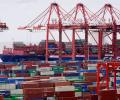
Exports contracted by 2.6 per cent to $34.47 billion in September even as the country's merchandise trade deficit narrows to $19.37 billion during the month under review, according to the government data released on Friday. Easing commodity prices helped in cutting down the country's import bill by 15 per cent to $53.84 billion in September, the 10th consecutive month of decline. During April-September this fiscal, exports contracted by 8.77 per cent to $211.4 billion.
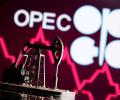
The surprise decision of OPEC and its allies, including Russia, to cut oil output may cause an immediate rise in prices, delaying revision in fuel prices in India, industry sources said. The grouping of Organisation of Petroleum Exporting Countries (OPEC) and its allies, called OPEC+, on Sunday decided to further cut oil output by around 1.16 million barrels. The move led to Brent rising by almost 6 per cent to $84.58 per barrel on Monday.

From the Sensex pack, JSW Steel, Tata Steel, NTPC and UltraTech Cement emerged as major winners, closing the day with a gain of up to 3.33 per cent. On the other hand, Asian Paints, ITC, L&T and SBI were the laggards, ending the session up to 3.95 per cent lower. Of the 30 Sensex stocks, 14 closed the day in green, while on the 50-stock index Nifty 25 scrips ended with gains.

Production of eight infrastructure sectors increased by 5.4 per cent in November against a 3.2 per cent growth in the same month last year on a better show by coal, fertiliser, steel, cement and electricity segments, according to the official data released on Friday. Crude oil, natural gas and refinery products, however, recorded negative growth in November this year. The production growth of eight key sectors slowed down to 0.9 per cent in October.
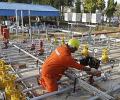
India's top oil and gas producer ONGC on Friday reported a tripling of net profit in the June quarter as it earned record prices before the government slapped a tax on windfall profits arising from a global rally in energy rates. Oil and Natural Gas Corporation's (ONGC) standalone net profit at Rs 15,205.85 crore, or Rs 12.09 per share, in April-June, compared to Rs 4,334.75 crore, or Rs 3.45 a share, in the same period a year back, according to a stock exchange filing by the company. Sequentially, the profit was higher than the Rs 8,859.54 crore net profit of January-March.

India's exports to Iran have been falling over the last one year, amid decline in rupee reserves of the West Asian economy. Going ahead, the possibility of augmenting exports to Iran may not be easy for India, considering the geopolitical tensions - Russia-Ukraine and Israel-Hamas conflicts - and the West Asian country's support for Russia and Hamas, people aware of the matter said. Exports to Iran saw a downward spiral since November last year.

Quarterly earnings, global trends and trading activity of foreign investors will drive stock markets in this holiday-shortened week, analysts said. It will be a trading holiday on January 22, with the Maharashtra government announcing a holiday in connection with the consecration of the Ram Temple in Ayodhya. Equity markets would also remain closed on Friday for Republic Day.

From the Sensex pack, Larsen & Toubro jumped 4.26 per cent to emerge as the biggest gainer, followed by IndusInd Bank, Tech Mahindra, State Bank of India, HCL Technologies, Power Grid, NTPC, Axis Bank, Kotak Mahindra Bank, HDFC Bank and Wipro. Mahindra & Mahindra, Infosys, UltraTech Cement and Hindustan Unilever were the major laggards.

Exchange-traded currency derivatives volumes are likely to drop in view of new Reserve Bank of India (RBI) rules, casting a cloud over further participation of retail investors and proprietary traders. There are concerns that existing positions without any underlying exposure will need to be liquidated. Also, weighed down by dollar demand from local oil companies and weakness in its Asian peers, the rupee on Wednesday (April 3) ended at a new closing low of 83.44 versus the US currency.

Among the Sensex firms, JSW Steel, Tata Motors, Tata Steel, Tata Consultancy Services, NTPC, Wipro, HCL Technologies, State Bank of India, Larsen & Toubro, UltraTech Cement, IndusInd Bank, Kotak Mahindra Bank, Power Grid and Reliance Industries Limited were the major laggards. Mahindra & Mahindra and Bajaj Finance were the gainers.

India imported goods worth $4.23 billion in June from sanctions-hit Russia, up 6.8 times as compared to last year, as demand for shipments of crude oil grew at the fastest pace during the month. Crude oil worth $3.02 billion was imported in June, which translates into a share of 71 per cent of the total imports from Russia, commerce and industry ministry data showed. Similarly, during the April-June quarter, India's imports from Russia were valued at $9.27 billion, up 369 per cent on year.

Global trends and trading activity of foreign investors would largely dictate terms in the equity markets this week amid a lack of major domestic triggers, analysts said. Markets may face near-term consolidation due to elevated valuations, they noted. "While the previous week was predominantly shaped by developments in the US Federal Reserve policy, attention will now shift to the Bank of Japan's policy decision on December 19," Santosh Meena, Head of Research, Swastika Investmart Ltd, said.

Shares of low-cost airline IndiGo hit record high on the bourses soon after reports of pilot crisis at Vistara emerged. The development also saw airfares surge by around 25 per cent on select routes. Shares of IndiGo hit a lifetime high of ~3,68.5 on April 2, 2024, and has gained 2.4 per cent on the bourses in April.

Among the Sensex firms, Infosys, Tech Mahindra, HCL Technologies, Tata Consultancy Services, Wipro and JSW Steel were the major gainers during the morning deals. Nestle, Bharti Airtel, Axis Bank ITC were among the laggards.

Volkswagen Passenger Cars is targeting a volume sales growth of about 15 per cent in the country in 2024, even as it expects the Indian passenger vehicle (PV) industry to grow by 5-7 per cent in the current year, its India brand director, Ashish Gupta, said on Thursday. This means the company is expecting to grow 2-3 times faster than the Indian PV industry in 2024. But globally, the German automaker is expecting just 3 per cent rise in sales this year, down from 12 per cent last year.
 © 2026 Rediff.com - Advertise with us - Disclaimer - Privacy Policy - Sitemap - Feedback - About us - Terms of use - Grievances