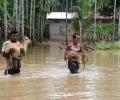
So far, over 30 people have died across Northeastern states due to heavy rainfalls, floods and landslides, according to media reports.

Since bodies are still being found from the slush and debris left behind by the river in both the states, the exact casualty count will be clear in the next few days after collating the details, officials said.
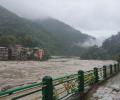
The release of water from the Chungthang dam led to a sudden increase in water levels up to 15-20 feet high downstream, defence spokesperson Lt Col Mahendra Rawat said.

On day three after a flash flood wreaked havoc in Sikkim's Teesta basin, the number of bodies recovered from the river and mud embankments downstream rose to 22, including seven army men.
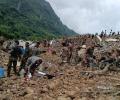
Landslides triggered by heavy rain cut off large parts of northern and eastern Sikkim, including Nathula pass, while efforts were being made to restore connectivity, officials said on Friday.

The NRSC satellite imagery revealed that the lake covered approximately 162.7 hectares. Its area increased to 167.4 hectares on September 28 but drastically reduced to 60.3 hectares.

Sikkim Chief Minister Prem Singh Tamang, better known as P S Golay, on Friday said that the Himalayan state has incurred damages worth thousands of crores of rupees in the flash flood.
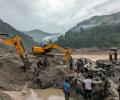
The Sikkim Government has confirmed that 14 people have died so far in the flash floods that occurred in Sikkim in the early hours of Wednesday.

A study by an international team of researchers had warned two year ago that the South Lhonak lake in Sikkim may burst in the future and significantly impact the downstream region.
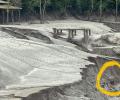
A GLOF occurred in parts of Lhonak Lake, leading to a rapid rise in water levels with very high velocities downstream along the Teesta River Basin in the early hours of October 4. This resulted in severe damage in Mangan, Gangtok, Pakyong and Namchi districts.
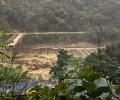
'We cried our hearts out as we saw our huts going underwater. It was hard to believe that I was fast asleep at the same spot just 15-20 minutes ago'

'The Weather Channel argues that India faces the gravest challenge: Climate change-induced health vulnerability.' 'This is an issue often neglected, alerts Claude Arpi: "Prolonged summers, unpredictable rains, floods, droughts, and rising sea levels are the harsh realities of climate change in the country. These factors increase the frequency and severity of illnesses, pushing people into poverty, and forcing migration".'

With rescue teams finding it difficult to reach far-flung quake-hit areas in Sikkim, hundreds of survivors are trekking out of their villages, crawling sometimes to negotiate dangerous stretches. Hundreds of villagers from inaccessible higher areas of Lachung, Lachen and Chungthan have gathered in Tung after an arduous trek down and are being taken to safe places. Army sources said hundreds of villagers reached Tung, 10 km from Chungthang, one of the worst-hit areas.
Prime Minister Manmohan Singh on Thursday made an aerial survey of quake-ravaged areas of Sikkim and announced Rs 1,000 crore as Central assistance to the state.
Helicopter sorties with relief to earthquake-affected areas which resumed on Sunday after a two-day gap were again suspended due to incessant rain on Monday.
The tourists were a state of shock.

Dates like 9/11 should never be allowed to pass by forgotten because terrorism is not to be borne, inhumanity is not to borne.
 © 2026 Rediff.com - Investor Information - Advertise with us - Disclaimer - Privacy Policy - Sitemap - Feedback - About us - Terms of use - Grievances