
The World Health Organisation (WHO) has issued an alert against three "substandard" oral cough syrups identified in India and urged national regulatory authorities worldwide to immediately notify it if these are detected in their country.

The USTR report, released just ahead of the US' April 2 deadline for implementing reciprocal tariffs, has also cited high tariffs and price caps, which have not increased in line with inflation, as key obstacles for US businesses.

Minister of State for Health Bharati Pravin Pawar said 642 prosecutions were launched for manufacturing, sale and distribution of spurious/adulterated drugs, while 262 persons were arrested.
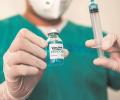
The Drugs Controller General of India will take a final call on the recommendation. If approved, it will be the third COVID-19 vaccine to be available in India.
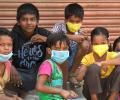
The trial will take place in 525 subjects at various sites, including AIIMS, Delhi, AIIMS, Patna and Meditrina Institute of Medical Sciences, Nagpur.

Three employees of a Noida-based pharmaceutical firm, whose cough syrup is alleged to have led to the death of 18 children in Uzbekistan last year, were arrested on charges of manufacturing and sale of adulterated drugs, officials said.
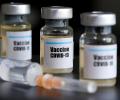
In a report submitted Monday to Rajya Sabha chairman and Vice President M Venkaiah Naidu, the Parliamentary Standing Committee on Home Affairs also said there was a need for a comprehensive public health law to keep a tab on private hospitals and check black-marketing of medicines.

According to sources, around 10 crore doses of the Sputnik V vaccine is likely to be imported for emergency use in the country in the next six to seven months.
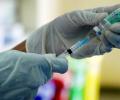
An expert panel of India's Central Drug Authority on Tuesday recommended granting permission to Serum Institute of India (SII) for conducting phase 2/3 trials of Covid vaccine Covovax on children aged 2 to 17 years with certain conditions, official sources said.

Choubey said till February 4 total 81 AEFIs, which is 0.096 per cent of the total beneficiaries who have been administered Covaxin, have been reported.
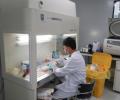
Concerned about the rise of antibiotic resistance and the time it takes for drugs developed abroad to reach Indians, the government is considering holding its own clinical trials. Clinical trials for new drugs have so far primarily been conducted only by private Indian or foreign drug firms. But given the stringent nature of India's regulatory environment for clinical trials, several pharmaceutical companies have moved their trials out of India. As a result, only 1.2 per cent of global clinical trials take place in India.
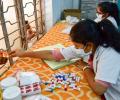
The situation is severe in North India as most of the logistics operation was manned by migrant labourers from Uttar Pradesh and Bihar. The problem with manpower is not only in courier and delivery services, but also at a shop level.
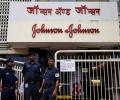
Of the 289 faulty hip implant victims identified, 93 patients had undergone revision surgeries. The company, however, said it could reach only 67 patients and would pay Rs 25 lakh each to the other 26 as well after verifying their claims and if those patients approached J&J.

In a video issued by the Health Ministry, Dr Randeep Guleria, Director of the All India Institute of Medical Sciences (AIIMS) answered commonly asked questions regarding the dosage of the vaccine saying that two doses of the vaccine will have to be taken 28 days apart and protective levels of antibodies generally would develop two weeks after the second dose.

Alkem Labs was issued drug alerts twice last year -- in June and July -- for its drug Glimekem.

As many as 150 applications are stuck at evaluation stage, says official.
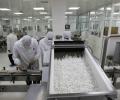
Indian loses chance to be research hub as domestic drug companies move R&D overseas.

Dinesh Thakur is famous for exposing Ranbaxy safety problems
 © 2026 Rediff.com - Investor Information - Advertise with us - Disclaimer - Privacy Policy - Sitemap - Feedback - About us - Terms of use - Grievances