
Seerat Naaz's video appeal to the prime minister last week, which was shared widely on social media, prompted Director of School Education, Jammu, Ravi Shankar Sharma to visit the government school located in the remote Lohai-Malhar block.

Fundraising through the issuance of shares to qualified institutional investors has seen hectic activity in the first half of the current fiscal year (FY24), with 20 companies mobilising over Rs 18,400 crore, more than four-fold from the year-ago period, on positive investors' sentiments. Moreover, the robust trend of Qualified Institutional Placements (QIPs) in the first half of the fiscal year 2023-24 is expected to persist throughout the second half of the year too, Sanjay Moorjani, Research Analyst at SAMCO Securities, told PTI. Prashant Rao, director and head of equity capital markets, Anand Rathi Investment Banking, said that market and investor sentiments play an important role for these issuances.

Coal India (CIL) produced 89 million tonnes (MT) in March-24, up 6 per cent year on year (Y-o-Y) and offtake was 69 MT, up 7 per cent Y-o-Y. FY24 production was 774 MT, up 10 per cent Y-o-Y. Offtake was 754 MT, up 9 per cent Y-o-Y. CIL targets production of 838 MT in FY25, up 8 per cent Y-o-Y over FY24.

There hasn't been any dramatic moment in the first act (the Budget) but nobody would complain. It's par for the course as long as the figures don't change in the main Budget, which will be presented after general elections.

Tata Power declared encouraging results for the April-June quarter (Q1) of the 2023-23 financial year (FY24). The firm's revenue rose 5 per cent year-on-year (Y-o-Y) to Rs 15,210 crore. It was driven by higher sales to distribution companies (discoms) and capacity addition in renewables. Company's adjusted profit after tax (PAT) rose 3 per cent to Rs 906 crore with reported PAT at Rs 1,100 crore on a one-time gain of Rs 235 crore.

Among Sensex shares, Bajaj Finserve, ICICI Bank, Bharti Airtel, Bajaj Finance, Sun Pharma, Maruti Suzuki, ITC, and Nestle were the lead gainers. On the other hand, L&T Wipro, IndusInd Bank and TCS and Tata Motors were the lead losers.

The engineering and construction (E&C) sector delivered an excellent performance in the last two financial years (FY2021-22 or FY22 and FY23's nine-months) and there's reason to believe that FY24 will also see outperformance. The sector has emerged from the pandemic with stronger balance sheets and more rational cost structures. It has a big order book and it should see new order flows accelerate in FY24.

There are conflicting views on Delhivery. The logistics player's results for the July-September quarter (Q2FY24) are being interpreted as good by some analysts and disappointing by others. As India's largest listed logistics player, the company stands to benefit from the formalisation across the mostly unorganised logistics space. Delhivery provides solutions to 23,113 customers, including e-commerce marketplaces, direct-to-consumer e-tailers, and enterprises across verticals.

Cement companies witnessed speculative support from investors through FY23 amid hopes of a rebound. After capex announcements in the FY24 Budget, there was further interest due to expectations that government expenditure would boost earnings, besides a generic macro-recovery. Cement earnings were under pressure in FY22 and FY23 due to high raw material and fuel costs; muted demand prevented them passing on the higher cost.

There is no impediment to normal operations as Tata Motors puts in place the demerger process of its commercial and passenger vehicles businesses. Instead, the demerger would provide greater manoeuvrability for both new entities to operate independently, according to Tata Motors management. While there may not be immediate value unlocking, it will give investors clarity about future growth and the financials across different segments.

'India is showing a reasonable amount of resilience, but we are still living in a world that is quite fragile.' 'That's why we hope that the government will continue to invest significantly in public capex so that we are able to ride through this cycle till the private sector is able to play its part in investing and adding to the capex cycle.'

Siemens reported solid results in the July-September quarter (fourth quarter, or Q4) of 2022-23 (FY23), with the top line growing 25 per cent year-on-year (Y-o-Y) to Rs 5,808 crore. The operating profit margin stood at 12.1 per cent, led by lower employee costs and other operating expenses. The company follows the October-September financial year.
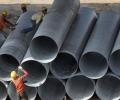
The festive season will mean business for the steel industry as it is the time when automotive and consumer appliance companies bump up demand to prepare for higher sales, experts have said. Ranjan Dhar, chief marketing officer at ArcelorMittal Nippon Steel India (AM/NS India), said that bookings by auto and consumer appliance industries are 20 per cent higher ahead of the festive season compared to last year. "While this could be for a couple of months, it could normalise later at approximately 10 per cent," he said.

On June 30, mining and metals giant Vedanta, announced that it had decided to initiate a strategic review of its steel and steel-making raw material businesses. The review would begin immediately and evaluate a broad range of options, including but not limited to a potential strategic sale of some or all of the steel businesses, the company said in its stock exchange filing. The signs have been there - approaches had been made to steel players over the past year. Last December, Anil Agarwal, chairman Vedanta group, told Business Standard that the steel plant capacity was about 3 million tonnes (mt).

The hospitality industry has seen plenty of interest since the catastrophic impact of the pandemic, which led to losses in FY21. The hotel industry market cap has more than tripled since 2019 on the combination of a strong earnings rebound and positive surprises, as well as three recent listings. The industry has good tailwinds. The anticipation is, demand for rooms will outrun supply for a few years despite capacity expansions.
India's economy continues to be robust, but downside risks such as rising crude oil prices, adverse weather conditions, and the global banking crisis outweigh the upside potential in gross domestic product (GDP) growth in the current financial year (FY24), the finance ministry said on Tuesday in its Monthly Economic Review for March. "We reiterate that downside risks to our official forecast of 6.5 per cent for real GDP growth in FY24 dominate upside risks," the review said. "Opec's surprise production cut has seen oil prices rise in April, off their lows of low-seventies per barrel in March.

India's first $1 trillion company by market capitalisation (mcap) is achievable by 2032 and HDFC Bank and Reliance Industries (RIL) are seen as lead contenders, ICICI Securities said in a note on Monday. To achieve this, the shares of both the firms will have to appreciate at least 20 per cent annually for the next decade. ICICI Securities believes this is possible if India's gross domestic product (GDP) growth accelerates to 9 per cent per annum and corporate profitability cycle peaks. "Our calculations suggest that India's first $1 trillion mcap stock could emerge by 2032.
Analysts assert that Vedanta Group's plan to demerge India-listed Vedanta Limited into six listed entities will not resolve the debt problem of its promoter entity, Vedanta Resources (VRL). They suggest that additional asset sales or stake sales by promoters will be necessary to repay the debt. Vedanta is already considering the divestment of its iron-steel division and its copper plant.

Crude and gas supply concerns have eased amid reports that Israel and Hamas have struck a peace deal. The International Energy Agency estimates oil demand may drop slightly in calendar 24 but Opec probably has enough pricing power to maintain $80/ barrel Brent prices. Russia's share of India's crude imports remained strong at about 35 per cent in September 2023.

All eyes will be on whether Sitharaman will deliver a populist budget leaving more money in hands of the common man or push the reform agenda by staying on the fiscal glide path to lower the fiscal deficit to 4.5 per cent of GDP by 2025-26.

'They have started becoming an important player, but not at the same level as they were in the earlier part of the decade.'

'Our factories are world-class and are becoming increasingly attractive for our global business leaders to use to serve other markets.'

Fiscal pressure for the Indian economy is gradually rising, suggested analysts at Jefferies in a recent note, as oil prices (Brent) - which are close to the $100 a barrel mark - continue to climb ahead of a busy election calendar. They added that the sharp rally in the equity markets during the last few months has made valuations costly. As a result, Jefferies expects the Indian markets to remain choppy in the near term.

The rising goods and services tax (GST) and personal income-tax collections may bolster the Narendra Modi government's ability to announce new schemes or enhance existing ones.

The medium-term scenario for oil marketing companies (OMCs) is high risk due to the surging crude and gas prices. Apart from OPEC-plus cutting production, the Hamas-Israel conflict has caused fears of supply disruption. The July-September quarter of 2023-24 (Q2FY24) saw positive surprises for OMCs. Strong gross refining margins (GRMs) more than offset weak marketing margins.

'More than investors, fund houses, and advisors have raised caution and limited flows on small-and mid-caps.'

Eicher Motors is a leader in the premium motorcycle segment, where it holds market share of over 85 per cent under the Royal Enfield (RE) brand. The company's joint venture VE Commercial Vehicles (VECV) with Volvo, where it holds 54.5 per cent stake, gives it a strong footing in commercial vehicles (CVs). The company had good results in FY23 and it has a strong balance sheet and good operating margins.

The S&P BSE Midcap and the S&P BSE Smallcap indices have managed to stay afloat in a volatile January that saw the frontline indices hit their respective 52-week high levels and then slip. While the S&P BSE Sensex has lost over 2 per cent thus far in January, the S&P BSE Midcap and the S&P BSE Smallcap indices have gained nearly 2.5 per cent and 4 per cent, respectively during this period.
Investors shunned shares of oil marketing companies (OMCs) on Friday as they feared that the government's decision to cut retail prices of petrol and diesel could hurt the companies' profit margins in the near term. On Thursday, the government announced that OMCs will reduce pump prices of petrol and diesel after a record 22 months, making them cheaper by Rs 2 per litre in the national capital. The changes were effective from Friday.

Earnings growth trajectory for India's capital goods firms is likely to stay buoyant for the December 2023-ended quarter (Q3 FY24), said analysts. Guidance on margins, ordering activity in an election year and export-related demand would be key monitorables. Brokerages - Motilal Oswal, Nuvama, Kotak Institutional Equities and Prabhudas Lilladher - estimated revenue growth for their capital goods universe to be 11-16 per cent year-on-year (Y-o-Y).

The sector may be overcrowded with a fair number of large players and the entry of the Adani Group through its two key acquisitions, followed by the takeover of majority stake in Sanghi Industries via Ambuja Cements. Since every major player is in expansion mode, there could be a capacity surplus and hence, price wars.

'...Market-linked debentures, high-value insurance, exemptions from capital gains by investment in real estate, etc.' 'So, there are a number of measures directed at collecting a fair share from higher income individuals.'

However, in the last few sessions, the stock of Mukesh Ambani-controlled Reliance Industries Limited (RIL), hit its 52-week low level of Rs 2269.75, and has been one of the worst performers among the Sensex pack thus far in calendar year 2023 (CY23). Thus far in CY23, RIL has tanked nearly 11 per cent as compared to a fall of around 5 per cent in the S&P BSE Sensex. The fall in the stock, according to Gaurang Shah, senior vice-president at Geojit Financial Services is mostly due to the overall dip in the market sentiment, which in turn has impacted large-caps, including RIL.

Investments worth more than Rs 80 trillion are expected in roads, railways and urban infrastructure between now and FY30 and the supply chains helping to build this core infrastructure are also readying to cash in on the growth. In the first half of the current financial year, orders worth more than Rs 2.6 trillion were tendered in the roads and railways segment alone, according to data sourced from ICRA Ratings and Research. "India's transportation infrastructure sector is in high gear, and we enjoy a sizable share of it," said S V Desai, whole time director and senior executive vice president (Civil Infrastructure) for Larsen & Toubro.

'Government's focus should be on the expenditure side in this Budget, not so much on the taxation side.'

Have the markets already played out their dynamics before the economy has even properly taken off? Are we now destined for a period of mediocre returns despite a strong economy? asks Akash Prakash.

While near-term performance is difficult to predict after a huge run-up, fund managers believe the PSU theme's prospects remain sound over the medium to long term.
Conflicting views on Coal India (CIL) might leave investors confused. The bullish perspective that India has strong power demand (and also high steel production) means high demand for coal. As CIL is the monopoly producer of coal -- supplying over 80 per cent of the domestic requirement - the public sector undertaking should be a beneficiary of the rising power demand.

'...which is possible through flexicap and multicap funds.' 'The latter has a better balance between large, mid and smallcap stocks.'

'Citibank customers will migrate to the Axis Bank platform over 18 months.'
 © 2026 Rediff.com - Advertise with us - Disclaimer - Privacy Policy - Sitemap - Feedback - About us - Terms of use - Grievances