
India, along with Southeast Asian countries such as Indonesia, is expected to sustain growth in the medium-term in Asia region, replacing China as the key growth driver, Morgan Stanley and Nomura said in two separate reports released on Monday. While Morgan Stanley projected a 6.2 per cent gross domestic product (GDP) growth forecast for India in FY24, Nomura estimated the Indian economy to grow at 5.9 per cent in 2023. "Even with a slowing China, we expect GDP growth in Asia to sustainably outperform other emerging markets and the US. India and Southeast Asia are set to be the fastest-growing economies this decade.
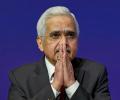
The highlights of RBI's bi-monthly monetary policy announced by Governor Shaktikanta Das:

After four years of growth at 40 per cent or more, capital expenditure (capex) by India Inc in the current financial year (2008-09) may drop almost 30 per cent.

'We are confident that over the next few years the government will strike a fine balance between populist measures and growth, and manage coalition partners well.'

Hindalco's first quarter (Q1FY23) results indicate healthy domestic volumes for aluminium and copper, and lower cost of production. Subsidiary Novelis saw weak volume trends but it managed to push operating profit margins on a better mix and pricing hikes. The weak global outlook on aluminium is a cause for ongoing concern.

Electrical Consumer Durable (ECD) companies like Havells India have seen strong Q4FY24 sales and continuing seasonal demand across fans, air coolers, and room air conditioners (RAC) in addition to business-to-business sales of cables, switchgear, and professional lighting, among others. Havells India's Q4FY24 revenue rose 12 per cent year-on-year (Y-o-Y) to Rs 5,400 crore, in-line with consensus. Strong summer demand led to robust volume growth in fans and RAC and volume growth in cable and wires (C&W) due to infrastructure spending and real estate activity.

Good results for the January-March quarter (Q4) of FY24 and strong seasonal demand have led to strong investor interest in Crompton Greaves (CG) Consumer Electricals which is hitting new highs. While there's bullish consensus on the company's future performance, the stock has gained over 40 per cent in the last six months and valuations may become stretched. The Q4FY24 revenue rose 9.5 per cent YoY to Rs 1,960 crore.

India's leading capital goods and engineering firms are in the midst of one of their busiest seasons, with the combined orderbook surging past Rs 8 trillion in value. As on September 30, 2023, 13 of India's top 15 listed capital goods and engineering firms, for which data for the September 2023 quarter was available, had a total orderbook worth Rs 8.45 trillion - a number unseen at least since 2018-19. "This intuitively looks like an all-time high factoring in inflation," said Anupama Arora, a senior independent analyst who tracks the capital goods sector.

'There is no reason why we should break this business up.'

'The global situation is not very good.'

Debt-ridden Vodafone Idea is planning to begin 5G rollout in six months in select cities and places where 5G device concentration is high, a senior company official said on Friday. Vodafone Idea CEO Akshaya Moondra said the company expects capital expenditure of the company to be in the range of Rs 50,000-Rs 55,000 crore over the next three years with focus on expanding and strengthening 4G coverage.

Global fund managers remain bullish on the Japanese stock markets, which is now their most preferred destination in the Asian region. Both Morgan Stanley and Jefferies in their recent reports, have cited their preference for the Land Of The Rising Sun, which is fast becoming the land of the rising equities, too.

As per the credit rating agency's survey, a whopping 94 per cent of those surveyed viewed inflation and rising interest rates as main threats to Indian debt markets, followed by global sovereign issues (66 per cent) and budget deficit (64 per cent).

'To sustain our growth trajectory, we must continue to explore and capitalise on growth opportunities.'

Reliance has around 90,000 telecom towers now, half of which are operational and owned by the RIL and rest on lease.

Finance Minister Nirmala Sitharaman on Wednesday announced hiking the capital expenditure by 33 per cent to Rs 10 lakh crore for infrastructure development for 2023-24 and will be at 3.3 per cent of the GDP. Presenting the Budget for 2023-24, she said the newly established infrastructure finance secretariat will assist in attracting more private investment. "Capital investment outlay is being increased steeply for the third year in a row by 33 per cent to Rs 10 lakh crore, which would be 3.3 per cent of GDP.

Bharat Electronics (BEL) reported excellent results for the January-March quarter (Q4) of FY24, which were driven by decent EBITDA margins and higher PAT as well as good revenue growth. Order inflows were also good. BEL is a major beneficiary of the policy of defence indigenisation.

Elections are not won or lost by expounding on such macro-economic matters. For the aam admi, what matters in manifestos are promises that will improve their quality of life, notes Vinayak Chatterjee.

'The expeditious enactment of labour codes and strategic measures to bridge the skills jobs gap are critical.'

Capex plans for the next six months imply a 20 per cent increase in calendar 2010.

'We are cautious only on sub-sectors that have seen massive melt-up during the past six months.'

As a percentage of the aggregate Budget expenditure, it is 12 per cent.

There have been several positive signals in Bharti Airtel with revenue market share (RMS) growth, better visibility of profits from Africa, and enough free cash flow to pursue deleveraging. Airtel's 4G and 5G data subscriber net additions were 5.6 million in Q1FY24, and 24.5 million in the last 12 months. Airtel currently has 230 million data subscribers on 4G/5G, which is about 70 per cent penetration of its base of 339 million subscribers.

It would be interesting to see what the government proposes to investors.

'Policy-sensitive sectors will wait and watch, but policy-agnostic areas will continue based on normal consumption demand.'

The company's investments in telecom business reached 15-20% of capital employed.

Adani Power, part of the Adani group, plans to add close to 6 gigawatts (Gw) of new power assets in the next five years, according to an investor presentation by the company. That is clearly meant to ride on India's burgeoning power demand. But there is another side to it: All of this new capacity is expected to be thermal power, or power produced from coal.

The challenge for the RBI in 2024 is likely to be less about containing elevated inflation and more about curbing excessive financial market exuberance and a 'problem of plenty', notes Sajjid Chinoy, Chief India Economist JP Morgan.

'Like every Budget, this time, too, there is chatter around tinkering with the long-term capital gains tax.' 'Investors may not want to jump into the markets until there is clarity on this front.'

UltraTech Cement's third quarter of financial year 2023-24 (Q3FY24) performance saw a combination of 6 per cent year-on-year (Y-o-Y) volume growth and 8 per cent revenue growth coupled with better realisations per tonne. The earnings before interest, taxes, depreciation, and amortisation (Ebitda) stood at Rs 3,250 crore and Ebitda per tonne was Rs 1,191. Profit after tax (PAT) was reported at Rs 1,780 crore. Other income dipped and interest costs rose.
'If the NDA comes to power with 320-330 plus seats, then we could see some correction. We could possibly see a level of 19,500 to 20,000.' 'If the NDA comes to power with a majority of 400-plus, we could see the markets going to about 23,500-24,000 levels.' 'And from there we could see some correction because markets are expensive at this point of time and a correction is overdue.'

Strong performance by its US subsidiary Novelis and better returns in the copper business helped Hindalco Industries post consolidated revenue growth of 2 per cent quarter-on-quarter (Q-o-Q) to Rs 54,100 crore in the July-September quarter of 2023-23 (Q2FY24). Novelis' Flat Rolled Products (FRP) volumes grew 6 per cent Q-o-Q to 933,000 tonnes (down 5.2 per cent Y-o-Y) on better North American and European volumes. The consolidated earnings before interest, taxes, depreciation, and amortization (EBITDA) declined 2 per cent Q-o-Q to Rs 5,610 crore despite lower input costs in India and better Novelis performance.
Mahindra & Mahindra has decided to curtail its capital expenditure of Rs 5,000 crore (Rs 50 billion) in view of the ongoing slump in demand for cars and sports utility vehicles in the domestic market.

Godrej Consumer Products (GCPL) reported 6 per cent year-on-year (Y-o-Y) consolidated net revenue growth in Q4FY24 to Rs 3,385 crore and this was impacted adversely by currency movement. The constant currency (CC) growth would have been 30 per cent Y-o-Y in Q4FY24. India business clocked 12 per cent Y-o-Y revenue growth (5 per cent of it organic) with volume growth of 15 per cent Y-o-Y (7 per cent organic).

The key risk factors would be anti-incumbency, small vote share swings causing large impact on outcomes and the 2004 example.

The deficit stood over Rs 8 trillion in the first seven months of the current financial year. Non-tax revenues, comprising transfers from the RBI and dividends of the public sector units, shored up the Centre's revenues.

India can sustain 8 per cent annual GDP growth and the conducive macroeconomic configuration may become a launching pad for a step-up in the country's growth trajectory, said an article on the 'State of Economy' in the central bank's March Bulletin published on Tuesday. Over the period 2021-24, gross domestic product (GDP) growth has averaged above 8 per cent. The global economy is losing steam, with growth slowing in some of the most resilient economies and high frequency indicators, pointing to further levelling in the period ahead, said the article authored by a team led by RBI Deputy Governor Michael Debabrata Patra.

Reliance Industries' (RIL's) retail arm, Reliance Retail, is now valued at nearly twice the amount of its decades-old and lucrative oil-to-chemical (O2C) division. Bernstein's latest report on the conglomerate projects a valuation of $112 billion for its retail business, dwarfing the $57 billion valuation of its O2C division. In addition, the research firm valued Jio Platforms, the company's telecom arm, at $77 billion and the renewable energy business at $17 billion.
 © 2026 Rediff.com - Advertise with us - Disclaimer - Privacy Policy - Sitemap - Feedback - About us - Terms of use - Grievances