
PM Modi seems to be gradually ending India's strategic ambiguity

Business should be pleasure, not pressure, believes Thrissur-based T S Kalyanaraman.

'Earlier India as part of the Third World fought for the rights of the Palestinians. But oddly the defeat of the Congress and the decline of the Nehruvian imagination has altered such perceptions. The new middle class expresses an open sympathy for Israel, contending that Jews like many Hindus has been misunderstood,' says Shiv Visvanathan.

'We teach our kids the 3 R's -- reading, writing, and arithmetic -- so that they can be successful. It's time the fourth R joined that list: Programming. My vision is to expose every student to computer science and show them that coding IS fun and applicable to their daily lives.' Just 15, Swetha Prabakaran, founder and CEO of Everybody Code Now!, a non-profit working to empower the next generation of youth to become engineers, scientists and entrepreneurs, is already a White House Champion of Change for teaching hundreds of students how to code.

New Delhi and Beijing are the only two regional capitals that have commented on US President Donald Trump's speech on August 21 outlining the way forward in Afghanistan. The Indian foreign ministry statement was effusive in praise, while the Chinese statement has been one of cautious and guarded hope. Delhi has identified itself with Trump's Afghan strategy, whereas the Chinese stance is calibrated -- observant and objective, keeping a distance, says Ambassador M K Bhadrakumar.
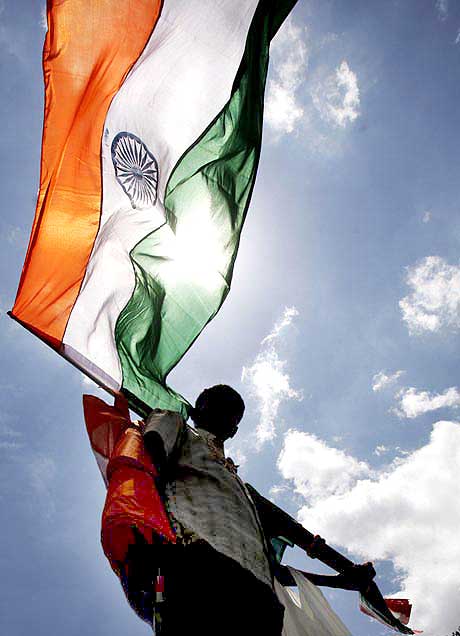
How has the Indian State, in principle and practice, given shape to the essential ingredients of the secular principle and composite culture?

'Obama's decision to end the US military involvement in the Afghan civil war needs to be welcomed as a positive development for regional security and stability. India, too, has a great opportunity opening up here if it plays its cards in sync with the spirit of the times rather than continuing to view the Afghan problem in zero-sum terms,' says Ambassador M K Bhadrakumar.

Developed and developing countries are very different and they are different from variety of reasons on climate change.

It is easy to foretell that negotiating a comprehensive and final agreement on the Iran nuclear issue is by no means an easy task. It involves hard negotiations, but the hardest step has been taken, says Ambassador M K Bhadrakumar, who was among the first group of foreigners to visit the the top-secret Arak plant hidden behind barren mountains south of Tehran.

With Beijing having had a profound rethink on India's admission as a full member of the Shanghai Cooperation Organisation, the tectonic plates of the geopolitics of a massive swathe of the planet stretching from the Asia-Pacific to West Asia are dramatically shifting. That grating noise in the Central Asian steppes will be heard far and wide -- as far as North America, says Ambassador M K Bhadrakumar.
 © 2026 Rediff.com - Investor Information - Advertise with us - Disclaimer - Privacy Policy - Sitemap - Feedback - About us - Terms of use - Grievances