
This is the lowest that the BCI has ever fallen in the history of 113 rounds of the NCAER Business Expectations Survey.

India's services sector activity moderated further in January as new business rose at a noticeably slower rate amid the escalation of the pandemic, reintroduction of restrictions and inflationary pressures, a monthly survey said on Thursday. The seasonally adjusted India Services Business Activity Index fell to 51.5 in January, down from 55.5 in December, pointing to the slowest rate of expansion in the current six-month sequence of growth. For the sixth straight month, the services sector witnessed an expansion in output.

India's services sector activity moderated in December as business activity and sales rose at a softer pace, while price pressures and the possibility of new waves of Covid-19 affected business sentiment, a monthly survey said on Wednesday. The seasonally adjusted India Services Business Activity Index fell from 58.1 in November to a three-month low of 55.5 in December. The rates of expansion moderated but were nevertheless "marked" by historical standards, the survey said.

SBI was the top loser in the Sensex pack, shedding over 1 per cent, followed by Reliance Industries, Tech Mahindra, M&M, L&T, Bharti Airtel, IndusInd Bank and HDFC. NSE Nifty slipped 31.60 points to 15,824.45.
India's services sector activity expanded at the strongest pace in ten-and-a-half years in October, driven by a substantial upturn in business activity amid favourable demand conditions, a monthly survey said on Wednesday. Companies indicated that a notable pick-up in new business led to the fastest expansion in output in over a decade and as a result more jobs were created, even though business confidence remained subdued due to growing inflationary concerns. The seasonally adjusted India Services Business Activity Index rose from 55.2 in September to 58.4 in October, signalling the strongest rate of growth in ten-and-a-half years.
Firms said subdued demand conditions, unfair pricing among competitors and economic woes affected the sector.

The government may drop its plan to decriminalise cheque bounce offences after there were requests to continue the existing system, which can potentially make people honour their financial commitments due to fear of prosecution. It would seek directions from a Supreme Court panel formed to expedite the pendency of cheque bounce cases before taking a final call. Last year the Department of Financial Services (DFS) had proposed decriminalising minor offences, which included cheque bouncing, for improving business sentiment and unclogging court processes.

India's services sector activities contracted further in June as the intensification of the COVID-19 crisis and reintroduction of containment measures restricted demand, a monthly survey said on Monday. The seasonally adjusted India Services Business Activity Index fell from 46.4 in May to 41.2 in June, as new work intakes and output contracted at the fastest rates since July 2020, which prompted companies to reduce employment again. Subdued demand conditions resulted in a second successive monthly drop in new business received by services firms.
India's services sector activities eased to a three-month low in April, as the rise in business activity was constrained by the pandemic and sentiment towards growth prospects faded, a monthly survey said on Wednesday. The seasonally adjusted India Services Business Activity Index fell to 54 in April from 54.6 in March, the slowest increase in output in three months. In PMI parlance, a print above 50 means expansion while a score below 50 denotes contraction.

The sentiment was sluggish in April.

The intent to hire in the current quarter is likely to rise by 7 per cent over the previous three months if further lockdowns and workplace operating rules are not enforced, mainly driven by demand in healthcare, pharmaceuticals, educational services, ecommerce and technology start-ups and IT, according to a report. In fact, out of the 21 sectors reviewed, more than 8 sectors will witness a 9-11 per cent rise in their intent to hire in the current quarter, TeamLease Employment Outlook Report has revealed.

Most of the hirings are, however, in the entry or junior level.

A resounding election victory last month for pro-business leader Narendra Modi, with the mandate to steer the economy out of its current slump and create more jobs, has revived consumer confidence in Asia's third-largest economy.
The headline seasonally adjusted IHS Markit India Manufacturing Purchasing Managers' Index (PMI) fell to a two-year low of 50.6 in October from 51.4 in September.
India's services activity expanded at the fastest rate in a year during February, while employment fell further and companies noted the sharpest rise in overall expenses, a monthly survey said on Wednesday. The seasonally adjusted India Services Business Activity Index rose from 52.8 in January to 55.3 in February, pointing to the sharpest rate of expansion in output in a year amid improved demand and more favourable market conditions. The index was above the critical 50 mark that separates growth from contraction for the fifth month in a row during February as the roll-out of COVID-19 vaccines led to an improvement in business confidence towards growth prospects.

The seasonally adjusted India Services Business Activity Index rose sharply from 34.2 in July to 41.8 in August, the highest since March, before the escalation of the pandemic.

For 2020 calendar year, it reduced the estimate by a similar measure to 6.7 per cent.

Tata Steel was the top gainer in the Sensex pack, rallying 5.14 per cent, followed by Bharti Airtel, HDFC, TCS, L&T, SBI and Reliance Industries.
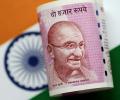
The bill to nullify retrospective taxation offers a fair solution within the framework of Indian law and Parliamentary sovereignty to companies which have been subjected to such demands, Finance Secretary T V Somanathan said on Thursday. Finance Minister Nirmala Sitharaman introduced 'The Taxation Laws (Amendment) Bill, 2021' in the Lok Sabha that seeks to withdraw tax demands made using a 2012 retrospective legislation to tax the indirect transfer of Indian assets. The Bill provides for the withdrawal of tax demand made on "indirect transfer of Indian assets if the transaction was undertaken before May 28, 2012 (i.e. the day the retrospective tax legislation came into being)."

Bhattacharya is now more optimistic than before regarding the adoption of newer technologies, even though she acknowledges there could be short-term challenges owing to the pandemic. Salesforce is among the first global employers to take the 'no lay-off' pledge, pertaining to COVID-19.

The Dun & Bradstreet Composite Business Optimism Index stands at 81.1 during the 2nd quarter of 2016

India slips to second place on hiring outlook

The coronavirus outbreak has brought a large part of the world's second-largest economy China to a standstill and its impact has been felt across industries.

Firms seem to have adopted a wait-and-see approach on their plans until public policies become clearer upon the formation of a government.

Sectors with positive growth during the month include rice, iron ore, oil seeds, oil meals, meat, dairy and poultry products, pharmaceuticals, coffee, engineering goods, and plastic.

Online hiring activity went up around 26 per cent in May.
The Finance Minister must deliver a business sentiment boosting budget and show that the new government can walk its talk.

Equity strategists are basing their expectation on strong corporate earnings recovery, supportive global economic growth, and gradual improvement in business sentiment.

Imports too tumbled by 58.65 per cent to $17.12 billion in April from $41.4 billion in the same month last year, according to the data by the commerce and industry ministry.

Inflation target remains 5% for January 2017.

On the job front, Indian service providers continued to add to their payrolls and the sector witnessed the second-strongest increase in employment since March 2011.

Barring rice, spices, iron ore and pharmaceuticals, all the remaining 26 key sectors registered negative growth in May. Imports too plunged 51 per cent to $22.2 billion in May.

With uncertainty over economic prospects and higher interest rates leading to subdued investments by the private sector, Indian companies' new order inflows in the quarter ended December 31 stood at the lowest level in nearly four years.
Over the next five years, plans to pump money in KG DG, refining, petrochemical sectors, retail and telecom.
A figure above 50 indicates that the sector is expanding, while a figure below that level means contraction.

Raghuram Rajan said the passage of the GST Bill augurs well for the growing political consensus for economic reforms.
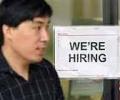
Indian employers are optimistic about their hiring prospects in the October-December quarter led by retail and healthcare sectors which are the prime movers behind the upswing, says a survey.

The company's planned capex for 2019-2020, which was Rs 12,000 crore, has now been revised down to around Rs 8,000 crore.

With political uncertainty reaching a new high, India Inc gets more anxious.
Factory output, as measured by the Index of Industrial Production, contracted in March to a five-year low of 3.5 per cent.
 © 2026 Rediff.com - Investor Information - Advertise with us - Disclaimer - Privacy Policy - Sitemap - Feedback - About us - Terms of use - Grievances