
GE Aerospace is set to significantly increase its supply chain spending in India, targeting USD 400 million by 2030, up from USD 200 million in 2025. This expansion reflects the company's commitment to India's burgeoning aviation market, driven by substantial aircraft orders and the strategic importance of its manufacturing and technology centres in Pune and Bengaluru.

Civil Aviation Minister K Ram Mohan Naidu highlights challenges in aircraft procurement due to global supply chain disruptions, impacting India's aviation sector growth and expansion plans.

The Indian government has waived customs duty on critical petrochemical products until June 30 to ensure supply stability and provide relief to consumers amid disruptions caused by the crisis in West Asia.
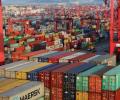
Civil Aviation Minister K Rammohan Naidu announced significant opportunities for Micro, Small, and Medium Enterprises (MSMEs) within India's rapidly expanding aviation sector. With Indian airlines ordering over 1,600 aircraft and the aerospace market projected to double by 2035, there's a massive scope for Indian suppliers to integrate into global aerospace supply chains, moving beyond assembly to design and manufacturing.
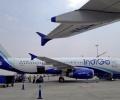
IndiGo on Monday said that around 30 aircraft are grounded due to "supply chain disruptions" and the country's largest airline is evaluating wet leasing of planes and other options to boost operations. At the end of September, the carrier -- also the world's seventh largest in terms of daily departures -- had 279 aircraft in its fleet. It operates more than 1,600 daily flights and currently flies to 100 destinations, including 26 international ones.
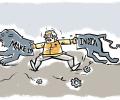
Hical Technologies and Safran Aerosystems have signed a Memorandum of Understanding to explore a joint venture for manufacturing complex systems, including fluid and fuel systems, for the Dassault Rafale program in India. This partnership aims to bolster the Make in India initiative, leveraging Hical's expanding manufacturing capabilities and Safran's technology leadership to produce critical aerospace components domestically and for global markets.

US Secretary of State Marco Rubio visited Reliance Industries' Jamnagar refinery, a day after calling India a crude oil refining 'superpower', and met with top Indian business leaders Gautam Adani and N Chandrasekaran to advance bilateral ties in energy, trade, investment, and defence.

Boeing projects Southeast Asian airlines will require 4,985 new commercial aircraft by 2045 due to expanding fleets and replacements. The region's air passenger traffic is expected to grow 6.7% annually, outpacing economic growth, driven by rising incomes, tourism, and connectivity. Most new aircraft will be single-aisle, with a significant portion supporting fleet growth.

Bengaluru-based electric air taxi startup Sarla Aviation has received Design Organisation Approval (DOA) from the Directorate General of Civil Aviation (DGCA), a crucial step towards commercial production of its indigenous electric vertical take-off and landing (eVTOL) aircraft. The company also inaugurated its new headquarters and announced partnerships, highlighting India's growing capabilities in advanced aerospace technology.

Prime Minister Narendra Modi convened a meeting with senior ministers to assess the impact of the evolving situation in West Asia on India's crude oil, gas, petroleum, power, and fertiliser sectors, focusing on ensuring uninterrupted supply and stable logistics.

Mumbai-based TCR Engineering Services has become the first independent company in India to receive Nadcap accreditation for materials testing at its Navi Mumbai and Vadodara laboratories, a crucial step for Indian suppliers to enter the global aerospace supply chain.
GE Aerospace is utilising artificial intelligence solutions, developed by its Bengaluru team, to significantly improve aircraft engine inspection, analytics, and maintenance. These innovations have reduced turnaround times by at least five days, enhancing engine durability, reliability, and time on wing, with specific tools like the AI-enabled Blade Inspection Tool cutting inspection times by 50%.
AM Green Ammonia has won the Asian lot in H2Global's auction, securing a 10-year agreement to supply renewable ammonia to Germany, valued at over 585 million euros. This deal positions India as a significant exporter of green molecules, with production slated for AM Green's Kakinada project, utilising renewable power and aiming for 2029 deliveries.

The reopening of the Strait of Hormuz, following a ceasefire agreement between the US and Iran, is expected to significantly ease India's crude oil supply risks, lower freight costs, and reduce inflationary pressures, as global oil prices have already dropped.
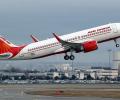
Air India Group has accumulated losses of about Rs 47,821 crore since its takeover, leaving its prolonged transformation among the biggest unfinished projects of N Chandrasekaran's tenure.

Jamco Interiors, a global supplier of aircraft cabin systems, has opened a Centre of Excellence (COE) in Pune. This strategic move aims to meet the increasing demand for advanced cabin interiors in India's rapidly growing commercial aviation market and leverage local engineering talent for global aerospace programmes.

Indian benchmark stock indices, Sensex and Nifty, advanced for the second consecutive day, driven by softening crude oil prices and a positive trend in global markets. Despite some profit-taking in IT and metal shares, auto stocks outperformed, contributing to the overall gains.
BikeWo Green Tech and Kwik Flite Support have signed an initial pact to develop an integrated air cargo, aviation logistics, and multimodal freight platform. This collaboration aims to combine road mobility with aviation capabilities to serve various industries, focusing on high-value and time-sensitive logistics across India, including Tier-II and Tier-III cities.

IndiGo will have 74 of its 224 weekly international departures affected while Air India will relocate 33 of its 100 departures.
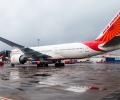
Indian carriers have cancelled over 10,000 flights since the onset of the West Asia conflict, as escalating tensions and airspace restrictions disrupted international operations, a senior government official said.

Outgoing Air India CEO Campbell Wilson stated that the airline's foundations have been rebuilt over the last four years, but non-delivery of aircraft on schedule has significantly impacted growth and fleet modernisation. He also revealed he has no plans to take up another full-time executive position after stepping down.

Akasa Air, despite facing headwinds from the West Asia conflict and rising aviation turbine fuel prices, expects to maintain a 30-40 per cent growth trajectory over the next five years and aims for an initial public offering (IPO) within two to four years, according to CFO Ankur Goel.

'Improved law and order and transparent governance have helped change UP's investment image.'

India has accumulated experience organically and in public, through blood, sweat and toil -- one commissioning and one agreement at a time -- and is called a regional power. China has accumulated hulls, by misdirecting its industrial capacity, and is mistakenly called a superpower. The Indo-Japan defence agreement pushes this theory to its limits without ever naming the dragon in the room, points out Dr Abhishek Puri.

Aviation fuel prices for domestic airlines remain unchanged, providing stability for local carriers, while commercial LPG and 5-kg cylinders see a significant rate hike due to rising international energy costs.
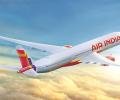
Tata Sons Chairman N Chandrasekaran on Saturday said Air India, which is undergoing a transformation, is not just a business opportunity but a "responsibility" for the Tata Group.

Prime Minister Narendra Modi convened the Cabinet Committee on Security to address the impact of the West Asia conflict on Indian citizens, focusing on safeguarding them from the conflict's effects and ensuring the smooth flow of essential supplies.

Tata Sons has the balance sheet to support them, for now.

Air Chief Marshal A P Singh, the IAF chief, has strongly advocated for India to achieve greater self-reliance in unmanned aerial systems and other critical defence technologies, stating, "Technology delayed is technology denied." He stressed the importance of indigenous development to avoid dependency on other countries for components.

Not a single retail outlet ran dry. Every household that wanted a cylinder got one. India faced neither a 1991 moment nor a 2013 one. Macroeconomic stability held. This was not an accident, and it was not luck alone. It was the work of a government that chose to act as it had during the pandemic -- deliberately and gradually, building one measure upon another rather than reaching for a single dramatic lever, explains V Anantha Nageswaran, chief economic advisor to the Government of India.

India has significantly reduced Aviation Turbine Fuel (ATF) prices for international airlines by 27% due to easing global fuel benchmarks, while simultaneously increasing commercial LPG and 5-kg cylinder prices to record highs.

Brokerage Bernstein has warned Prime Minister Narendra Modi that India risks squandering recent economic gains unless it accelerates structural reforms, particularly in jobs, manufacturing and innovation.

Nath's comments came amid the Congress party's continuous attack on Centre for the recent hike in commercial LPG cylinders and the Aviation Turbine Fuel (ATF).

Amazon plans to significantly expand its use of automation and advanced robotics, including systems like the SLAM labeler, across its Indian fulfilment centres. The company, which has committed substantial investments in India, also highlighted its global rollout of autonomous robots like Proteus and cautioned against premature AI regulation that could stifle innovation.

The Indian government is considering additional relief packages for vulnerable sectors like MSMEs to mitigate the impact of the ongoing West Asia crisis on the economy and inflation.
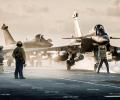
The first fuselage sections are expected to roll off the assembly line in financial year 2028, with the facility expected to deliver up to two complete fuselages per month, Tata Advanced Systems Ltd (TASL) said.

The trails of mega-mergers, tailwinds of expanding fleets, flights and airports will dot the fast-growing Indian aviation firmament in 2025, though the dark clouds of supply chain woes will persist longer. Also, new airline takeoffs, the future trajectory of revised norms to tackle pilot fatigue and efforts to reduce carbon emissions will be on the radar.

Reliance Defence, promoted by Anil Ambani's Reliance Infrastructure, has partnered with German arms manufacturer Rheinmetall AG to produce ammunition in Maharashtra's Ratanagiri. As part of the agreement, Reliance Defence will supply the explosives and propellants for medium and large caliber ammunition to Rheinmetall.

Indian benchmark equity indices Sensex and Nifty experienced a significant crash in early trade, triggered by a sharp increase in crude oil prices and escalating tensions in the Middle East.
Aviation Turbine Fuel (ATF) prices have more than doubled to a record high, impacting airlines and consumers, while commercial LPG rates also see a significant increase.
