
B Sriram, the senior-most managing director at SBI, along with fellow MDs Rajnish Kumar, P K Gupta, and Dinesh Kumar Khara had been interviewed for the post
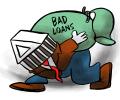
'The concern that the bad bank may create a moral hazard for the system is extremely valid.'

"I'm taking a minute to respond... I do respect Raghuram Rajan as a great scholar who chose to be in the central bank in India at a time when the Indian economy was all buoyant," Sitharaman said during the lecture organised by the Deepak and Neera Raj Centre on Indian Economic Policies of the Columbia University.

Fitch Ratings on Wednesday cut India's growth forecast to 10 per cent for the current fiscal, from 12.8 per cent estimated earlier, due to slowing recovery post second wave of COVID-19, and said rapid vaccination could support a sustainable revival in business and consumer confidence. In a report, the global rating agency said the challenges for banking sector posed by the coronavirus pandemic have increased due to a virulent second wave in the first quarter of the financial year ending March 2022 (FY22). "Fitch Ratings revised down India's real GDP for FY22 by 280bp to 10 per cent, underlining our belief that renewed restrictions have slowed recovery efforts and left banks with a moderately worse outlook for business and revenue generation in FY22," it said. Fitch believes that rapid vaccination could support a sustainable revival in business and consumer confidence; however, without it, economic recovery would remain vulnerable to further waves and lockdowns.

'In the overall global portfolio, India's weighting has come down in the past seven months.'

State-run lenders will take a lead in creation of the bad bank, but the sick asset resolution platform needs the support of private banks and other lenders to be successful, State Bank of India managing director Swaminathan J said on Thursday. If all lenders come on board, the National Asset Reconstruction Company (NARC) announced in the budget will be able to aggregate 100 per cent of a sick company's outstanding loans, which shall ultimately lead to better resolution of the asset quality stress for all. The government is yet to announce the specific contours of the NARC or the bad bank and has also only said that it is willing to provide some sovereign guarantee to help the platform.

All these companies were provided loans by PNB as part of consortium lending.

The life insurer tinkered with its business strategy - raised the share of protection plans and reduced dependency on ULIPs in the past four years.
The overall debt servicing metrics of Indian corporates are weak.

At a combined level, the fiscal deficit of the Centre and states together will come at 12.1 per cent, with the states contributing 4.5 per cent.
Top gainers in the Sensex pack included Sun Pharma, TechM, Axis Bank, L&T, Reliance Industries and ICICI Bank, which rose up to 2.66 per cent.
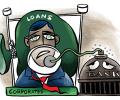
Public sector banks (PSBs) have written off a massive Rs 8 trillion of loans in the seven years of the Narendra Modi government in office. This is more than twice the capital infused by the Bharatiya Janata Party-led government during the period. Between 2014-15 and 2020-21 (FY21), the Centre had infused Rs 3.37 trillion into PSBs. At Rs 1.06 trillion, FY19 saw the highest capital infusion.

Liquidity has improved, but 20 out of 24 NBFC stocks are staring at an over 5% reduction in 12-month target prices.

While banks are busy firming up business plans for 2008-09, some of them have already conveyed to the Reserve Bank of India about prospects of a moderation in the credit growth. In March, many banks held talks with RBI on resource conditions and growth prospects. In fact, Bank of India has already scaled down the estimate for the current financial year to 17-18 per cent compared with the 24 per cent rise it had targeted in the just-concluded financial year.

The Indian economy will suffer lasting damage from the coronavirus crisis and after an initial strong rebound in FY22 (fiscal year ending March 2022) growth will slow to around 6.5 per cent a year over FY23-FY26, Fitch Ratings said on Thursday. "A combination of supply-side scarring and demand-side constraints - such as the weak state of the financial sector - will keep the level of GDP well below its pre-pandemic path," it said in commentary on the Indian economy. Fitch said India's coronavirus-induced recession has been among the most severe in the world, amid a stringent lockdown and limited direct fiscal support.
A media report in the run up to the board meet had mentioned the names of Sashidhar Jagdishan, Kaizad Bharucha and Sunil Garg as the ones who had made the cut. Jagdishan and Bharucha are internal candidates, while Garg is working with American banking major Citigroup.
Available data obscures the true stress in bank books, and the pandemic will result in balance sheet impairments and capital shortfalls at lenders, RBI Governor Shaktikanta Das said on Monday. Balance sheet impairment and capital shortfalls will be more evident once the regulatory reliefs are rolled back, Das said in the bi-annual Financial Stability Report, asking lenders to augment capital.

The state-owned bank's loss largely offsets the Rs 1,800-crore (Rs 18-billion) capital injection the government will make in FY14.

'Q1 is going to bear the brunt of the second wave, exposing full-year GDP forecasts to downward revisions, unless phase-3 of vaccination is executed quickly.'

'Any normalisation exercise will bring its share of volatility.'

On November 12, 2021, the Reserve Bank of India (RBI) decided to ring in uniformity in asset classification and income recognition across all lending institutions. Shadow banks, or non-banking financial companies (NBFCs), like commercial banks, are to test non-performing assets (NPAs) on a daily basis and upgrade them to "standard assets" only when interest and principal arrears are settled by borrowers. This is going to create all manner of headaches for shadow banks and their clientele. Says Y S Chakravarti, managing director and chief executive officer (CEO), Shriram City Union Finance: "NPA levels will go up, especially of small borrowers.

S&P Global Ratings on Wednesday said Indian banks face a systemic risk as the second COVID wave will impair the performance of financial institutions in the April-September period. Stating that economic recovery remains highly vulnerable to setbacks due to COVID, particularly if fresh outbreaks trigger new lockdowns, S&P said the banking sector's weak loans will likely remain elevated at 11-12 per cent of gross loans in the next 12 to 18 months. "The second wave has front-ended weakness in asset quality," said S&P Global Ratings Credit Analyst Deepali Seth Chhabria. "Financial institutions face a strained first half amid weak collections and poor disbursements."

The government plans to bring down its stake to 26 per cent in these two banks, which are yet to be identified. This may not come in the way of getting investors for these banks, provided the government is willing to step back rather than run them the way it had been doing for over five decades since these banks were nationalised, points out Tamal Bandyopadhyay.
Banks are set to sell dud-loans worth Rs 90,000 crore of 22 firms in the first tranche to the National Asset Reconstruction Company (NARCL). It's reason for cheer given that such sales to asset reconstruction companies (ARCs) have been poor in recent times. In fiscal 2020, their assets under management (AUM) contracted by 4 per cent; and in fiscal 2021, it fell by another 100 basis points to Rs 1.07 trillion. So, why are we where we are?

Capital needs are likely to increase substantially each year.

These consistent performers are expected to maintain momentum.

Moody's said implementation challenges, in addition to affecting growth and government revenues, will impact corporates by lowering sales volumes and cash flows.

Mid- and small-cap indices have outperformed the frontline benchmarks - the S&P BSE Sensex (up around 10 per cent) and the Nifty50 (13 per cent) - in the first half of calendar year 2021 (H1-CY21) by rallying 26 per cent and 39 per cent, respectively. The trend, analysts believe, is likely to continue in H2-CY21 as well. The outperformance in H1-CY21 comes on the back of improved earnings and strong inflows from the foreign portfolio investors (FPIs) in Indian equities. However, good monsoon so far, gradual opening up of the economy and the pick-up in the pace of vaccination provides support to the market.
.jpg)
Bank stocks have underperformed in the second quarter of FY'14 with the BSE Bankex declining 18 per cent compared to fall of 1 per cent in the BSE 30-stock index, Sensex, during this period.

The growth had slumped to sub-5 per cent in the earlier two consecutive fiscals.

NPA problem to continue for next 2-3 quarters: banks to FinMin

Raghuram Rajan's 'surgery' uncovers more bad loans
The report said resilience of the banks has increased with a sharp improvement in the provision coverage ratio to 60.6 per cent in March 2019 from 52.4 per cent in September 2018 and 48.3 per cent in March 2018.
In his first comments after resigning as RBI governor on December 10 last year amid sharp differences with the government, Patel said banks indulged in over-lending, while the government did not "fully play" its role, and also conceded that the regulator should have acted earlier.
All shares held by SBI in the five associate banks will stand cancelled after merger.

Experts said banking is a play on the economy and the latest buying into this space is underpinned by hopes of a sharper-than-expected recovery in the economy.

Fitch Ratings on Wednesday said India's high fiscal deficit would pose a challenge in lowering the debt to GDP ratio, which is expected to rise above 90 per cent in the next five years. It said India entered the pandemic with little fiscal headroom from a rating perspective. Its general government debt/GDP ratio stood at 72 per cent in 2019, against a median of 42 per cent for 'BBB' rated peers.
The non-watchlist stress emanated from over five year-old loans in the iron and steel, infrastructure and construction sectors.
The stock was the top gainer among the blue-chips on both Sensex and Nifty.

The RBI has cited corporate governance and regulatory issues for not extending Kapoor's term. Further, the lender has been directed to search for a successor.
