
It's going to be another predictable quarter for banks. Slower credit growth, high interest rates and deteriorating asset quality will continue to haunt the sector, especially public sector banks.
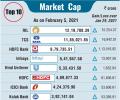
Reliance Industries Limited was leading the chart of the top-10 valued domestic companies, followed by Tata Consultancy Services, HDFC Bank, Infosys, Hindustan Unilever Limited, HDFC, ICICI Bank, Kotak Mahindra Bank, State Bank of India and Bajaj Finance Limited.

The problem for the NBFC sector is the funding inertia by banks and not lack of funds.

M&M was the top gainer in the Sensex pack, soaring over 10 per cent, followed by L&T, IndusInd Bank, Bajaj Finserv, SBI, Bajaj Finance, ICICI Bank and Kotak Bank. On the other hand, HUL, ITC, Titan TCS and Bharti Airtel were among the losers.
Giving their presentation at the CLSA investor forum, HDFC chairman Deepak Parekh, vice chairman and chief executive officer Keki Mistry and MD Renu Karnad highlighted that the competitive environment has been stable and HDFC can deliver 18-20 per cent loan growth with stable margins and asset quality.

Other gainers included Nestle India, Asian Paints, Bajaj Finance, NTPC, L&T, Axis Bank and Bajaj Auto. On the other hand, TCS, ONGC, Infosys, HDFC and SBI were among the laggards. NSE Nifty surged 121.65 points or 1.03 per cent to 11,889.40.

'For the next two years, we expect the bulk of earnings growth contribution from sectors like financials and energy, where the outlook remains positive, while the sectors which are linked to domestic consumption and are currently witnessing strains on margins have low salience for Nifty earnings.'

'Large-caps are better placed to withstand the impact of higher input cost inflation, rising rates and withdrawal of excess global liquidity.'

ICICI Bank was the top gainer in the Sensex pack, rising over 3 per cent, followed by ITC, SBI, HCL Tech, Axis Bank, Bajaj Finserv and Tech Mahindra. NSE Nifty advanced 32 points to 15,856.05.

The stress in the banking sector, which mirrors the stress in the corporate sector, has to be dealt with in order to revive credit growth.

Gross NPAs of public sector banks were Rs 41,378 crore (Rs 413.78 billion) in March 2006, which came down to Rs 38,305 crore (Rs 383.05 billion) in March 2007 because of better economic environment.
Led by state-run banks which are set to report increased strains on asset quality, the banking sector is set to see net profits decline by 11 percent in Q1 as compared to the last quarter of 2011-12, says a StanChart Securities report.
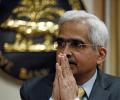
Economic activity has regained momentum from late-May after the dent caused by the second wave of COVID-19, and the pandemic's impact on the overall asset quality has been less than expected, Reserve Bank Governor Shaktikanta Das said on Thursday. However, Das flagged rising data breaches and cyber-attacks as among the risks for the recovering economy, along with others like firming global commodity prices. The governor also said the second wave had a "grievous toll" on the country.

'While we note the very strong cyclical recovery in the economy, we believe there is still uncertainty over medium-term prospects.'

Three stockmarket experts give their best picks for the New Year.

'If the third wave of Covid infections is as bad as the second one, the market may get very polarised with a preference for blue-chips with low volatility.'
Moody's expects that India will record the GDP growth of around 7.5 per cent in 2015 and 2016.

While the stress is lower than projections, it would be higher than what we saw last year because of the pandemic: Axis.

The Cabinet on Wednesday gave in-principle approval for strategic disinvestment along with transfer of management control in IDBI Bank in line with the Budget announcement earlier this year. The central government and LIC together own more than 94 per cent equity of IDBI Bank. LIC, currently the promoter of IDBI Bank with management control, has a 49.21 per cent stake. The Cabinet Committee on Economic Affairs chaired by Prime Minister Narendra Modi approved the strategic sale of IDBI Bank, an official statement said on Wednesday.
Net profit rose to Rs 1,982 crore (Rs 19.82 billion) in the quarter ended September 30 from about Rs 1,560 crore (Rs 15.6 billion) a year earlier, the bank said on Tuesday. Net interest income grew nearly 15% to Rs 4,480 crore (Rs 44.8 billion).
Asset quality of banks, which saw some improvement in the second half of 2020, is likely to worsen during the first six months of 2021, according to a survey. The findings are part of the 12th round of bankers' survey carried out by FICCI-IBA between July and December 2020. The survey was conducted on 20 banks, including public sector, private sector and foreign banks, representing about 59 per cent of the banking industry, as classified by asset size.
The management, however, is a bit wary about near-term performance.

Highlights of Economic Survey 2020-21, tabled in Parliament by Finance Minister Nirmala Sitharaman on Friday.

Moody's said the asset quality of the banks will remain under pressure.

Indeed, there were frauds, and the politician-banker-industrialist nexus played a role in the rise of NPAs, but governance issues in Indian banking are far more nuanced and complex, reveals Tamal Bandyopadhyay.

Experts say a combination of improving asset quality and NBFCs' weak balance-sheets bodes well for both corporate and retail banks.

Banks such as IndusInd Bank, Federal Bank, DCB Bank and Axis Bank which have renewed their focus on secured loans may be, hence, walking on a tightrope.
Managing expectations is a challenge for policymakers.

Check out some of the stocks that will react on the basis of their numbers in the near term.

Amid an increase in localised lockdowns across the country, Reserve Bank Governor Shaktikanta Das on Wednesday said there is no need for a loan repayments moratorium at present, stating that businesses are better prepared to face the situation. It can be noted that the RBI had announced a six-month moratorium in the early days of the national lockdown last year to help borrowers impacted by a chilling in economic activity. The entire state of Maharashtra is in a lockdown for non-essential services and localised and night lockdowns are being observed in many pockets of the country, including the national capital, to restrict the surge in cases.

Gross Non-Performing Assets rose to 12.90 per at the end of March, from 6.55 per cent a year ago.

'India's sizeable foreign exchange reserves should serve as a buffer.'

The country's largest lender State Bank of India (SBI) on Wednesday reported a 55 per cent increase in consolidated net profit at Rs 5,245.88 crore for the second quarter ended September 30 on account of decline in bad loans. The bank's net profit stood at Rs 3,375.40 crore in July-September quarter of the previous fiscal, SBI said in a regulatory filing.
The bank expects to grow loan book by 10 per cent in the current financial year with calibrated exposure to corporate accounts and thrust on the retail segment.

Report says stressed asset level to peak at 15% in 2014-15.

SBI, which accounts for a quarter of the country's loans and deposits, said on Wednesday its net profit fell 35 per cent to Rs 2,375 crore (Rs 23.75 billion) in the quarter ended September.
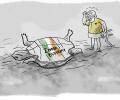
S&P Global Ratings on Wednesday said the second wave of COVID infections poses downside risks to India's GDP and heightens the possibility of business disruptions. The second wave brings in uncertainty and a drawn-out COVID outbreak will impede India's recovery, it said.
The country's largest lender SBI on Thursday reported a 4.20 per cent decline in consolidated December quarter net at Rs 6,257.55 crore, largely because of a higher base in the year-ago period where it had benefitted from a Rs 4,500 crore one-off income. On a standalone basis, the city-headquartered lender's net profit came in at Rs 5,196.22 crore as against Rs 5,583.36 crore in the year-ago period and Rs 4,574.16 crore in the preceding September quarter. SBI chairman Dinesh Kumar Khara told reporters that the year-ago period had seen the resolution of the Essar Steel loans, resulting in an over Rs 4,000 crore interest income and Rs 500 crore other income benefit.

Moody's Investors Service on Friday said India's economy is expected to contract for the first time in more than four decades saying economic damage owing to the coronavirus-induced lockdown will be significant with lower consumption and sluggish business activity. Even before the coronavirus outbreak, Indian economy already was growing at its slowest pace in six years and with the stimulus measures announced by the government falling short of expectations, the disruptions are likely to be greater. "We now expect India's growth to register a real GDP contraction for the fiscal year ending in March 2021 (fiscal 2020-21), from our earlier projection of zero growth," it said in a research note.

Fitch Ratings on Monday said the plan to privatise two state-owned banks in the current financial year ending March 2022 could face delays amid renewed challenges for the Indian banking sector due to the second wave of Covid-19. The government in the Budget announced plans to privatise two public-sector banks. NITI Aayog has been entrusted with the task of selecting the banks and one general insurance company for the privatisation.
