
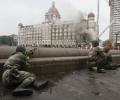
'A close look at the time-lines tells you that exactly as the back-channel negotiations were in their most crucial stage, "somebody" was planning the 26/11 attacks in Mumbai,' says Shekhar Gupta questioning Khurshid Mahmud Kasuri's account of a peace deal with India.

'General Bajwa is believed to consider the internal threats to Pakistan's security as far more serious than the bogey of the Indian threat.' 'This doesn't mean that he is soft on India, only that he is more rational and sensible than his predecessor who had a bit of a chip on his shoulder about India,' points out Pakistan expert Sushant Sareen.
Through its early days to the 1980s, Pakistan sought to expand its sphere of Islamic influence through Afghanistan to Central Asia and got Pakistani citizens recruited in the Afghan government institutions in the 1990s when the Taliban were power. Now, it is looking eastward through India to Bangladesh and Myanmar to establish an imaginary caliphate.

The US needs to do three things to help the newly elected Nawaz Sharif government in Pakistan, says Stanley A Weiss
.jpg)
Pundits in Pakistan and also some western diplomats are predicting that the next army chief will be forced, partly by institutional pressure and partly by circumstances, to indulge in some tough talking with the civilian leadership. How the civil-military equation settles in this sort of a situation is something that will determine the future of Pakistani politics, and also Pakistan's relations with rest of the world, says Sushant Sareen.
 © 2026 Rediff.com - Investor Information - Advertise with us - Disclaimer - Privacy Policy - Sitemap - Feedback - About us - Terms of use - Grievances