
There is record underperformance and under-ownership. Some of this is cyclical and will turn on its own. However, we also need to regain our growth credentials. For this, both the government and companies have a role to play, as do investors, points out Akash Prakash.

'India may never fully participate in the AI hype cycle, but we can position ourselves to benefit from its inevitable disenchantment and the cycle of disillusionment,' alerts Akash Prakash.

You can't be the second-most expensive market in the world and deliver just 10 per cent EPS growth, points out Akash Prakash.

Many promoters still consider the cash in the company as their money and are averse to sharing this pie with minority investors, points out Akash Prakash.

Have the markets already played out their dynamics before the economy has even properly taken off? Are we now destined for a period of mediocre returns despite a strong economy? asks Akash Prakash.

Could it have been more reformist? Of course, but this is an election year Budget, observes Akash Prakash.

Expect heightened volatility and stress to hit the markets. Caution may be the need of the hour, alerts Akash Prakash.

It's the first time in my memory that I have seen a negative expected return for equities, notes Akash Prakash. Hopefully, this implies the consensus is being too negative, and markets, as usual, will surprise everyone and deliver the least likely outcome.

The funding marks the first investment in the Indian food delivery category by SoftBank Vision Fund 2, with participation from the company's long-term investor, Prosus, and other existing investors Accel Partners and Wellington Management, Swiggy said in a statement. In addition, new investors Qatar Investment Authority, Falcon Edge Capital, Amansa Capital, Goldman Sachs, Think Investments and Carmignac participated in the round, it stated. This latest fundraise was heavily oversubscribed following strong interest from investors, and comes on the back of Swiggy's rapid recovery from the impacts of COVID-19 and subsequent growth in 2020-21, Swiggy said.

Since October, FPIs have sold over $26 billion worth of stocks, which is the largest selling ever seen in India, observes Akash Prakash.

The fundamental debate remains where you stand on the long-term growth question. That is what every investor must monitor and come to their own conclusions, suggests Akash Prakash.

The market price action seems to point in this direction. Let's hope we finally break out. It is about time! asserts Akash Prakash.

Zomato has the potential to be an equally important milestone for Indian equity markets, notes Akash Prakash.

After years of disappointing growth, the economy and the markets are poised for a breakout, notes Akash Prakash.

Markets are assuming that by the second half of 2021, the world will be approaching some type of normalcy, points out Akash Prakash.

The broadening of the market rally sends the signal that growth will be broad-based, observes Akash Prakash.

It is not clear as to whether we are in a bubble in technology stocks. What is clear, however, is that there is no reason why this potential bubble will pop anytime soon, notes Akash Prakash.

'Once the lockdown is lifted, we will need the mother of all fiscal and monetary policy support to sustain the economy,' advises Akash Prakash.

Are we seeing a replay of March 2000? What are the similarities and differences and how worried should we be, asks Akash Prakash.

'If India can only grow at 5%, why bother spending time on the country?' asks Akash Prakash.

There are also signs that the private sector investment cycle is slowly coming back, as capacity utilisation figures across industry continue to slowly creep up. A pickup in investments will front load profitability, says Akash Prakash.

Just when stocks are seen as invincible, we should worry, warns Akash Prakash.

A strengthening dollar, rising interest rates, tightening liquidity and a surge in oil prices - all are combining to create a toxic atmosphere for EM assets, says Akash Prakash.

'My sense is that we should be braced for a correction.' 'It has already begun in the mid-caps for the past month, and will now spread to larger stocks as well.' 'Use the correction to upgrade the quality of your portfolio,' advises Akash Prakash.

Indian companies seem to be trailing behind. They will have to catch up by reskilling the workforce and ramping up investments.

Determining the direction of the dollar in Trump's America will be more critical for asset allocation than getting your call on interest rates right, says Akash Prakash.

'The pressure on relative performance and the feeling of being left out among many investors may also account for the belief among many that this has to be a technology stock bubble.' 'The feeling of a bubble is also reinforced by the extreme performance gap between growth and value investing.' 'While at first glance, one can only stand back awestruck by the wealth creation delivered by technology stocks globally. It does not seem at all like the internet bubble of 1999-2000, says Akash Prakash.

Indian IT giants are outstanding companies with great management teams, but they have been held hostage by their past success.

While demonetisation will benefit the organised sector, the government has to find a way to channel the upcoming revenue buoyancy towards job creation to balance out job losses in the informal sector, says Akash Prakash.

There are good reasons to believe that India is at the start of a long period of growth for equities.
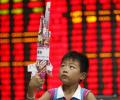
Most analysts had predicted a decline in real estate fixed asset investment.

A new CBDT directive actively makes India-dedicated funds comparatively unattractive for institutional investors. It makes no sense, says Akash Prakash.

As for structural reform, there are signs if one looks hard enough.

Public sector banks' need for capital should be used to make fundamental reforms to their governance and management.

Even US equities are now back to end-2014 levels.

Emissions would still keep rising till 2030, and the path towards global warming would improve to 2.7c.

There is uncertainty in most investors' minds as to whether China is transitioning to a new growth model or simply collapsing.

It is by now quite clear that in all likelihood the US Federal Reserve will hike interest rates in its next meeting in mid-December.

Expectations were probably too high from Narendra Modi.

The Chinese economy is not collapsing, it is shifting to different growth drivers which the old metrics used to judge China do not pick up.
