
Reema Kagti and Ruchika Oberoi's eight-part crime drama Dahaad, starring Sonakshi Sinha, Vijay Varma, Gulshan Devaiah and Sohum Shah will have its world premiere at the Berlin International Film Festival.

Following are comments from economists at leading financial institutions, banks and rating agencies on the interim Budget:

Abheek Barua analyses varied nuances of the Union Budget.
If the Budget has to be announced by July, there simply isn't enough time to entirely rework the interim Budget and produce an alternative set of forecasts.
Inflation targeting is not de facto a kind of shock therapy that the RBI wants to administer.
It's in the same boat as other emerging markets with current account deficits, but the recent capital-raising measures may help
The developed world's recovery, particularly that of the US, is not necessarily a positive for the Indian market.
The response by the finance ministry and the RBI to the churning in financial markets is mature.
While euphoria over the Iran deal has waned sharply, the current account deficit has gone into remission due to a collapse in gold demand.
Investors need to ask some basic questions before betting in the markets on the Gujarat model's national success.
The RBI's strategy to feed dollars to oil marketing companies directly from its dwindling reserves is not sustainable

The Reserve Bank of India (RBI) will stay away from changing key rates - including the reverse repo rate - this fiscal in the backdrop of Omicron. However, it will continue to shape the rate movements through liquidity market operations. Soumya Kanti Ghosh, group chief economic advisor, State Bank of India, said whether Omicron surge or not, there is not going to be any hike this year. However, the central bank may continue to shape rates through market operations.
It is against China's interest to shift away from dollar.
It is logical to believe the measures that have been introduced are 'temporary'.
The Fisc and savings-investment gap lie at the heart of policy responses.

Finance Minister Pranab Mukherjee was saddled with a number of handicaps when he presented the Union Budget 2012-13 on Friday morning.
The index of industrial production -- gauge of industrial activity in terms of production -- showed a 2.4 per cent growth in May, down from 6.2 per cent a year ago.

Turbulence in financial markets could mean that 'exit' from expansionary policies will be delayed.
ABN Amro may hike interest rates by 25-40 basis points by middle of 2006 and 50-70 basis points by the end of the year.
While there are certainly more hawks perched on monetary policy committees of central banks around the world now than a couple of months ago, the doves still have the upper hand.
The sell-off in the equity markets, especially by foreign institutional investors, could have a ripple effect across asset classes and adversely impact consumer spending.

RBI does need to keep signalling to the markets that it is tough on inflation.

Hardly ever, because none of them has a crystal ball and all of them depend on current trends.

The prospect of the Chinese central bank tightening rates is the biggest risk for the financial markets, says Abheek Barua.

The RBI may be concerned about inflation but it is unlikely to put an abrupt end to monetary accommodation
The International Monetary Fund says India will clock growth of 8.4 per cent in the coming year.
Credit growth has slowed down from around 32 per cent (year-on-year) in July 2006 to around 23 per cent in August. Anecdotal evidence suggests that much of the deceleration in growth has come on the back of softer retail credit off-take.

As COVID-19 infections spike in the country resulting in restrictions in various states and impacting the fragile recovery, many economists are expecting RBI to delay the policy normalisation move, which is expected in the February review. The country has reported a single-day rise of 58,097 new Covid-19 cases as of Wednesday morning--the highest in around 199 days -- of which 2,135 are Omicron cases and later in the day, the first confirmed Omicron-related death has also been reported. Maharashtra recorded the maximum number of 653 Omicron cases followed by Delhi at 464, Kerala 185, Rajasthan 174, Gujarat 154 and Tamil Nadu 121 cases, taking the total tally of cases to 3,50,18,358.

Economist Abheek Barua's insight into the global and domestic economy at the turn of the financial year.

Globalisation with small government has not been a successful pairing.

The rise in US interest rates and associated change in the direction of capital flows, the fall in oil prices and the slowdown in China will dominate the markets, say Abheek Barua and Bidisha Ganguly

China is keen to rebalance its economy towards higher consumption, services, technology use and value-added exports. The hope is that its currency will strengthen as the world embraces it as a global trade and reserve currency, say Abheek Barua & Bidisha Ganguly.

The dollar gained strength with the emergence of the US as the only developed economy showing signs of recovery.

Having exposure to international funds and gold is a must for those who have foreign currency-denominated goals.

The fact that the US recovery needs an elaborate defence suggests that things are far from certain.

Political risk culminating from elections in the US and Latin America, and evolving right-wing populism in Europe could lead to substantial volatility, say Abheek Barua & Tushar Arora.

Abheek Barua & Bidisha Ganguly explain why the US treasury should intervene if the overvalued greenback continues to rise.

The majority in the markets believe that a September lift-off is likely.
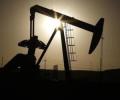
OPEC's move to cut output has pushed up oil prices. From here it could go either way: oil could reach $100/barrel or an analysis of demand and supply might follow, say Abheek Barua & Bidisha Ganguly.
 © 2026 Rediff.com - Advertise with us - Disclaimer - Privacy Policy - Sitemap - Feedback - About us - Terms of use - Grievances