
Lashkar-e-Tayiba operations commander Zaki-ur-Rehman Lakhvi, one the seven Pakistani nationals accused of planning and abetting the 2008 Mumbai terror attacks, was granted bail on Thursday by the anti-terrorism court in the country.
Delhi Police's Special Cell has arrested a suspected Lashkar-e-Taiba operative from the Ghazipur area. The accused, Shabbir Ahmad Lone, is suspected of working as a sleeper cell member and has alleged links to Pakistan's ISI.

The Lashkar-e-Tayiba may be try to free 26/11 prime accused Zaki-ur Rehman Lakhvi from prison after Pakistan confirmed his role in the Mumbai attacks to India last week.
Pakistan's Supreme Court adjourned for two weeks the hearing of Lashkar-e-Tayiba commander Zaki-ur-Rehman Lakhvi's petition seeking his acquittal in a case related to the Mumbai attacks in order to study Ajmal Kasab's confessional statement.

Lakhvi's lawyer Khwaja Sultan, who has been accused by the prosecution of filing numerous petitions to delay the trial, told PTI that his client would not approach the Lahore High Court for bail.
Pakistan Army Chief General Ashfaq Pervez Kayani refused an American request to confiscate the cell phone of jailed Lashkae-e-Tayiba commander Zaki-ur-Rehman Lakhvi being used to direct group's operation from the Rawalpindi jail, reflecting connection between the country's military and the terrorist outfit.
Lakhvi is a top-ranking prisoner in Pakistan. It does not appear as though he is in judicial custody, but looks like he is living a normal life. Vicky Nanjappa reports
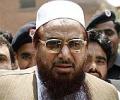
India had also sent proof and request for issuing a similar warrant against Lashkar commander Zarar Shah and Abu Al Qama, to which the Interpol has said that it was analysing the evidence against them.

India has conveyed to Pakistan its "strong concern" on the grant of bail to key 26/11 Mumbai attack handler Zaki-ur-Rehman Lakhvi, saying the release will make a mockery of Pakistan's commitment to fight terror groups without hesitation and without making distinctions.

Pakistan's Punjab government on Tuesday challenged the Lahore high court's decision to suspend the detention of Lashkar-e-Tayiba operations commander and 2008 Mumbai attack mastermind Zaki-ur-Rehman Lakhvi in the supreme court, saying his release has created problems for it.
Describing Faheem Ansari and Sabauddin Ahmed as "co-conspirators" in the 26/11 attacks, Special Public Prosecutor Ujjwal Nikam on Wednesday told the Bombay high court that the trial court had erred in acquitting the duo by giving them the benefit of doubt.
India will seek access to Zaki-ur-Rehman Lakhvi and other handlers of the 26/11 terror attack during the foreign secretary-level talks with Pakistan on Wednesday, a "not very optimistic" home minister P Chidambaram said on Tuesday.
Lakhvi, who was on bail since 2015 in the Mumbai attack case, was arrested by the Counter-Terrorism Department.
China has blocked India's move in the UN demanding action against Pakistan over the release of Mumbai attack mastermind and LeT commander Zaki-ur-Rehman Lakhvi in violation of a resolution of the world body as it contended that India provided insufficient information.
The NIA, which has been on the trail of American terror operative David Coleman Headley, had been hoping to piece together the terror jig-saw by gaining independent access to Lashkar-e-Tayiba founder Zaki-ur-Rehman Lakhvi and Jamaat-ud-Dawah chief Hafiz Saeed, who are alleged to have masterminded the Mumbai carnage.
Haroon Naik, an arrested accused in 13/7 Mumbai blasts, had met Lashkar-e-Tayiba operations chief Zaki-ur-Rehman Lakhvi and was present at an "inspirational" lecture by slain al Qaeda leader Osama Bin Laden in Pakistan just a month before the 9/11 attack.

A Pakistani court on Monday barred the government from booking Zakiur Rehman Lakhvi, the 2008 Mumbai attack mastermind, in any other case without its permission after his counsel argued that "false" cases might be slapped against him to keep him in jail.

The Pakistan government on Monday failed to file a plea challenging the bail to Zaki-ur-Rehman Lakhvi even as the key planner of 2008 Mumbai attack filed a petition in the high court in Islamabad against a court's decision to make a judicial panel's record a part of evidence in the 26/11 case.
Mumbai attack mastermind Zaki-ur-Rehman Lakhvi, who has been remanded to police custody in an abduction case, on Wednesday challenged his detention on charges of kidnapping in a Pakistani court.
A Pakistani court on Friday suspended the detention order of Lashkar-e-Tayiba operations commander Zaki-ur-Rehman Lakhvi, the 2008 Mumbai terror attack mastermind, and ordered his immediate release, drawing India's ire.
'We are not going to let him go free. Justice will be served,' a Pakistan official tells Rediff.com contributor Shahzad Raza in Islamabad.

Sri Lanka's response to the Easter attacks has been slow and politically contested, unlike India's swift institutional reforms after the 2008 Mumbai terror attacks, observes Colonel R Hariharan (retd).

In a major counter-terror operation spanning three states, the Delhi Police has dismantled a Lashkar-e-Taiba (LeT) module comprising eight operatives, including seven Bangladeshi nationals who had illegally entered India and procured forged identity documents, an official said on Sunday.
From an expert bomb maker to a small time shopkeeper selling perfumes near Muridkee in Pakistan, Abdul Karim Tunda has claimed that top Lashkar-e-Tayiba commander and Mumbai attack mastermind Zaki-ur-Rehman Lakhvi calls the shots in the terror outfit.
For Lashkar-e-Taiba, Ajmal Kasab's conviction is nothing, but good news. At least that is what lawyers in Pakistan -- who defend the likes of Zaki-ur Rehman Lakhvi feel. "Kasab's conviction at Indian court means I have won the case of Lakhvi and other accused," a lawyer told rediff.com. Shahbaz Rajpoot, lawyer for Lakhvi and other accused said, "The verdict against Kasab has eased down my case, now there is no difficulty to prove my clients' innocence."
Lakhvi's reported arrest, if confirmed, speaks of the intense pressure on Pakistan from the US to act against the Lashkar. India, the US and the rest of the international community should ensure that this is not a cosmetic step like similar steps in 2002 and that the LeT infrastructure in Pakistan is dismantled and those involved in the Mumbai terrorist strike against Indians, Israelis, Americans and others are brought to justice.
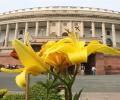
The Rajya Sabha on Monday adopted a resolution condemning the bail granted to Mumbai attack mastermind Zaki-ur Rehman Lakhvi and asked Pakistan to ensure that no perpetrator of any terrorist activity went unpunished.
A year after the ghastly Mumbai terror attacks, in which about 170 people were killed and numerous lives were ruined, Pakistan is yet to take credible action against the perpetrators.
Ajmal Kasab has revealed details of the 'final lesson' or shahdat given to him and his nine associates. The motivational speech was delivered by Lashkar-e-Tayiba terrorist Zaki-ur Rehman Lakhvi, before he escorted them to Karachi port.
The United Nations Security Council has placed sanctions on Pakistan-based Jamaat-ud-Dawa, the front organisation of banned Lashkar-e-Tayiba, declaring it a terrorist organisation.Four top leaders of LeT including Hafiz Muhammad Saeed, Zaki-ur-Rehman Lakhvi, Haji Muhammad Ashraf and Zaki-ur-Bahaziq have also been declared as terrorists by the UNSC.Imposing the sanctions, the Council asked all member states to freeze their assets and impose travel ban and arms embargo.
Pakistan on Monday termed as "irrational" India's strong reaction to a court's ruling ordering release of 2008 Mumbai terror attack mastermind Zaki-ur-Rehman Lakhvi, but hoped that the issue will not affect the proposed bilateral talks.
The government has given its sanction to charge sheet nine people including Pakistani-American terrorist David Headley, Lashkar-e-Tayiba founder Hafiz Saeed and two Inter Services Intelligence officers for plotting terror attacks in India including the 26/11 strikes.
The list in 2018 contained about 7,600 names. It has been reduced to under 3,800 in the past 18 months, according to Castellum.AI, a New York-based regulatory technology company. About 1,800 of the names have been removed since the beginning of March, according to data collected by Castellum.

India on Thursday reacted strongly to release 2008 Mumbai terror attack mastermind Zaki-ur Rehman Lakhvi
She said China's blocking of India's move in the UN for action against Pakistan over 26/11 plotter, saying it was at "variance" with progress in ties.
Two years after his role in terror activities surfaced, the National Investigation Agency on Saturday chargesheeted Lashkar-e-Tayiba operative David Headley, Lashkar founder Hafiz Saeed and two Inter-Services Intelligence officers for plotting terror attacks in India including the 26/11 strikes.

In a sharp reaction, India on Monday conveyed to Pakistan its "strong concern" at the lack of effective action by it in the case of Mumbai attack mastermind Zakiur Rehman Lakhvi, saying there seems to be no end in sight to that country remaining a safe haven for well-known terror groups.
Jamaat-ud Dawa chief Hafiz Muhammad Saeed has moved the Lahore high court seeking direction for the Pakistan government to defend him, Inter Services Intelligence officians and others before a United States court, which has issued summons to them in connection with the 2008 Mumbai terror attacks.
Lashkar founder Mohammad Sayeed and 26/11 attacks accused Zaki-ur Rehman Lakhvi must be neutralised one by one if Pakistan does not act against them, says Brigadier Gurmeet Kanwal (retd).
National Investigation Agency has moved a Delhi court for issuance of non-bailable warrants against Pakistani-American terror suspects David Headley, Tahawwur Hussain Rana and Pakistan-based Zaki-ur-Rehman Lakhvi and Hafiz Saeed on the charge of plotting terror attacks in India.
 © 2026 Rediff.com - Advertise with us - Disclaimer - Privacy Policy - Sitemap - Feedback - About us - Terms of use - Grievances