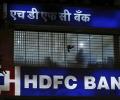
HDFC Bank Q4 review: HDFC Bank's January-March quarter (Q4) results, for financial year 2022-23 (FY23), brought no cheer to investors as elevated costs, and merger-related uncertainties continue to dent the sentiment. Moreover, analysts fear that merger-related costs may put pressure on margins and cost to income ratio in the near-term, while the return on equity could moderate owing to low leverage of the parent. Analysts, therefore, opine that the stock's re-rating may be some time away. "While the risk of a de-rating on a standalone basis appears to be quite low given that the business performance is holding up well, we believe a re-rating in the stock would happen as and when more clarity emerges on the smooth transition (merger)," said a report by Sharekhan.

The stock of Divis Laboratories is up 10 per cent over the last couple of trading sessions on expectations that the worst is behind and the company could see a sequential growth in the March quarter of the 2022-23 financial year (Q4FY23). The stock witnessed the highest downgrades among Nifty50 index stocks with earnings cuts over a third after the Q3FY23 results. The company had posted a 32 per cent drop in revenues over the year ago quarter in Q3FY23 and 8 per cent sequentially, which was sharply lower than Street expectations.

The National Company Law Tribunal's (NCLT's) declaration that Zee Entertainment is bankrupt adds a new measure of uncertainty to the proposed merger with Sony. Three entities -- Aditya Birla Finance, IndusInd Bank and YES Bank -- have filed appeals in the NCLT for recoveries of Rs 130 crore, Rs 90 crore and Rs 540 crore, respectively. The money was borrowed by a related party - Siti cable - and not returned. Zee was a corporate guarantor.

India's traditional PC market, inclusive of desktops, notebooks, and workstations declined by 11.7 per cent year-on-year (YoY) in Q3CY22 (Jul-Sep) after 8 consecutive quarters of growth despite strong shipments of 3.9 million units, according to new data from the International Data Corporation (IDC) Worldwide Quarterly Personal Computing Device Tracker. All segments declined except the government, which grew by 91.5 per cent YoY on the back of government orders, leading to strong growth in the third consecutive quarter. While the desktop and workstation categories grew by 23.4 per cent and 17.6 per cent YoY respectively, the notebook category declined by 19.5 per cent YoY.

Bank of Baroda Q4 results: Key brokerages have raised their target prices on Bank of Baroda after the state-owned lender posted better-than-expected March quarter (Q4FY23) results. Analysts now see up to 29 per cent upside in the stock from a one-year perspective as they believe BoB is well-placed among the large public banks with nearly all key business metrics moving closer to the top-tier banks. Valuations, too, remain attractive despite steady strong quarterly performances.

The 2023 Budget set off a downtrend in the listed life insurance company stocks. The key reason was a proposal to tax income from insurance policies (other than unit-linked insurance plans or ULIPs) with a premium, or aggregate premium, of above Rs 500,000 per annum. This impacted the traditional savings profile since it affected the returns for these products.

Despite rising interest rates, and high inflation, the banking sector is doing well, on the back of a recovering economy. The last couple of quarters indicate credit demand is picking up and Return on Assets (RoA) is more than acceptable at the moment. The PSU bank pack may be more interesting at the moment simply due to being valued at far lower multiples than the private banks.

FMCG major Hindustan Unilever on Wednesday reported a 1.53 per cent decline in consolidated net profit to Rs 2,561 crore for the fourth quarter ended March 31, 2024 due to factors such as deflation and softening of commodity prices. The company had posted a net profit of Rs 2,601 crore in the year-ago period, according to a regulatory filing from HUL. Net sales of Hindustan Unilever Ltd (HUL) were almost flat to Rs 15,013 crore in the March quarter.

Amid better semiconductor chip supplies, the Indian automotive industry posted an 8 percent growth in production of vehicles across categories for the month of May, with three-wheelers (20 per cent) and passenger vehicles (16 per cent) leading the pack. Exports, however, dipped 21 per cent at an industry level. The industry also recorded its highest-ever May wholesales of domestic passenger vehicles (334,802 units), riding on high demand for sport utility vehicles (SUVs) and better supplies of semiconductor chips.
Benefitting from the economic rebound, banks are expected to report a healthy bottom-line and asset quality profile in the quarter ended March 2023 (Q4FY23). The net profit of listed commercial banks is projected to grow by an average 43.6 per cent year-on-year (YoY) in Q4FY23 amid better net interest margins (NIMs) and declining credit costs. This is based on a combined assessment of analyst estimates for 17 banks on Bloomberg database.

The cement sector may be looking at better realisations and higher volume offtake going by the trends of the October-December quarter of the 2022-23 financial year (Q3FY23), a recent price hike, and the promise of a continued infrastructure thrust in FY24. In Q3, revenues rose by an aggregate of 17 per cent year-on-year (YoY), but Ebitda (earnings before interest, tax, depreciation and amortisation) per tonne, fell by 14 per cent YoY while profit after tax (PAT) rose by 23 per cent YoY. Expenses were up 30 per cent per tonne YoY - power and fuel costs in particular - and that's no surprise given the rise in fossil fuel prices.

Corporate earnings grew in double digits during the April-June 2022 (Q1FY23) quarter but the momentum waned. Overall corporate earnings in the quarter were down sharply from their highs in FY22. The combined net profit of 2,981 listed companies across sectors in the Business Standard sample was up 22.4 per cent YoY to Rs 2.24 trillion in the June quarter, driven by a big jump in the earnings of banks, non-banking lenders, oil & producers, and FMCG companies. Also, earnings in the corresponding quarter a year ago were affected because of the second wave of the Covid pandemic, even though the numbers were a lot better than Q1FY21 when there was a nationwide lockdown.

The combined net profit of "early bird" companies, those that have declared their quarterly results, rose for the third consecutive quarter in July-September 2023 (Q2FY24). But the figures suggest a continued slowdown in revenue growth and stagnation in earnings over recent quarters. This slowdown is severe for companies in the manufacturing and non-financial service sectors.

ONGC's January-March quarter results for the 2022-23 financial year (Q4FY23) indicated changes in the trends of the energy cycle as well as the impact of policy change in gas-pricing. The public sector oil and gas major reported standalone Ebitda (earnings before interest, tax, depreciation and amortisation) at Rs 16,340 crore, down 12 per cent year-on-year (YoY), and down 20 per cent quarter-on-quarter (QoQ). There was a net loss of Rs 250 crore due to exceptional items of Rs 9,240 crore for provisions related to the ongoing dispute regarding the applicability of service tax and goods and services tax on Royalty.

The automobile sector has started seeing volume growth, the crucial economy segment included. Maruti Suzuki India (MSIL) could be a big beneficiary as the country's largest passenger vehicle (PV) maker has seen several favourable developments including volume recovery. Demand for its new sports utility vehicles (SUVs) appears to be good, and the company has 4 lakh outstanding orders by April 2023, (up from 3.6 lakhs in January 2023). Siam (Society of Indian Automobile Manufacturers) estimates that passenger vehicle demand would grow by 5-7 per cent in the 2023-24 financial year (FY24) and MSIL is likely to beat the market growth.

The "asset-right" strategy, reiterated by ITC chairman Sanjiv Puri during the company's 112th annual general meeting (AGM) on August 11, received a thumbs up from the analysts. They, however, believe that sustained earnings growth and synergies with the demerged hotel's vertical will help the stock break out from the ongoing consolidation. "The stock is expected to consolidate between Rs 420 and Rs 450 in the near future.

The stock of the country's largest listed oral care company -- Colgate-Palmolive (India) Ltd is up 18 per cent over the past month. The gains were led by better than expected June quarter (Q1) performance of the 2023-24 financial year (FY24) and growth revival expectations of the oral care category. The company's volume growth is pegged at 5-8 per cent in Q1FY24. This is the second consecutive quarter of volume growth.

Adani Ports and Special Economic Zone Ltd (APSEZ) on Tuesday announced the acquisition of a 95 per cent stake in Gopalpur Ports in Odisha from Shapoorji Pallonji Group and Orissa Stevedores Ltd at an equity value of Rs 1,349 crore. In Gopalpur Ports, Shapoorji Pallonji Group (SP Group) firm SP Port Maintenance Pvt Ltd has a 56 per cent stake and Orissa Stevedores Ltd (OSL) has a 44 per cent stake. Gopalpur Port is an all-weather deep-water berthing port with a capacity of 20 million tonnes per annum (MTPA) situated in Ganjam district of Odisha.

At Rs 919 crore, InterGlobe Aviation, the parent firm of low-cost airline IndiGo, posted its best-ever fourth quarterly net profit in the January-to-March quarter (Q4) of financial year 2022-23 (FY23). The bottom-line, however, was lower than the Street's expectations where estimates ranged from Rs 1,160 crore to Rs 2,180 crore. On the bourses, shares of IndiGo have added just 30 paise (0.01 per cent) since the announcement of the Q4-FY23 results on May 18.

Outward remittances under the Reserve Bank of India's (RBI) liberalised remittance scheme (LRS) rose in May 2023 to $2.88 billion as compared to $2.33 billion in April, mainly due to an uptick in travel spend. People in India spent close to $1.5 billion on international travel in May, against $1.10 billion in April.

Smartphone shipment in India declined by 10 per cent to hit a three-year low of 43 million shipment in the July-September 2022 period, market research firm International Data Corporation said on Monday. The 5G smartphone share reached 36 per cent of total smartphones during the reported quarter with 16 million units at a slightly higher average selling price of $393, about Rs 32,000, apiece compared to $377, about Rs 30,600, in the previous quarter. "India smartphone market declined 10 per cent year-over-year (YoY) shipping 43 million units in July-September 2022.

With the Big Four information technology services players having disappointed the Street, the focus is on mid-cap IT players who seem to have met expectations, according to analyst reports and management commentary on the demand environment.

Contrary to expectations, the new business premium (NBP) of life insurance companies dropped 12.62 per cent year-on-year (YoY) in March 2023 due to an over 30 per cent drop in Life Insurance Corporation (LIC) of India's premiums, albeit on a high base. Data released by the Life Insurance Council shows the industry racked up NBP of Rs 52,081 crore in March 2023, compared with Rs 59,608.83 crore in the year-ago period. NBP is the premium acquired from new policies in a year. It is the sum of the first-year premium and single premium, reflecting the total premium received from new businesses.

As temperatures soar across the country, amid searing heat wave, analysts see power demand hitting fresh record highs this year. The time, therefore, may be opportune to add related stocks on dips as higher demand boosts earnings visibility, they said. On April 18, India's electricity demand touched a new high of 216 gigawatts.

Manappuram declared consolidated assets under management (AUM) growth of 27 per cent year-on-year (Y-o-Y) (5.1 per cent quarter-on-quarter or Q-o-Q) to Rs 38,950 crore. Net interest income (NII) saw a margin expansion of 24 basis points (bps) Q-o-Q to 15.44 per cent.

Titan posted better than expected revenue growth in the March quarter of the financial year 2022-23 (Q4FY23), powered by strong demand trends in the jewellery and watch segment. Standalone jewellery sales for the firm were up 24 per cent year-on-year (YoY) on a slightly lower base and aided by like-to-like growth of 19 per cent. The company highlighted that new buyer growth was at 15 per cent while average ticket size was up 8 per cent.

Hospitals to recover from sluggish Q3; diagnostics' growth rate at pre-Covid levels.

Abbott India outperformed the Indian pharmaceutical market (IPM) with a year-on-year (YoY) growth of 23 per cent in February. The domestic market grew at a robust 20 per cent on a low base, primarily led by volume growth and price hikes. Abbott continued to outperform the sector in the anti-diabetic space with a growth of 20 per cent and key brands such as Thyronorm (hypothyroidism), biliary agent Udiliv, insulin Ryzodeg posted robust growth.

The early bird results for the January-March 2022 quarter (Q4FY22) hint at a slowdown in corporate sector growth in the upcoming quarters. The combined net sales of the 81 early bird companies in the Business Standard sample were up 15.1 per cent year-on-year in Q4FY22; this was less than the 15.9 per cent YoY jump reported in Q3FY22. The slowdown could be much stronger for the domestic market-focused companies, including those in the banking, finance, and insurance (BFSI) space.

With the rains at unprecedented low in August, kiranas are thinking twice before stocking up on goods. "With August 2023 rain shortfall at almost a 100-year low, we are seeing kiranas stocking up very carefully," Akshay D'Souza, chief of growth and insights at Bizom. He added, "As we look ahead, it does seem that the impact of rains in September will be critical to the sowing season.

http://im.rediff.com/money/2023/jul/20uv.jpg

With sales of cooling products turning out dismal this summer due to unseasonal rains, the stocks of related companies are now off their March highs. Shares of fan and air conditioner makers such as Voltas, Symphony, Orient Electric, Johnson Controls-Hitachi Air Conditioning and Crompton Greaves are down 5-23 per cent since March when the summer season saw a firm onset. In comparison, the BSE Sensex index is up 10 per cent.

The changes in the domestic and global economy following the outbreak of the Covid-19 pandemic are altering the corporate profit league table in India. Reliance Industries (RIL), which topped the India Inc profit chart for more than a decade, lost out to State Bank of India (SBI) in the 2023-24 (FY24) April-June quarter (first quarter, or Q1). India's biggest lender reported a consolidated net profit (adjusted for exceptional gains and losses) of Rs 66,860 crore during the trailing 12-month (TTM) ended in June this year, ahead of RIL's TTM adjusted net profit of Rs 64,758 crore in the quarter.

The Reserve Bank of India (RBI) has given HDFC Bank six months to migrate HDFC's home loan customers to external benchmark linked lending rate (EBLR), top sources in the bank told Business Standard. Almost half of HDFC's 5.4 million customers are home loan customers. It is mandatory for banks to link retail loans and loans to micro, medium and small enterprises to an external benchmark. Non-banking financial companies do not have such a mandate.

State-backed Life Insurance Corporation of India (LIC) recorded strong growth in the value of new business (VNB) margin in the third quarter of financial year 2023-24 (Q3FY24) while major listed private life insurers reported a weak performance. VNB refers to the profit that an insurer is likely to garner from new business, which comes from policies sold in a particular period. VNB margin is the profit margin of the insurer.

Punjab National Bank on Monday allayed concerns about its exposure to Adani companies and noted that its loans to the group are diversified into 8-9 companies, which are generating sufficient cash. Atul Kumar Goel, the bank's MD & CEO, in a post-earnings call said total exposure to Adani group, so far, stands at Rs 7,000 crore, of which Rs 2,500 crore is in the airport sector. He further said there is "no worry as the exposure is not very big" and that the bank is keeping an eye on the development that is taking place.

ITC stock slipped over 4 per cent on Thursday (February 8) after British American Tobacco (BAT) said it could sell some of its stake in the company, recovering partially in trade. The stock of the cigarette-to-hotels conglomerate traded at Rs 420 levels, rising 1.3 per cent in intraday deals as compared to the S&P BSE Sensex that traded flat for most part of the day. The development, meanwhile, saw Jefferies downgrade the stock to 'hold' from 'buy' earlier with a target price of Rs 430, down a huge 17.3 per cent from its earlier price target of Rs 520.

India's largest two-wheeler maker by volume - Hero MotoCorp (Hero) - posted a better-than-expected operating performance in the January-March (fourth quarter, or Q4) quarter of 2022-23 (FY23). Riding on higher average selling prices which were up 5 per cent year-on-year (YoY) and volume growth of 7 per cent, the company registered a 12 per cent growth in revenue to Rs 8,306 crore. The company sold 127,000 units in the quarter, largely driven by domestic sales which were up 11.6 per cent, while exports saw a sharp fall of 57 per cent over the year-ago quarter.

Bajaj Finance's quarterly business update, coupled with around 24 per cent fall over the past six months, has turned risk-reward favourable for investors, observe analysts. They see up to 39 per cent upside in the stock, from a one-year perspective. Global brokerage CLSA, for instance, has upgraded the stock from 'underperform' to 'outperform' with an increased one-year target price of Rs 6,600 (vs Rs 6,000 earlier) as it believes the risk-reward has turned favourable for the counter, and there is scope for expansion if growth remains robust.
India's top listed companies reported their best-ever quarterly net profit of Rs 2.39 trillion in the September quarter of FY22, up 46.4 per cent year-on-year. The earnings were driven by a big surge in the profitability of banks, non-banking financial companies & insurance (BFSI), oil & gas, and metal & mining firms. The combined net profit of these three cyclical sectors were up 87 per cent YoY to a record high of Rs 1.53 trillion, up from Rs 82,000 crore a year ago and Rs 1.08 trillion in Q1FY22.
 © 2026 Rediff.com - Advertise with us - Disclaimer - Privacy Policy - Sitemap - Feedback - About us - Terms of use - Grievances