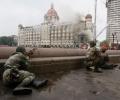
The Bombay High Court has upheld the police's decision to deny a clearance certificate to Fahim Ansari, acquitted in the 26/11 terror attack case, preventing him from driving an autorickshaw for livelihood, citing public safety and national security concerns.
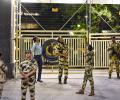
Tahawwur Hussain Rana, a Pakistani-born Canadian national accused of playing a role in the 2008 Mumbai terror attacks, has been extradited from the United States to India. Rana was arrested in the US in 2009 and convicted in 2011 for providing material support to the Lashkar-e-Taiba terror group, which carried out the Mumbai attacks. He had been fighting extradition since 2012, but the US Supreme Court ultimately denied his review petition, paving the way for his transfer to India. Rana will now face trial in India for his alleged role in the attacks, which killed 166 people.

Videos this week: Kasab hanging and more

Maharashtra Home Minister R R Patil has confirmed the execution.
The Supreme Court on Wednesday upheld the death sentence of 26/11 Mumbai terror attack convict Mohammed Ajmal Amir Kasab, saying that waging war against the country was the primary and foremost offence committed by the Pakistani terrorist.
The division bench of Justices Ranjana Desai and R V More, apart from pronouncing the judgement on confirmation of death sentence to Kasab, will also deliver its verdict on Maharashtra government's plea against the acquittal of two Indians accused of aiding in commission of the crime.
The Congress on Wednesday welcomed the Supreme Court verdict upholding the death sentence of Ajmal Kasab in the 26/11 Mumbai attacks case and demanded his "quick" execution.
Terming the Supreme Court order upholding Ajmal Kasab's death sentence in Mumbai attacks case as "inevitable", Law Minister Salman Khurshid rejected suggestions of delay in the final verdict saying a country governed by rule of law cannot mete out street justice.
The Mumbai Crime Branch, which probed the 26/11 terror attack case, on Wednesday termed as an "important milestone" the Supreme Court verdict upholding death sentence of Pakistani gunman Ajmal Kasab.
With the Supreme Court upholding the death sentence on the Pakistani terrorist Ajmal Kasab, India's case for action against others involved in the Mumbai terror attacks got strengthened ahead of Prime Minister Manmohan Singh's meeting with President Asif Ali Zardari in Teheran on Tuesday.
Ahead of Thursday's meeting between Prime Minister Manmohan Singh and President Asif Ali Zardari, India on Thursday said it was sure that Pakistan would not fail to take note of the Supreme Court verdict upholding the death sentence of Ajmal Kasab, the lone surviving terrorist in the 26/11 attacks.
With the Supreme Court upholding the death sentence of Ajmal Kasab in the 26/11 Mumbai terror attacks case, Pakistan should now expedite the trial in their court, special public prosecutor Ujjwal Nikam on Wednesday said.
In its judgement upholding the death sentence passed on Ajmal Kasab, the sole surviving perpetrator of the terrorist strikes carried out by Pakistan's Lashkar-e-Tayiba in Mumbai from November 26 to 29,2008, the Supreme Court has made some observations on the role of the media, particularly the Indian TV channels, in covering the terrorist strikes.

Rediff.com takes a look at some cases from the recent past where the courts awarded the capital punishment for horrific crimes that fall under the rarest of rare category.

'I got to know the men accused of the blasts regularly meeting them in court and jail. Some of them, like Dutt, are back in jail. Others, like Mohammed Jindran, a quiet and well spoken middle class man, were killed. And now of course Yakub is ready to be hanged. The first in the case to do so,' says Aakar Patel.

Saeed's release has virtually 'boosted up the morale' of the six suspects facing the trial in Pakistan for the last eight years, believe Saeed's supporters.

SC said to establish a clear link between the convicts and the incident, the police has adduced scientific evidence like DNA, fingerprint and bite mark analysis.
