
The Cellular Operators Association of India has suggested that the government, in allocating telecom licence, consider applicants with experience and impose a five-year lock-in period under which promoters cannot sell their equity.
Trai also recommended allocation of 3G spectrum in the 2.1 GHz band through auction in tranches of 2x5 MHz. And if this spectrum band was not adopted, it would be possible to provide spectrum only to two to three operators, apart from state-owned companies (Bharat Sanchar Nigam Limited and Mahanagr Telephone Nigam Limited).
A bitter battle between the finance ministry and the Department of Telecommunications over their jurisdiction might force the latter to withdraw its decision to waive licence fees for fixed-line service operators in rural areas.
The Department of Telecommunications (DoT) on Thursday came out with a notification under which a UASL (Universal Access Service Licence) holder will have a lock-in period of three years or till the fulfilment of rollout obligations, whichever is earlier, before promoters can sell their equity stake.
AT&T has also applied for a universal access service licence (UASL), which allows operators to offer services in both GSM and CDMA technology, with the Mahindra & Mahindra group, for 22 circles. The US company, however, has stipulated that it wants a majority equity stake in the mobile venture.
Following is the chronology of the events in the 2G spectrum allocation scam in which the prime accused and former Telecom Minister A Raja was on Tuesday granted bail:
Among the new guidelines under discussion, DoT is looking at raising the net worth criterion of companies applying for a pan-India UASL licence from Rs 1,380 crore to Rs 1,500 crore.
Aditya Birla Telecom Ltd (ABTL), a wholly-owned subsidiary of Idea Cellular, will offload 20 per cent to Providence Equity Partners, a US buyout firm, for Rs 2,560 crore. This takes Providence's total investment in Idea Cellular to $1.04 billion, which is the largest private equity investment in an Indian telecom service provider. The deal values ABTL at Rs 12,800 crore.
Following is the chronology of events in the 2G scam.
However, operators said the chief beneficiary would be the state-owned Bharat Sanchar Nigam Ltd and Mahanagar Telephone Nigam Ltd, which have already been given the spectrum for 3G services, as well as Reliance Communications, which is still to roll out its 2G GSM network.
In a major development, the Ministry of Communications and Information Technology has cleared applications of nine telecom aspirants and is close to issuing them Letters of Intent. This will be followed by issuance of universal access service licences and allocation of spectrum.
The Department of Tele-communications is close to allocating start-up spectrum in seven more circles, in addition to Tamil Nadu, where the process is set to begin next week. According to the telecom ministry's plan, the companies would get 4.4 MHz each and the allocation would be completed within a fortnight.

The question is no longer whether the war will expand. It has. The next few days will tell us whether the war stabilises around Hormuz or whether the Strait itself becomes the trigger for a far larger rupture. What to watch for over the next 48 hours is simple: Any move by the US toward direct naval control of the Strait; any credible Iranian attempt to disrupt or mine shipping lanes and, critically, whether energy infrastructure in the Gulf continues to be targeted.If those lines are crossed in tandem, the war will no longer be containable within the region.

A series of decisions were taken under the Public Health Department, including an approval to increase honoraria for field-level workers engaged under the Ayushman BharatPradhan Mantri Jan Arogya Yojana and Mahatma Jyotirao Phule Jan Arogya Yojana.

MUSO is more than a museum; it is a vibrant, innovative playground that fosters curiosity.
The department of telecommunications is planning to seek details from four operators - Bharti-Airtel, Hutchison-Essar, Tata Teleservices Ltd and Reliance Communications - on the fulfillment of rollout obligations under the mobile telephony licence.

Telecom services providers have urged the Ministry of Finance to suspend the universal service obligation (USOF) till the existing corpus is exhausted. In their Budget recommendations, they have also pressed for an exemption from the service tax on "assignment of right to use natural resources" and the slashing of Customs duty on telecom equipment to zero. The Cellular Operators Association of India (Coai), which represents private sector telecom operators Reliance Jio, Bharti Airtel, and Vodafone Idea, called for abolishment of USOF levy.

The Reserve Bank of India (RBI) on Thursday paved the way for niche banking by issuing draft guidelines for setting up payment banks and small banks.

Bharti Global is planning to put up more satellites and has set a stiff deadline to launch commercial Internet services by October in the UK, Alaska, northern Russia and northern Europe.

The Universal Service Obligation fund was set up in April 2002 and a statutory status was given to it.

"I would like to resign as an independent director of the bank with effect from January 27, 2020. Given an entity owned and controlled by me has made an application to the RBI for a universal banking license, I felt it was -- in the interest of propriety and corporate governance -- only appropriate that I stepped down from this role," Bansal said in his resignation letter, which was disclosed by Ujjivan SFB in the regulatory filing.
Will Mukesh Ambani disrupt the telecom market by offering consumers voice calls at rock-bottom tariff?

"The provisions of the said bill are nothing short of draconian and promote gross incompetence and mockery of professionals currently working day and night and sacrificing their youth for this broken system," said the protesting doctors.
The central bank gave 11 entities licences to start payments banks.
The government is planning to merge Bharat Broadband Nigam Limited (BBNL) with the loss-making state-run telecom operator Bharat Sanchar Nigam Limited (BSNL) this month, a senior official has said. BSNL chairman and managing director PK Purwar at a recent event organised by the All India Graduate Engineers and Telecom officers Association (AIGETOA) said that the government is giving the telecom firm an opportunity for a turnaround. "The government has taken a policy decision that BBNL is going to be merged into BSNL. "This means all work of BBNL at the pan-India level is going to come to BSNL," Purwar said at the All India Conference of AIGETOA on March 13.
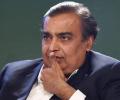
Billionaire Mukesh Ambani on Wednesday pitched for using the USO Fund to subsidise smartphones for select groups to help penetrate the digital revolution and said India should make the rollout of 5G or the fifth-generation technology standard for broadband cellular networks a national priority. As much as 5 per cent of the licence fee paid by telecom operators goes to the Universal Service Obligation (USO) Fund, which was set up in April 2002 for achieving universal service objectives by providing access to telephone services in rural and remote areas and creation of infrastructure for mobile services and broadband in these areas. However, according to the CAG, less than half of the funds so collected are transferred for the said purpose.

The Indian market is highly competitive, and tariffs here are amongst the lowest in the world.

In DigiLocker, a user can get different government departments to issue documents in digital format. At present, there are 117 such issuers. You can get PAN, Aadhaar, vehicle fitness certificate, vehicle tax receipt, class ten and twelve mark sheets, driving licence, caste certificate, ration card, birth certificate, college degrees and diplomas, marriage certificate, and many more.
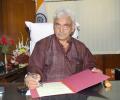
Manoj Sinha, earlier minister of state for railways, will be tasked to conduct the auction and deal with issues like net neutrality.

If a feasible business model is worked out for cable operators, they will not only build the last-mile networks, but also market them among the local population telling people the benefits as well as how to utilise them

Most adult Indians should have access to bank deposits, credit and remittance facilities as well as insurance and mutual fund products in the next decade, and technology will play a big role in this transformation, says Tamal Bandyopadhyay.

Facebook owns WhatsApp and Microsoft owns Skype, the two services that are at the centre of the current "net neutrality battle".

Payment banks may not be viable option to attain financial inclusion.

India will have to deal with the question of whether broadband service providers are 'common carriers', like highways.
Cashless transactions need ubiquitous connectivity, which we don't have. And connectivity needs political and administrative convergence, says Shyam Ponappa.

A look at the life and times of maverick businessman Chinnakannan Sivasankaran

Manish Sabharwal tackles 5 criticisms of demonetisation.

It emerges that not only does the CIDR project fails the test of fairness, justness and reasonableness besides the test of not being fanciful, oppressive or arbitrary; it also fails the test of Arthashastra, Hadith and the Bible.
