
Maruti, which is majority owned by Suzuki Motors of Japan, pays massive tax, generates huge employment (its staff are almost entirely Indians) and also makes its investors extremely rich. JLR, on the other hand, though owned by Tata has its factories in England and China and in every way (sales, employment, technology) has nothing Indian about it.

Major automakers, including Maruti Suzuki, Hyundai, Tata Motors, Mahindra & Mahindra, Kia, Toyota and Honda, on Thursday reported healthy growth in passenger vehicles sales in June, recovering from the disruptions induced by the second wave of COVID-19. The country's largest carmaker Maruti Suzuki India (MSI) posted total sales of 1,47,368 units in June, up from 46,555 units in May. Its domestic dispatches to dealers last month stood at 130,348 units, up from 35,293 units in May, as easing of COVID-related restrictions helped the auto major to dispatch more units to dealerships.
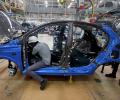
While sales of compact cars, including models such as Swift, Celerio, Ignis, Baleno and Dzire declined, sales of utility vehicles, including Vitara Brezza, S-Cross and Ertiga, increased 26.3 per cent to 19,177 units as compared to 15,178 in the year-ago month.

Auto majors, including Maruti Suzuki India, Hyundai and Tata Motors, on Sunday reported high double-digit growth in their domestic passenger vehicle sales in July riding on stabilisation of macro-economic factors and better consumer sentiments. Similarly, Honda, Nissan, MG Motor and Skoda also reported healthy growth in their sales last month leveraging on improved market mood amid prevailing lower coronavirus infection rate, despite supply constraints of semi-conductors. The country's largest carmaker Maruti Suzuki India's (MSI) domestic sales increased by 39 per cent to 1,41,238 units last month as against 1,01,307 units in July 2020, the company said in a statement.

According to government data, the Centre procured only 35,179 ventilators out of the 50,000 originally ordered.

Analysts caution against volatility and recommend buying stocks of companies that are on strong fundamental footing that have been beaten down badly in the recent carnage.

Yes Bank was the biggest gainer in the Sensex pack, rallying 3.79 per cent. It was followed by PowerGrid, Maruti Suzuki, IndusInd Bank and Axis Bank -- rising up to 2.85 per cent.

Ajit Mishra, vice president, Research, Religare Broking, answers your queries.

Developed in-house, the 1.5-litre engine comes mated with six-speed transmission and offers improved performance.

India's largest carmaker, Maruti Suzuki India (MSIL), is focused on getting 50 per cent of its customers' car-financing transactions executed through its Smart Finance platform by next year. Shashank Srivastava, executive director-sales, MSIL, said this will help the company turn its website into a single-window channel through which customers can select their models, find dealers, and arrange financing. He said there is a likelihood that 100 per cent of its customers availing of financing will take it through Smart Finance. To date, the company has disbursed Rs 6,500-crore loans via Smart Finance to around 100,000 customers, accounting for 28 per cent of all finance-based car-purchase transactions for the company.

So which sectors are likely to do well in 2022? Should you focus on domestic economy-related sectors or export-oriented ones?

Developed at an investment of Rs 620 crore (Rs 6.2 billion), the most on a car by Maruti Suzuki, the Ciaz will also be exported to West Asia, Europe, Africa and Latin America.

IndusInd Bank was the top gainer in the Sensex pack, rallying over 7 per cent, followed by SBI, ICICI Bank, HDFC twins, Axis Bank, Bajaj Finserv and UltraTech Cement. NSE Nifty soared 245.35 points to 14,923.15.

Tata Motors, India's third largest passenger vehicle maker, took pole position in the competitive sport utility vehicle (SUV) market in October, reveals the data from industry sources. Riding high on the Punch - the sub-compact SUV offering launched on October 18 - the Tata group flagship sold a record 23,381 units in October, higher than 20,022 units sold by archrival Mahindra & Mahindra, 18,538 units sold by Hyundai Motor India, and 15,931 units sold by Kia Motors India. Utility vehicles - that include SUVs and multipurpose vehicles - accounted for almost one in every two passenger vehicles sold in India in the first seven months of the current financial year, according to the Society of Indian Automobile Manufacturers.

Good sowing of kharif crops, better minimum support prices, and fewer Covid-19 cases (in villages) will help the rural growth story to continue, says Maruti.

IndusInd Bank was the top laggard in the Sensex pack, cracking around 10 per cent, followed by HDFC, Maruti Suzuki, Axis Bank and UltraTech Cement. On the other hand, TCS, Infosys, ITC and HCL Tech closed with gains. NSE Nifty plunged 313.60 points or 3.43 per cent to 8,823.25.

Honda has grown from 15% in FY12 to 27% now; Yamaha has doubled share to 5% in five years.

Maruti has announced it will phase out diesel variants from April 1, 2020, when stringent BS VI norms take effect

It is currently working out the details of the quantum of price increase, which will vary depending on the model.

With entry-level cars being preferred amid the pandemic, market leader Maruti Suzuki has strengthened its hold, along with Hyundai Motor India.

Major carmakers in the country are loading barrels for the coming battle in the field, reports Arnab Dutta.

Ban on large diesel vehicles a transient phase, says Jaitley

The country's largest carmaker Maruti Suzuki India (MSI) aims to sell 4-6 lakh CNG units in the current fiscal year depending upon supply situation of essential components, as per a senior company official. The company sold about 2.3 lakh CNG units in 2021-22. MSI currently sells nine of its 15 models with CNG powertrain and is looking to drive in more models with such technology in the coming days.

However, compared to August, vehicle sales increased by 15.25 per cent on the back of discounts. Maruti led the market in offering heavy discounts and incentives for buyers and dealers, reports Arindam Majumder.

In May, Satpal Singh, who runs a dairy business with three buffaloes in Jewar, near Noida, was worried about the steep spike in input costs. Singh said dry fodder rates, which cost Rs 1,500-2000 per tractor trolley last year, were quoting at Rs 4,500-5,000. The price of other cattle feed ingredients (that include mustard meal and similar mixes) had also gone up from Rs 2,000 per quintal to Rs 3,100-3,200 per quintal.

M&M also saw its domestic passenger vehicle sales grow by 1 per cent, while Toyota Kirloskar Motor witnessed a decline in its PV sales.

The investment will be made through a joint venture with Toshiba and Denso. The battery is the most expensive single part of an EV.

Market leaders Maruti Suzuki and Hyundai, who together control two-thirds of the domestic market, have not yet firmed up a decision on raising prices.

Today, Suzuki depends on Maruti for its place in the world

First images of the model that can replace Swift.

The first major pricing error was made by market leader Maruti Suzuki when it launched its first crossover the S Cross
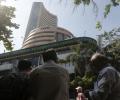
Tata Motors was the top gainer in the Sensex pack rallying 5.32 per cent. Among other prominent gainers were Bharti Airtel, IndusInd Bank, Sun Pharma, Axis Bank, Maruti Suzuki, Bajaj Auto and TCS.
