
The Mahindra's Scorpio-N becomes the first body-on-frame chassis SUV to secure a five-star Global NCAP rating.
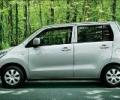
Maruti Suzuki, the market leader in the passenger car market in India is betting big on the A2 segment which is the biggest contributor to the overall passenger car sales in the country.

American tech billionaire Elon Musk on Saturday said his proposed visit to India has been postponed due to "very heavy Tesla obligations". The electric carmaker Tesla CEO -- who was expected to be in India on April 21 and 22 and scheduled to meet Prime Minister Narendra Modi -- wrote on X that he is looking forward to coming to India later this year.

Maruti Suzuki India (MSI) on Tuesday said it will not resume full-scale production at its Manesar plant till workers sign a 'good conduct bond', as demanded by the company to ensure there is no repeat of quality issues that have surfaced at the plant.

Operating margins have been the primary driver of corporate earnings in India in recent quarters, despite revenue growth suffering from weak consumer demand. Companies across sectors have reported a sharp improvement in earnings before interest, tax, depreciation, and amortisation (Ebitda) margins over the past two years, benefiting from lower commodity and energy prices. Higher margins more than compensated for slower revenue growth, resulting in double-digit growth in net profit for five consecutive quarters.
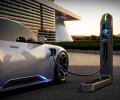
When it comes to electric cars, the electric dream is turning out to be a six-letter word starting with f, ending with y, and having antas in between, notes Suveen Sinha.

Almost all of these companies either unveiled their new electric vehicle or alternative energy-powered models.

Maruti Suzuki India (MSI) on Thursday said its new manufacturing facility in Haryana, the company's third in the state, would reach peak production capacity of 10 lakh units per annum in the next eight years entailing a total investment of Rs 18,000 crore. The new facility, which would come at a 800-acre site at IMT Kharkhoda in Sonipat district, will entail total investment of Rs 11,000 crore in the first phase with a production capacity of 2.5 lakh units per annum. The first set of vehicles are expected to roll out from the facility in 2025.
Maruti Suzuki India on Tuesday said it is recalling 9,125 units of its models Ciaz, Brezza, Ertiga, XL6 and Grand Vitara to fix possible defects in a part of the front row seat belts. The affected vehicles were manufactured between November 2-28, 2022, Maruti Suzuki India said in a regulatory filing.
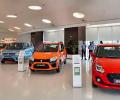
Maruti Suzuki India on Monday said it has hiked prices of its vehicles across models by about 1.1 per cent. This is the second price hike that the carmaker is undertaking in the ongoing fiscal year, after increasing it in April 2022. In December last year, the company had said it would hike prices of its vehicles to offset the impact of rising input costs and make provisions to update the model range to conform to stricter emission norms which will kick in from April 2023.

Car sales in the quarter were up 3.9 per cent at 3,60,402 units, the company said, adding that the exports were at 27,009 units.

Among the main gainers were Jio Financial Services which jumped 4.99 per cent, Tata Steel (2.09 per cent), Maruti Suzuki (1.87 per cent), M&M (1.31 per cent) and Infosys (1.19 per cent).

That means a manufacturer looking at a market like India needs to decide whether small, cheap cars or small, expensive cars or both will work better for them, says Pavan Lall.

Corporate India is starting to step up its capital expenditure plans amid government incentives and signs of rising demand, company executives and analysts have indicated. This coincides with the Reserve Bank of India (RBI) recently citing a double-digit growth in private capital expenditure. Healthy balance sheets of banks and corporates, along with increasing capacity utilisation and improving business sentiment, are contributing to a favourable environment for sustained growth in private sector investments, the RBI said in its policy last week.

Auto Expo 2023 may not trigger a fresh rally in automobile stocks, say analysts, as this year's edition lacks participation from major listed players. It is also owing to the focus on electric vehicles (EVs), a segment where four-wheelers have minuscule market share. "In the passenger vehicles (PV) segment, Maruti Suzuki India and Tata Motors are the only listed players.
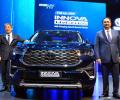
Hybrids have helped Maruti acquire leadership in SUVs, a segment that was never its forte. Toyota has also risen with the hybrid tide to clock its highest-ever annual sales in 2023.

Will you ditch Honda City or Hyundai Verna for Maruti's latest offering?
The government on Friday said it had started talks with Japanese auto major Suzuki for offloading its remaining equity in joint venture Maruti Udyog Ltd.

Net sales of the company for the fiscal stood at Rs 48,605.53 crore.
The company said its cost reduction and localisation initiatives, growth in volumes and favourable foreign exchange helped improve the bottomline during the quarter.

Bajaj Pulsar 150NS specifications revealed, makes 17PS

India is sceptical that Tesla might import into the country cars made in China. Tesla executives were in India last month and appear to have proposed a factory in the country. But do not be surprised if that does not happen in a hurry.

Tokyo -- the songs Japan, Love In Tokyo and Sayonara from the 1966 Hindi film automatically pop up in the mind -- is buzzing and crowded like any other metropolis, discovers Deepa Gahlot. The modern apartment blocks are built cheek by jowl, so close together that one can open the window and borrow sugar from the neighbour in the next building. One of the fears of the Indian traveller is the unavailability of vegetarian food. Every city and town in Japan has an array of Indian restaurants that serve every variety of cuisine, right from Gujarati to Punjabi to Andhra and Kerala meals.

Tata Motors surpassed Maruti Suzuki (India) (MSIL) to become the most-valuable automobile company, in terms of market capitalisation (mcap), after a gap of seven years. With this, the company's stock hit a new high on the BSE on Tuesday (January 30). The combined mcap of Tata Motors (Rs 285.51 crore) and Tata Motors DVR (Rs 29,119 crore) stood at Rs 3.146 trillion.

Passenger vehicle wholesales in India rose 9 per cent year-on-year in August on the back of strong demand for utility models, industry body SIAM said on Monday. Overall passenger vehicle dispatches to dealers rose to 359,228 units last month from 328,376 units in August 2022. Utility vehicle sales increased 34 per cent year-on-year to 181,825 units.

Consumer goods firms and auto companies are witnessing an upturn in rural demand, which had been lagging for most of FY24. Expectations of a bumper rabi crop harvest have helped turn the tide. The Reserve Bank of India's (RBI's) Monetary Policy Committee kept the repo rate unchanged last week, noting that as rural demand catches up, consumption is expected to support economic growth in 2024-25.

Which entrepreneur would willingly part with her or his hard-earned money for grasping, self-serving politicians? asks Debashis Basu.
Maruti Udyog Ltd is set to embark on an aggressive cost cutting drive and improve operating efficiencies to bring itself at par with auto major Suzuki's manufacturing facility in Kosai, Japan.\n\n
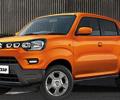
http://im.rediff.com/money/2023/jul/20uv.jpg

Christopher Wood, global head of equity strategy at Jefferies has rejigged his equity portfolios. In his Asia ex-Japan long-only portfolio, he has added Axis Bank (5 per cent weightage) and increased holding in Larsen & Toubro (L&T) by one percentage point. This, Wood said, will be paid for by removing the investment in ICICI Lombard General Insurance and reducing the investments in HDFC Bank and Reliance Industries (RIL) by one percentage point each.

Domestic equity markets will be driven mainly by quarterly earnings, global trends, and the movement in crude oil prices in this holiday-shortened week, analysts said. Investors would also keep an eye on the Middle East amid the ongoing Hamas-Israel conflict and the trading activity of foreign investors. Markets will remain closed on Tuesday for Dussehra.
Tata Motors, Mahindra & Mahindra and Kia India on the other hand witnessed an increase in their market share based on the retail sales last fiscal. As per the Federation of Automobile Dealers Associations (FADA), the retail sales of country's largest carmaker Maruti Suzuki India rose to 14,79,221 units in 2022-23 fiscal, attaining a market share of 40.86 per cent. It had retailed 12,39,688 units in 2021-22 and grabbed a market share of 42.13 per cent.
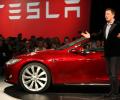
If Tesla comes in, India's position as a manufacturing hub will rise many notches, as it will become only the second country, after China, to have both Apple as well as Tesla.
Suzuki Motor Corporation is believed to have promised to submit the business plan for joint venture Maruti Udyog by the month-end to enable the government to proceed with its proposed public offer.
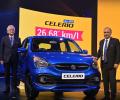
'It leads to more investment, more money put in R&D, expansion and modernisation.'

India's flagship motor show Auto Expo 2023 kicked off on Wednesday with the global unveiling of Suzuki Motor Corporation's concept electric SUV 'eVX' which is slated to hit the market by 2025. The company's Indian arm Maruti Suzuki India is among the major manufacturers participating in the show that has returned after three years. The Concept eVX is a mid-size electric SUV concept designed and developed by Suzuki Motor Corporation (SMC), Japan. It will be powered by a 60 kWh battery pack offering up to 550 km of driving range on single charge.

Equity benchmark indices Sensex and Nifty on Friday reversed their six-session losing streak and rebounded more than 1 per cent on value buying in auto, IT, financial and energy stocks. Better than expected quarterly financial results of corporates also boosted investor sentiments even as uncertainties persisted over the escalating tensions in the Middle East, according to analysts. In a largely range-bound trade, the 30-share BSE Sensex rose 634.65 points or 1.01 per cent to settle at 63,782.80 points.

'The decrease in the popularity of white cars and the rise in preference for darker colours like black, grey, and blue over the past three years reflect changing consumer attitudes.'
