
The company's net sales rose about 12 per cent to Rs 1,465 crore (Rs 14.65 billion).
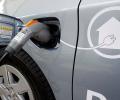
At a time when consumers increasingly embrace green mobility solutions, it is not electric cars but hybrids that are taking the lead, as automotive sales data indicate. Since January, 64,097 electric cars have been sold compared to 266,465 hybrids, according to data from the ministry of road transport and highways' Vahan dashboard. Hybrid car sales have surged from 4.42 per cent of the 4.1 million cars sold in calendar year 2022 to 7.2 per cent this year.

The Maruti Udyog board has approved the purchase of Suzuki Motor Corporation's shares in their joint venture Maruti Suzuki Automobile India Ltd for Rs 12 crore (Rs 120 million) and merge the arm with itself, the Lok Sabha was told on Thursday.

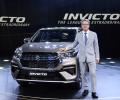
Maruti Suzuki is set to launch a new multi-purpose vehicle (MPV) -- Invicto -- next month. It will be the company's first passenger vehicle with an ex-showroom price tag of Rs 20 lakh or more, said Shashank Srivastava, executive director (sales), on Tuesday. The upcoming MPV will compete with the likes of Toyota Innova Hycross, Kia Carnival, Hyundai Alcazar, MG Hector Plus, Tata Safari, Mahindra & Mahindra XUV700, and Mahindra & Mahindra Scorpio-N - all having three rows of seats. Invicto will be based on the Hycross by Toyota, which will manufacture Maruti's most expensive car at its Bidadi plant in Karnataka.
Maruti recorded a 13.12% year-on-year surge in average revenue earned per car in 2023 compared to M&M's 7.56%, Hyundai's 6.76% and Tata Motors' 1.88%.

Car maker Maruti is hoping to improve margins.
In what would be a generational change in its engine technology, India's largest car manufacturer Maruti Suzuki has decided to introduce the new K-series petrol engine in all its cars in India in the next three to five years, according to the company's annual report for 2007-08.
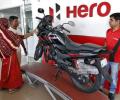
Hero MotoCorp, India's largest two-wheeler maker, has seen a decline in its market share in rural areas since 2018, losing ground to major competitors such as TVS Motor Company, Bajaj Auto, and Honda Motorcycle & Scooter India (HMSI), according to data from JATO Dynamics reviewed by Business Standard. Hero's share of rural two-wheeler sales in India has dropped from 40.4 per cent in 2018 to 33.3 per cent in 2023. In contrast, Bajaj's share increased from 12.7 per cent in 2018 to 13.9 per cent, HMSI's from 21.8 per cent to 22.2 per cent, and TVS' from 15.5 per cent to 17.8 per cent. Suzuki Motorcycle India has also seen its share rise from 1.7 per cent to 2.5 per cent.
At a time when consumers increasingly embrace green mobility solutions, it is not electric cars but hybrids that are taking the lead, as automotive sales data indicate. Since January, 64,097 electric cars have been sold compared to 266,465 hybrids, according to data from the Ministry of Road Transport and Highways' Vahan dashboard. Hybrid car sales have surged from 4.42 per cent of the 4.1 million cars sold in calendar year 2022 to 7.2 per cent this year.
The country's largest carmaker, Maruti Suzuki, on Thursday reported 9.95 per cent decline in sales during December last year at 56,293 units against 62,515 units in the same month of 2007.

The Fazer V2 is designed to rival the Honda CB Trigger, TVS Apache 160 and the recently launched Suzuki Gixxer, says Faisal Ali Khan.
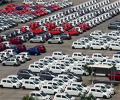
Passenger vehicle sales are expected to experience muted growth in the current financial year.

Hyundai, which is also toeing Maruti's lines, said special schemes are offered to engage the cab aggregators, including annual-maintenance-contract packages and extended warranty.

"Currently work is going on for developing a diesel engine for mid-sized sedans. Our engineers are developing it internally and we are hopeful of getting it ready by mid (of) next year," said MSI Managing Director and CEO Shinzo Nakanishi.

Nissan, Japan's fourth-largest car manufacturer, sells MSIL's A-Star as Pixo, an entry-level car, in Europe.
Maruti is in the final stages of talks with the state government to set up a manufacturing plant in Gujarat, similar to those in Gurgaon and Manesar.
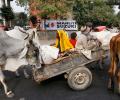
Maruti Suzuki says it has sold at least one car in 418,000 villages.
Suzuki Motorcycle India is planning to open 100 dealer outlets across the country by the end of June this year.

Net sales, however, rose marginally to Rs 21,551.9 crore for the quarter under review
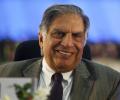
'I think some of us, like Mukesh Ambani, myself and those of us who head industrial units, ought to really focus on what we can really do to make the world a safer place, maybe 50 or 100 years from now.' 'For instance, how can we deal with climate change and global warming, right now?' 'The effects of it may not be felt now; in fact, we may pay a price for it today, but it will help the generations to follow.'
As part of this cost-cutting exercise, the company has initiated measures to step up localisation levels and to pare the number of tier-I suppliers over the next two-three years.

The revenue growth of early birds or companies that have declared their Q4FY24 (March quarter) numbers is the highest in the last four quarters. The 178 companies (excluding their listed subsidiaries) that declared their results have reported a sales growth rate of 13.2 per cent year-on-year (Y-o-Y), taking aggregate revenue to Rs 9.1 trillion. Including other income, growth is at 16 per cent, the highest in the last four quarters.
Suzuki India's Baby B-King (or GW250) is a great option for the Indian subsidiary. Production of this motorcycle -- that's designed for emerging markets -- began in China earlier this month. The muscular GW250 is expected to be priced in the range of Rs 1.6 to Rs 1.8 lakh if brought to India.

Suzuki Motor Corporation (SMC) on Friday said it has terminated the partnership pact with Volkswagen AG (VW) after two years of unsuccessful attempts to gain access to technology from the German firm.
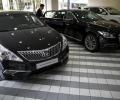
Passenger vehicle wholesales in India rose to a record high in October as companies pushed dispatches to dealers to cater to the enhanced demand in the festive season. The overall passenger vehicle wholesales in October rose to 391,472 units, up 16 per cent from 336,679 units in the same month last year. Last month witnessed the highest-ever dispatches of passenger vehicles in the domestic market by Maruti Suzuki India and Mahindra & Mahindra.

In terms of volumes, sales were down by 9.98 per cent to 266,343 units.
India's car market leader Maruti Suzuki India unveiled two concept models - sedan Ciaz and crossover SX4 S-Cross - as it looks to enhance its position in the bigger sedan segment going forward.

Country's largest car-maker Maruti Suzuki India (MSI) on Saturday reported 10.3 per cent decline in total sales in January at 1,02,416 units as against 1,14,205 units in the same month last year.

The quarter was marked by adverse foreign exchange rates and commodity prices, higher depreciation and higher sales promotion expenses.
The decision to add capacity comes at a time when most auto majors have been resorting to production cuts.

In terms of volumes, sales were up by 19.6 per cent to 2,75,586 units compared 2,30,376 to the year-ago period.

Collectively, these companies spent Rs 628 crore (Rs 6.28 billion) on political contributions in the past five years, according to their annual reports.

Net sales during the reported quarter rose to Rs 20,594.3 crore, up 14.4 per cent against the year-ago period.

Interim Budget, the US Federal policy decision and quarterly earnings will be the major drivers for stock markets which may also see some consolidation this week, say analysts. Besides, investors would also focus on the trading activity of foreign investors and global trends for further cues. From the macroeconomic front, the PMI (Purchasing Managers' Index) data for the manufacturing sector is scheduled to be announced on Thursday.
Among Sensex shares, Bajaj Finserve, ICICI Bank, Bharti Airtel, Bajaj Finance, Sun Pharma, Maruti Suzuki, ITC, and Nestle were the lead gainers. On the other hand, L&T Wipro, IndusInd Bank and TCS and Tata Motors were the lead losers.
HDFC Bank, Reliance Industries and ICICI Bank remained among the top mutual fund (MF) buys for the second consecutive month in September. MFs deployed a net of Rs 15,000 crore into these stocks during the two-month period (August-September), revealed Nuvama Alternative & Quantitative Research reports.

The new Duster will go head-to-head with popular models like Hyundai Creta, Kia Seltos, Volkswagen Taigun, Skoda Kushaq, Maruti Suzuki Grand Vitara, Toyota Urban Cruiser Hyryder, MG Astor, etc in the highly competitive mid-size SUV segment.
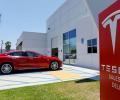
'Gujarat is the frontrunner at present.'
'However, Tamil Nadu's robust automobile ecosystem and Telangana's aggressive incentives make them strong contenders.'
