Would have constructed Ram temple on 5 acre land if given to us: UP Shia Central Waqf Board
The Waqf Board was yet to take a call on whether to accept a five-acre alternative plot for a mosque, its chairman Zufar Farooqi said.
Earlier, board's counsel Zafaryab Jilani had said that he is not satisfied with the verdict.

Describing the Waqf Board decision as "not in the interest of Taj Mahal," a representative of the Archaeological Survey of India, who attended the hearing, said it would challenge it in the court of law.
The Sunni Central Waqf Board is expected to file a Special Leave Petition in the Supreme Court on Tuesday, challenging the Allahabad high court verdict in the Ram Janmabhoomi-Babri Masjid title suits.

Under attack, Sibal claimed he did not represent the Sunni Waqf Board in the Ayodhya case in the SC.
Ruling out giving up its claim on the mosque in Ayodhya, the Sunni Central Waqf Board on Thursday said exploring possibilities for an amicable solution to the dispute without a concrete proposal was a 'futile exercise'.

Uttar Pradesh Minority Affairs Minister Azam Khan wants the Taj Mahal to be handed over to the Sunni Waqf Board, which has jurisdiction over Muslim tombs and graves, since the iconic monument had the mausoleum of two Muslims.

Rizvi along with some Mahantas from Ayodhya will also approach the Supreme Court before December 5 with a solution to the Ram Janmabhoomi-Babri Masjid dispute.

Sunni Central Waqf Board Chairman, Zufar Farooqui said some persons are advising that land should not be taken for the Babri mosque.

Udai Pratap College in Varanasi is entangled in a land dispute with the Uttar Pradesh Sunni Central Waqf Board, which claims a mosque on the campus and surrounding land as Waqf property. The college administration rejects the claim. The dispute dates back to 2018 when a notice was sent to the college alleging the mosque and land were donated by the Nawab of Tonk to the Waqf Board. The college claims the mosque was built illegally and the land belongs to a trust. The Waqf Board attempted construction in 2022 but was stopped by police after the college complained. The college also alleges the mosque is stealing electricity. The mosque administration asserts ownership based on the Nawab's donation and claims a mutual agreement for electricity supply. The college, founded in 1909, has a long history of promoting education in the region.

The Places of Worship (Special Provisions) Act, 1991 provides for maintaining the 'religious character' of holy structures as it existed on August 15, 1947.
the Uttar Pradesh Sunni Central Waqf Board on Tuesday filed a caveat in the Supreme Court to prevent the ASI from taking an ex parte order on the issue.
The Wakf Board, a litigant in the Ayodhya title suit, held an emergency meeting here and decided to challenge the High Court's verdict in the Supreme Court, Wakf Board Chairman Zafar Ahmad Farooqui told PTI.

The Shia Waqf Board is drafting the terms and conditions of a mutual agreement.
In a historic verdict in November on the Ramjanmabhoomi-Babri Masjid dispute, the Supreme Court ruled in favour of construction of a temple. It also ruled that an alternative five-acre plot must be found for a mosque within Ayodhya.

The Nirmohi Akhara has approached the Supreme Court, seeking a directive to the Centre to reconstitute the Shri Ram Janmabhoomi Theerth Kshetra Trust as a 'public trust' and include structural safeguards for oversight by seers, citing alleged large-scale embezzlement of donations.

The Madhya Pradesh High Court referenced the Supreme Court's Ayodhya verdict principles while ruling on the Bhojshala-Kamal Maula mosque complex case, determining the site to be a temple dedicated to Goddess Saraswati.

The Supreme Court has rejected a petition seeking to prevent the construction of mosques named after Mughal emperor Babur.

A meeting of the joint committee of Parliament on the Waqf (Amendment) Bill on Friday witnessed fireworks with members vociferously opposing certain provisions of the draft legislation, leading to a brief walkout by opposition members.
This disputed the Uttar Pradesh Sunni Waqf Board's claim that the Taj as a Waqf property and that they should get rights over its control and management.

The specter of how the Munambam issue was exploited during the November by-elections is proof of the price Kerala is paying for its emergent politics. Controversies become the stuff of slow-burn and brinkmanship. The former promises mileage; the latter searches for an advantage, notes Shyam G Menon.

It provides for a broad-based composition of the Central Waqf Council and the State Waqf Boards and ensures the representation of Muslim women and non-Muslims in such bodies.

The bill to amend the law governing Waqf boards proposes far-reaching changes in the Wakf Act, 1995, including ensuring the representation of Muslim women and non-Muslims in such bodies.
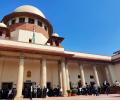
The Supreme Court on Monday agreed to consider listing for urgent hearing the petitions challenging the constitutional validity of the Waqf (Amendment) Act, 2025.

The bill aims to include all the Muslims sects in the Waqf board, Rijiju said.
A fresh plea has been filed in the Supreme Court challenging the constitutional validity of the Waqf (Amendment) Act, 2025, claiming it was a "blatant intrusion" into the rights of a religious denomination to manage its own affairs in the matter of religion. The plea, filed by Samastha Kerala Jamiathul Ulema, argues that the amendments would distort the religious character of Waqfs and irreversibly damage the democratic process in their administration. Several other petitions have been filed in the apex court challenging the validity of the bill, including those by Congress MP Mohammad Jawed, AIMIM president Asaduddin Owaisi, and AAP MLA Amanatullah Khan.

The senior advocate had represented the Muslim parties, including the Uttar Pradesh Sunni Central Waqf Board, in the case in trial court, Allahabad High Court and the Supreme Court.
Khan asserted that he will not allow the central government to take over the waqf properties.
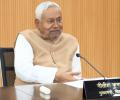
Nitish Kumar's decision to contest the Rajya Sabha elections signals the end of his long-standing tenure as Bihar's Chief Minister, paving the way for a potential BJP leader to take the helm.
Stressing that the decision of the Sunni Central Waqf Board, one of the main litigants, will have no effect on the AIMPLB decision, Jilani said the board has already taken a final decision in this regard in its meeting on November 17.
The Archaeolological Survey of India on Friday filed a petition in the \n\nsupreme court challenging the Uttar Pradesh Sunni Wakf Board decision declaring the 17th\ncentury mughal monument Taj Mahal as Wakf property.

Students at Udai Pratap College in Varanasi, India, protested demanding the removal of a mosque located on the campus. The protest came after tensions arose when a section of students recited Hanuman Chalisa near the mosque while prayers were being offered. The college administration has denied claims by the Uttar Pradesh Sunni Central Waqf Board that the mosque and surrounding land are Waqf property, stating that the mosque was built illegally. The college administration has also accused the mosque of stealing electricity.
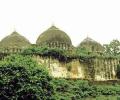
The Waqf Board has sought time from the top court for setting up of a committee for exploring an amicable resolution of the vexatious issue.

The Allahabad high court on Monday dismissed a petition filed against the allotment of land in Ayodhya's Dhannipur village for the construction of a mosque, following the Supreme Court verdict in the Ram Janmabhoomi-Babri Masjid dispute.

The meeting of the Joint Committee on Waqf (Amendment) Bill took an ugly turn as the Trinamool Congress MP smashed a glass water bottle and threw it towards panel chairman Jagdambika Pal of the Bharatiya Janata Party during a heated exchange of words with BJP's Abhijit Gangopadhyay, a former Calcutta high court judge.

The lawyers said the mediation panel's report was leaked to the media and they do not approve the procedures adopted in the process and the suggested compromise formula of withdrawal of the lawsuit.

'The locals want a permanent solution to the perennial Mandir-Masjid issue. They have realised political parties will lose relevance if a temple is built.'

Several petitions were filed in the apex court challenging the Act, contending that it was discriminatory towards the Muslim community and violated their fundamental rights.

AIMPLB member Zafaryab Jilani on Wednesday said the proposed mosque in Ayodhya following last year's Supreme Court verdict is against the Waqf Act and 'illegal' under the Shariat laws.
