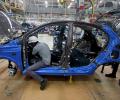
Automobile industry in India is going through a long-term structural slowdown as the compound annual growth rate (CAGR) across all major vehicle segments has witnessed a decline over the last three decades, as per industry body SIAM. The auto industry has been facing headwinds even before the COVID-19 pandemic derailed the entire sector last year, a research conducted by the Society of Indian Automobile Manufacturers (SIAM) has revealed. The study clearly shows that the pandemic is not the only reason for the auto sector slowdown, which is facing deeper structural issues that need attention, the industry body noted.

The last four years, the best for corporate profits in a long time, have not been as impressive for corporate capital expenditure. The combined net profits of India's top listed companies excluding banks, financial services, and insurance (BFSI) increased at a compound annual growth rate (CAGR) of 32.4 per cent since FY20, a sharp jump from the 7.4 per cent in corporate earnings between FY14 and FY19.

'The current crisis is one of incomes, driven by poor job growth, agrarian distress and poor investment sentiment,' notes Harsh Pati Singhania, director, JK Organisation.

The value of private equity (PE)-backed mergers and acquisitions (M&As) in India reached a six-year low during the first seven months of the current calendar year, amid ongoing global uncertainties. The total value of these deals stood at $6.2 billion during the period, down from $9 billion in the same period last year, and lower than the $14 billion recorded during the corresponding period in 2019, according to data from LSEG Deals Intelligence. PE funds pool capital from investors, including high-net-worth individuals, to invest in high-return opportunities.

Indian companies also hold a considerable share of the car, bus, and three-wheeler markets in the country.
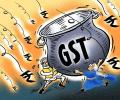
GST collections in July rose 10.3 per cent to over Rs 1.82 lakh crore, mainly driven by domestic transactions in goods and services, according to official data released on Thursday. This is the third-highest-ever monthly collection recorded since the indirect tax regime was rolled out 7 years ago on July 1, 2017. According to the data, total refunds stood at Rs 16,283 crore in July.
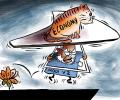
What could be the reason for the successive downward revisions across the board? Some key indicators make it evident, reports Abhishek Waghmare.

'What is unusual about the current period of slow growth is that it has come without an external driver -- high oil prices and/or successive monsoon failures -- as was the case with all previous periods of slowdown, going back 50 years, notes T N Ninan.

FMCG CEOs indicate that the market should stabilise post the general elections and that some growth should make its way back especially in rural areas

India's economic growth slowed to a 15-month low of 6.7 per cent in April-June 2024-25, mainly due to poor performance of the agriculture and services sectors, government data showed on Friday. The gross domestic product (GDP) expanded by 8.2 per cent in the April-June quarter of 2022-23. India, however, remained the fastest-growing major economy, as China posted a 4.7 per cent growth in April-June 2024.

'At this moment you cannot give her asylum because if you do, then you are directing public anger against India.'

'Despite the current uncertainties, the long-term outlook remains constructive due to strong fundamentals, government initiatives, and a stable banking sector.'

The IPO market will be bustling next week, with four companies, including Bajaj Housing Finance, set to launch their initial share-sale to raise a total of Rs 8,390 crore. Besides these four main-board IPOs, nine SMEs are preparing to debut with their maiden public issues next week, targeting to collect Rs 254 crore. Together, these 13 firms are looking to raise Rs 8,644 crore through IPO.

'In terms of incentives, if you think about it, hybrids are a 20-year-old technology.'

Automobile retail sales increased 9 per cent year-on-year in June quarter FY25 with all segments, barring tractors, reporting growth, dealers' body FADA said on Monday. Overall retail sales rose to 61,91,225 units in the April-June period from 56,59,060 units in the same quarter of FY24. Passenger vehicle retails increased 2.53 per cent to 920,047 units as against 897,361 units a year ago.

Modi, after delivering his sixth straight address to the nation on Independence Day from the ramparts of the Red Fort in New Delhi, went into a brainstorming session with Sitharaman and all top officials in her ministry, sources privy to the development said. T

Gold seems to be losing its glitter in India due to a rise in prices. Demand in Q2CY24 was 149.7 tonnes - a 5 per cent drop compared to 158.1 tonnes in the same period last year, according to a report by the World Gold Council (WGC). Demand by value in April-June 2024 stood at Rs 93,850 crore, up by 14 per cent compared to Rs 82,530 crore in the same period last year.

Deputy Governor Michael Patra warned about the spillover effects of food inflation.

From the Sensex pack, Tata Motors slumped over 7 per cent. Adani Ports, Tata Steel, SBI, Power Grid, JSW Steel and Maruti were the other big laggards. However, Hindustan Unilever and Nestle ended in positive territory.

Passenger vehicle retail sales in India witnessed a 10 per cent on-year jump in July driven by new model launches and enhanced discounts, industry body FADA said on Monday. Total passenger vehicle retail sales rose to 3,20,129 units in July, as compared to 2,90,564 units in July 2023. "Dealers reported benefits from good product availability, attractive schemes, and a wider range of products," the Federation of Automobile Dealers Associations (FADA) vice president C S Vigneshwar said in a statement.

The net credit card additions in the banking sector nearly halved to 2 million in the first quarter of the current financial year (Q1FY25) from the previous quarter due to seasonal and regulatory factors. According to the Reserve Bank of India (RBI) data, the net credit card additions during the April-June quarter of FY25 stood at 2 million, 48 per cent lower than 3.9 million in the December-March quarter of FY24.
IMF believes it is mostly cyclical, not structural, but because of the financial sector issues, recovery will be not be quick. IMF said, it saw an opportunity with the strong mandate of the new government to reinvigorate the reform agenda to boost inclusive and sustainable growth.

The Indian IT services sector is staring at a second consecutive year of muted revenue growth due to modest increase in tech spends in Europe and the US, a domestic rating agency said on Wednesday. Crisil Ratings said it expects the sector to grow at 5-7 per cent in FY25, after a growth of 6 per cent estimated to have been achieved in FY24. The overall industry size is pegged at $250 billion and it creates over 50 lakh direct jobs.
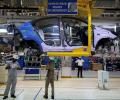
Availability of jobs at India's auto companies has shrunk significantly over the last two years, as the industry goes through one of its worst slowdowns. More than 60 per cent of the total workforce fell by 24 per cent in 2019-20, against 2017-18.

Most lenders that have reported their April-June business update posted slower growth in deposits sequentially as compared to the loan growth in the April-June quarter of 2024-25 (FY25). Current and savings account (CASA) deposits continue to face pressure. Private-sector lenders YES Bank, Bandhan Bank, and RBL Bank saw their deposit growth contract by 0.5 per cent, 1.5 per cent, and 2 per cent, respectively.

As per a Knight Frank FICCI Naredco report, a majority 69% of the stakeholders say that the residential sales will remain tepid or may even go down further in the coming six months.

The implication of a slowdown in the financial services sector are very different (eg, likely to affect fewer people directly, and even that affecting those at the top of the income distribution) from that of a slowdown in construction, one of the most employment intensive sectors in the Indian economy (that will affect aggregate demand much more).'
Automobile (auto) retail sales in India grew by an impressive 14 per cent in July compared to the same period last year, driven by a surge in the rural economy, good product availability, and product launches. While passenger vehicles (PVs) saw a 10 per cent increase during this period, inventory levels have surged to a historic high of 67-72 days in PVs, equating to Rs 73,000 crore worth of stock, according to the Federation of Automobile Dealers Associations (Fada). This poses a risk to dealer sustainability. Inventory levels in July 2023 were only 50-55 days, equating to a stock worth Rs 49,833 crore. In June 2024, inventory was between 62 and 67 days, with a stock value of Rs 60,000 crore.

'Asset allocation should be driven much more by long-term factors rather than the market scenario at any particular point in time.'

The brokerage earnings estimate for the January-March 2024 quarter (Q4FY24) for Nifty 50 companies hints at a slowdown in corporate profit growth while revenue increase is likely to be in low single digits as in the previous two quarters. According to various brokerage estimates, the companies' combined net profits are expected to grow 3.1 per cent year-on-year (Y-o-Y) in Q4FY24, the slowest in the last five quarters. For comparison, the index companies' combined net profits were up 8.2 per cent Y-o-Y in Q3FY24 and 3.4 per cent Y-o-Y in Q4FY23.

The FM said, change in the mindset of the millennials not to commit any EMIs towards buying an automobile and instead taking Ola, Uber or the Metro (train) services also led to automobile sector slowdown.

The services sector growth in India moderated in February amid softer expansions in business activity, sales and jobs, a monthly survey said on Tuesday. The seasonally adjusted HSBC India Services Business Activity Index registered 60.6 in February, down from 61.8 in January. In Purchasing Managers' Index (PMI) parlance, a print above 50 means expansion, while a score below 50 denotes contraction.

Info Edge (India), the country's leading consumer internet company known for its platforms in recruitment (naukri.com), real estate (99acres.com), matrimony (jeevansathi.com) and education (shiksha.com) space, delivered revenue growth in line with expectations in the April-June quarter (Q1) of FY25.

In the first quarter (Q1) of the ongoing financial year ending June 30, Westlife Foodworld, which operates McDonald's outlets in the South and West, reported an 88 per cent drop in net profit. While net sales remained flat, its same-store sales growth (SSSG) fell by 6.7 per cent, impacted by "subdued in-store business, although the off-premise segment saw positive same-store sales", the company said.

According to the World Bank, economic growth in middle-income countries, including India, is not accelerating. 'In fact, it is slowing down as incomes increase, with the trend becoming more pronounced each decade.'

To minimise risk, invest in a debt fund whose duration matches your investment timeframe.

China's GDP grew by 4.9 per cent in the third quarter, down from 7.9 per cent in the second, confirming the slowdown of the world's second-largest economy which was under pressure from the crisis-hit property sector, curbs on energy and tardy recovery from the Covid-19 pandemic.

After four years of high double-digit growth in profits, corporate earnings of Indian companies hit a speed bump in the April-June quarter of 2024 (Q1FY25), leading to the risk of a downward revision in India Inc profit estimates for FY25 and volatility in the equity market. Earnings growth slowed despite companies in most non-financial sectors reporting higher operating margins from lower commodity prices and a decline in interest costs.


Rajat Patidar completely overshadowed senior team-mate Virat Kohli with a blistering display of power hitting.
 © 2026 Rediff.com - Advertise with us - Disclaimer - Privacy Policy - Sitemap - Feedback - About us - Terms of use - Grievances