
Most investors should have a 5% to 10% allocation to gold for diversification. They should stagger their investments to mitigate timing risk.

L&T surprised on the upside of consensus due to stronger-than-expected growth overseas. The Q1FY25 results were ahead of estimates on both revenue and net profit fronts. The company reported a 15 per cent year-on-year (Y-o-Y) growth in revenues along with 15 per cent Y-o-Y growth in operating profit and 12 per cent Y-o-Y growth in net profit on consolidated basis.

Unincorporated enterprises in the manufacturing sector lost nearly 1.8 million establishments and shed 5.4 million jobs between July 2015-June 2016 and October 2022-September 2023, an analysis of the fact sheet on 'Annual Survey of Unincorporated Sector Enterprises (ASUSE)' and the comparable 73rd round survey in 2015-16 by the National Statistical Office (NSO) showed. An estimated 17.82 million unincorporated enterprises operated in the manufacturing sector in October 2022-September 2023, nearly 9.3 per cent down from 19.7 million unincorporated enterprises in July 2015- June 2016.

Leading broadcaster Zee Entertainment on Monday said it is planning to raise funds from the market through various routes, including issuing of equity of shares, and qualified institutions placements (QIPs). Though the company has not specified the amount it plans to raise, Zee Entertainment Enterprise Ltd (ZEEL) in a regulatory filing said its board is meeting on June 6 to consider the proposal for this.

There is a need for tax reforms in the country in a bolder way, Singh said.

Nearly 40 per cent of IITians sitting for placements in 2024 are yet to receive job offers, showing a doubling of the 'unplaced' in the last three years from 19 per cent in 2021-2022 to 38 per cent in 2023-2024.

Weighed down by the oil-to-chemicals (O2C) business, Reliance Industries (RIL) results for the April-June quarter (Q1) of 2024-25 (FY25) missed Street estimates. A 14 per cent fall in the O2C segment's operating profit compared to the year-ago quarter and a 22 per cent sequential decline pulled down the consolidated performance. The O2C segment accounts for a third of the overall operating profit and about 60 per cent of the attributable consolidated profit.

The early bird results for the January-March 2022 quarter (Q4FY22) hint at a slowdown in corporate sector growth in the upcoming quarters. The combined net sales of the 81 early bird companies in the Business Standard sample were up 15.1 per cent year-on-year in Q4FY22; this was less than the 15.9 per cent YoY jump reported in Q3FY22. The slowdown could be much stronger for the domestic market-focused companies, including those in the banking, finance, and insurance (BFSI) space.

While most analysts are expecting poor results from oil marketing companies (OMCs) in the first quarter of 2024-25 (Q1FY25) and even in the first half (H1) of FY25, GAIL (India) could be an outlier. Upstream producers, Oil and Natural Gas Corporation (ONGC) and Oil India (OIL) could do well due to strong crude and gas prices, but refiners are likely to see weak margins and the impact of frozen prices during the election period will also be negative.

'Those betting against PSUs will likely be punished in this upswing.'

The stock of footwear major Bata India has been the highest gainer among larger listed footwear companies since the start of the month on expectations of a recovery in the value segment, new launches and measures by the new government to boost consumption. The third largest footwear maker by market capitalisation has been trailing its peers over the past few quarters due to the slowdown in the mass segment market which accounts for a significant chunk of its revenues.

'Those satisfied with returns and not expecting further rally could be booking profits and also stopping SIPs.'

India's manufacturing sector saw a slower growth rate for the second straight month in May but stayed firmly in expansion mode with global sales increasing to the greatest extent in over 13 years, a monthly survey said on Monday. The seasonally adjusted HSBC India Manufacturing Purchasing Managers' Index (PMI) fell from 58.8 in April to 57.5 in May, signalling a slower but substantial improvement in the health of the sector. The index had climbed to a 16-year high of 59.1 in March.

The stock of commercial vehicle (CV) company Ashok Leyland is up 46 per cent in the past three months, gaining despite worries about a slowdown in sales volume. Brokerages have a mixed view on the country's second-largest medium and heavy commercial vehicle manufacturer. The company reported steady March quarter results and its valuation, focus on growth and medium-term prospects are positive, but some brokerages are cautious, given near-term demand concerns and the risk of competition increasing in the industry.
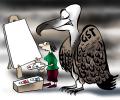
Experts said if the slowdown, and subsequent weakness in GST mobilisation, continued, it would curtail the Centre's resources to a considerable extent in the current financial year.

'India represents one of the top opportunities with robust growth, solid fundamentals, and openness to foreign investment.'

"Now is the time for countries with room in their budgets to deploy -- or get ready to deploy -- fiscal firepower. In fact, low interest rates may give some policymakers additional money to spend," new IMF chief Kristalina Georgieva said.

'Barring a temporary blip where stocks fell on verdict day, we are back to all-time highs.'

'We are confident that over the next few years the government will strike a fine balance between populist measures and growth, and manage coalition partners well.'

By taking the mutual fund route, investors can take exposure to gilts with small amounts. Over a decade or more, returns from these funds tend to be sound.

Looking under the hood, I see India on the terrible, but commonplace, road to prosperity failure, warns Rathin Roy.

'Investors should focus on largecap funds, flexicap funds, business cycle funds, or hybrid-category funds.'

'Event management can distract from, but not permanently mask, execution failures,' points out Rathin Roy, director, National Institute of Public Finance and Policy.

The economic slowdown in India preceded global meltdown due to stoppage of reforms by the UPA government, former union disinvestment minister Arun Shourie said.
Centre for Monitoring Indian Economy says industrial sector in India is liket to see expansion at 10.4 per cent for fiscal 2009. The reason for the current slowdown in industrial production was the supply problem faced by sectors like cement, aluminium, electricity and steel, it said. India's industrial growth slipped to 5.3% in January as compared to 11.6% in the same month last year as growth in all major sectors comprising manufacturing, electricity and mining declined.

The slowdown in private consumption in the economy is taking a toll on the growth of fast-moving consumer goods (FMCG). The net sales growth of listed FMCG companies hit a 14-quarter low of 2.5 per cent in October-December 2023 (Q3FY24). This is the lowest revenue growth for the industry since the June 2020 quarter, when the FMCG firms in the Business Standard sample had reported a 13.2 per cent Y-o-Y decline in combined net sales owing to the lockdown.

After some enforced slowdown in offtake during April-May 2024 due to elections, the cement sector is looking at a possible demand rebound which may help it to push up prices. The April'24 offtake was muted while May'24 saw some improvement with a likely 5-6 per cent rise in demand month-on-month (MoM). In June, some price hikes seem to have been taken, which suggests more sustained improvement in demand.

A reading above 50 indicates expansion, while a reading below 50 reflects contraction.

Remittances growth is muted due to "structural" reasons which will hamper consumption demand locally, a report said on Thursday. "...the muted external remittances growth is more of a structural issue than transitory," India Ratings and Research said in its note. India has been the largest recipient of remittances from its diaspora spread all across the world and received over $70 billion inflows last year. The agency argued that flows had started to moderate even before the COVID-19 pandemic outbreak, pointing out that as a percentage of gross disposable income, the share of remittances fell to 2.5 per cent in FY19 as against 3.5 per cent in FY10.

Gold is an excellent asset class for diversification and should be included in all long-term portfolios.

Good results for the January-March quarter (Q4) of FY24 and strong seasonal demand have led to strong investor interest in Crompton Greaves (CG) Consumer Electricals which is hitting new highs. While there's bullish consensus on the company's future performance, the stock has gained over 40 per cent in the last six months and valuations may become stretched. The Q4FY24 revenue rose 9.5 per cent YoY to Rs 1,960 crore.

The Softbank-backed company has set a price band of Rs 72 to Rs 76 per share for the maiden share sale and is expected to test the appetite for new-age loss-making companies.

India's fast-moving consumer goods (FMCG) sector witnessed growth in rural consumption in volume terms outpace urban consumption for the first time in five quarters, in the January-March period. According to a report from consumer intelligence firm NIQ, rural consumption grew at a rate of 7.6 per cent year-on-year (Y-o-Y) in Q1CY24, overtaking that in urban areas which stood at 5.7 per cent.
The post-Covid pandemic boom in corporate revenues appeared to have faded away in 2023-24. Yet, companies have reported a sharp recovery in their profits in FY24, driven by high margins. Their combined net sales, including gross interest income for lenders, rose by a modest 4.8 per cent year-on-year (Y-o-Y) in FY24.

The combined net profit of "early bird" companies, those that have declared their quarterly results, rose for the third consecutive quarter in July-September 2023 (Q2FY24). But the figures suggest a continued slowdown in revenue growth and stagnation in earnings over recent quarters. This slowdown is severe for companies in the manufacturing and non-financial service sectors.
Placement season drags on as B-schools find it difficult to place students despite making changes in their policies

Net inflows were $18.4 billion for the rolling 12-month period ended January 2024 compared to $32.7 billion for the rolling 12-month period ended January 2023.
Profits of India's top listed companies have been growing at a faster pace than those of their American peers, but when it comes to revenue growth, the order has reversed recently. The combined net profit of the S&P 500 companies was up 14.1 per cent year-on-year (Y-o-Y) during the trailing 12 months (TTM) ended December 2023, as against 17.4 per cent profit growth logged by the BSE 500 companies in the same period. This is the second consecutive year of faster profit growth for the BSE 500 companies.
Corporate India reported high double-digit growth in net profit for the fourth consecutive quarter in October-December 2023 (Q3FY24), driven by margin gains from lower prices of raw material and energy.

From the Sensex basket, Maruti, Mahindra & Mahindra, NTPC, JSW Steel, Larsen & Toubro, Reliance Industries, Axis Bank, and Power Grid were the major gainers. Nestle, Wipro, Tata Consultancy Services, HDFC Bank, Titan, HCL Technologies and Infosys were the laggards.
 © 2026 Rediff.com - Advertise with us - Disclaimer - Privacy Policy - Sitemap - Feedback - About us - Terms of use - Grievances