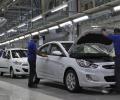
Passenger vehicle dispatches to dealers in India rose over two-fold last month on a low base of Covid-19-hit May last year. As per the Society of Indian Automobile Manufacturers (SIAM), passenger vehicle wholesales rose to 2,51,052 units last month as compared to 88,045 units in May 2021. The two-wheeler sales rose to 12,53,187 units in May as compared to 354,824 units in the year-ago period.


Passenger vehicle wholesales in India declined by 66 per cent to 88,045 units in May as compared to April this year as lockdowns across various states impacted dispatches to dealers, auto industry body SIAM said on Friday. Passenger vehicle wholesales in April stood at 261,633 units. As per the latest data by the Society of Indian Automobile Manufacturers (SIAM), two-wheeler dispatches to dealers dropped by 65 per cent to 3,52,717 units, compared to 9,95,097 units in April.
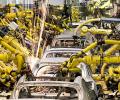
The passenger vehicle dispatches to dealers increased by 11 per cent in July as improvement in semiconductor supplies helped the companies to ramp up production ahead of the festive season, auto dealers' body SIAM said on Friday. Overall passenger vehicle wholesales increased to 293,865 units last month compared to 264,442 units in July 2021. Passenger car dispatches rose 10 per cent to 143,522 units in July from 130,080 units in the year-ago period.

Passenger vehicle wholesales in the country declined by 19 pc in November as the semiconductor shortage continued to impact vehicle production and subsequent deliveries to dealer partners, auto industry body SIAM said on Friday. The passenger vehicle (PV) dispatches last month stood at 215,626 units, down 19 per cent from 264,898 units in November 2020. Similarly, total two-wheeler sales declined sharply by 34 per cent to 10,50,616 units last month from 16,00,379 units in the year-ago period.

Passenger vehicle wholesales in India witnessed a decline of 41 per cent year-on year in September as automobile manufacturers struggled to produce adequate units owing to semiconductor shortage, auto industry body SIAM said on Thursday. Passenger vehicle sales last month stood at 1,60,070 units as compared with 2,72,027 units in the year-ago period. As per the latest data by Society of Indian Automobile Manufacturers (SIAM), two-wheeler dispatches to dealers also witnessed a dip of 17 per cent at 15,28,472 units, compared to 18,49,546 in September 2020.

The Elle Sustainability Awards 2023 saw a gaudy constellation of stars, dressed to the nines, congregate under one roof.

The next edition of the country's leading automobile show, the Auto Expo, will be held from January 13-18 next year, having been cancelled this year due to the COVID-19 pandemic. The last edition of the biennial automobile show took place in February 2020 amid fears of the spread of the coronavirus across the world. It was supposed to take place in February this year at Greater Noida but was postponed due to the worsening COVID-19 situation.

Passenger vehicle dispatches from factories to dealers in India fell 8 per cent in January, mainly due to semiconductor shortage, auto industry body SIAM said on Friday. The total passenger vehicle wholesales dropped to 254,287 units in January 2022 as compared to 276,554 units in the same month of last year. Last month, passenger car dispatches stood at 126,693 units as compared to 153,244 units in the year-ago period. Similarly, van dispatches declined to 10,632 units in the period under review from 11,816 units in January 2021.

'There is a need for a national task force with a singular objective to increase automotive exports.'

Market leader Maruti Suzuki India's passenger vehicles sales declined by 2.34 per cent last month at 133,702 units. Hero MotoCorp reported total two-wheeler sales of 480,196 units last month, down 20.05 per cent.

During the six-day-long event, automakers have planned 10 global launches, 26 India specific launches, six concept vehicles, seven facelifts and 21 vehicle unveilings.

Vehicle prices have gone up as manufacturers gear up for the transition to stricter emission norm BS-VI from BS-IV beginning April 1.

Passenger vehicle wholesales in India rose by 14.16 per cent in August to 2,15,916 units, driven by pent-up demand, industry body SIAM said on Friday. According to the latest data by the Society of Indian Automobile Manufacturers, passenger vehicle wholesales stood at 1,89,129 units in the same month last year.
Market leader Maruti Suzuki sold 51,274 units, down 49.61 per cent from the same month last year. Hyundai Motor sold 21,320 units, a decline of 49.25 per cent and Mahindra & Mahindra sold 8,075 units, down 54.54 per cent.
Passenger vehicle exports from India increased 43 per cent in FY22, with Maruti Suzuki India leading the segment with dispatches of over 2.3 lakh units, as per the latest data by industry body SIAM. The total passenger vehicle (PV) exports stood at 5,77,875 units in 2021-22 fiscal, as compared to 4,04,397 units in 2020-21. Passenger car shipments saw 42 per cent growth at 3,74,986 units, while utility vehicle exports rose 46 per cent at 2,01,036 units during the last fiscal, the data by the Society of Indian Automobile Manufacturers (SIAM) showed.

US-based electric vehicle maker Tesla is looking to source components worth around $1.9 billion this year against $1 billion last year, Commerce and Industry Minister Piyush Goyal said on Wednesday. The minister said that going forward, demand for electric vehicles will increase and it will help in pushing the growth of the sector. "Tesla already last year bought one billion dollars of components from I think all of you sitting here.... I have the list of companies who supply to Tesla.

'Some companies have agreed to 2-3% incentive but the automakers and SIAM have to decide amongst themselves'

Use of 10 per cent ethanol-blended petrol has led to a saving of over Rs 41,000 crore in the foreign exchange for the country, minister of state for environment, forest and climate change Ashwini Kumar Choubey said on Wednesday. Speaking at an online event of auto industry body SIAM on sustainable mobility, the minister said the government is working in multiple ways to encourage sustainable mobility. "India recently achieved 10 per cent ethanol blending target 5 months in advance, saving over Rs 41,000 crore worth of fuel imports for the nation," Choubey noted.

Passenger vehicle dispatches from factories to dealers declined 13 per cent to the lowest level in five years in December last year as the industry continued to face production issues due to semiconductor shortage, auto industry body SIAM said on Friday. Passenger vehicle dispatches last month stood at 2,19,421 units compared to 2,52,998 units in December 2020. While acknowledging that the chip shortage situation is not expected to dramatically change in the short term, the industry body expressed hope that things will improve soon.

The semiconductor chip supply for the electric two-wheeler industry has normalised but the prices are up by nearly 50 per cent compared to pre-pandemic period, said Eric Vas, president, Urbanite, the electric vehicle (EV) business of Bajaj Auto. "It (the supply) has improved greatly. It has pretty much normalised. The problem is the cost. "The costs remain very high. Hopefully, the costs will start correcting themselves over this fiscal year," he said in an interview with Business Standard.

Maruti Suzuki India (MSIL) does not anticipate growth in the small car segment because people continue to find these vehicles unaffordable, chairman R C Bhargava said on Wednesday. He said the market had clearly shifted towards the sport utility vehicle (SUV) segment and the company will go in the same direction. The domestic sales of utility vehicles jumped in India by 34.54 per cent to about 2 million units in FY23.

The automobile sector has started seeing volume growth, the crucial economy segment included. Maruti Suzuki India (MSIL) could be a big beneficiary as the country's largest passenger vehicle (PV) maker has seen several favourable developments including volume recovery. Demand for its new sports utility vehicles (SUVs) appears to be good, and the company has 4 lakh outstanding orders by April 2023, (up from 3.6 lakhs in January 2023). Siam (Society of Indian Automobile Manufacturers) estimates that passenger vehicle demand would grow by 5-7 per cent in the 2023-24 financial year (FY24) and MSIL is likely to beat the market growth.

Union Minister Nitin Gadkari on Tuesday launched the country's first crash testing programme Bharat NCAP aimed at improving road safety standards of motor vehicles up to 3.5 tonnes. Bharat New Car Assessment Programme (Bharat NCAP) is India's own crash testing programme and is cheaper than tests conducted abroad, Gadkari said, adding that the star ratings will help buyers understand the quality of the product and make an informed purchase decision. Bharat NCAP will be implemented from October 1, 2023.

Clock 11% growth in the first 11 months of 2022.

Passenger vehicle wholesales in India declined by 10 per cent to 2,61,633 units last month as compared to March this year, as COVID-19-led restrictions across various states impacted demand, auto industry body SIAM said on Wednesday. Passenger vehicle sales in March 2021, stood at 290,939 units.

Ahead of the Budget, Society of Indian Automobile Manufacturers on Tuesday asked the government to retain excise duty on small cars at the current level of 10 per cent even though the industry witnessed good growth this fiscal.

Two years after it hitched a ride with Hero MotoCorp (Hero), Harley-Davidson (Harley) and the Pawan Munjal-led firm are gearing up to ride into the middleweight (midweight) motorcycle segment (350-850cc) in the world's largest two-wheeler market.

Passenger vehicle wholesales in India slipped to a 10-year low in the April-December this fiscal, and the industry will have to work hard to regain better volumes and business health, industry body SIAM said on Thursday.
The Society of Indian Automobile Manufacturers had earlier revised the sales forecast for financial year 2012 downwards for the passenger cars at 10-12 per cent in July against 16-18 per cent announced at the beginning of the fiscal.

Automobile exports from India recovered in the first quarter with all vehicle segments, including passenger vehicles and two-wheelers, witnessing growth following an improvement in the pandemic situation across various international markets. As per the latest SIAM data, total vehicle exports during the April-June quarter this fiscal stood at 14,19,430 units as compared with 436,500 units in the same period of 2020-21 which saw massive disruptions due to the COVID lockdowns across the country, hampering sales as well overseas shipments. SIAM director general Rajesh Menon told PTI that while two-wheeler shipments were better than previous three years, passenger vehicles, three-wheelers and commercial vehicles export numbers were yet to catch up with numbers in the first quarter of 2018-19 fiscal.

Passenger vehicle wholesale in India increased by 14.19 per cent to 3,10,294 units in October against 2,71,737 units in the same month last year as companies despatched more units to dealers to cater to enhanced demand in the festive season, auto industry body SIAM said on Wednesday. According to the latest data by the Society of Indian Automobile Manufacturers (SIAM), two-wheeler sales also rose 16.88 per cent to 20,53,814 units, compared with 17,57,180 units in the same month last year. Motorcycle sales were at 13,82,749 units as against 11,16,886 units in October 2019, up 23.8 per cent.

Maruti Suzuki India (MSIL) - the market leader in small cars - is eyeing the top spot in the sports utility vehicle (SUV) segment within a year - with a 33 per cent share of the pie. The company has been selling two SUVs - the Brezza and the Grand Vitara - and will start deliveries of the Jimny and the Fronx from March-end, and has set a target of growing its share from the current 11.5 per cent of the SUV market to 33 per cent by the end of 2023-24. The SUV segment is roughly about 42 per cent of the total passenger vehicle market, or around 1.3 million units.

Three business houses are likely to be in the final race to strike a deal with Germany's Metro AG for investing in its India unit -- Metro Cash & Carry. Industry sources in the know named Reliance, Adani Group, and Thailand's conglomerate Charoen Pokphand (CP) as potential frontrunners to acquire a partial or full stake in the Gurugram-headquartered Metro Cash & Carry, which has 31 stores and 5,000 direct employees. Around 20 companies, including strategic and private equity investors, were approached by the German chain, inviting them to bid for the Indian wholesale business, according to a source aware of the M&A developments.

Honda Motorcycle and Scooter India (HMSI), India's second-largest two-wheeler maker, on Wednesday revealed its electric vehicle (EV) roadmap, which includes setting up a dedicated EV factory, launching the first two EVs in 2023-24, and establishing 6,000 battery exchange points in the country. HMSI plans to establish a specialised unit for the manufacturing of electric vehicles (EVs), named 'Factory E', at its Narsapura plant located in Karnataka. Factory E will be created by converting an existing production line that currently manufactures internal combustion engine (ICE) vehicles, said Atsushi Ogata, HMSI managing director and chief executive officer.
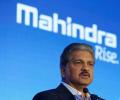
"I took some time to explore the contours of this initiative. I don't use the term 'game-changer' too often but it's apt in this case. For me, what's much more important than the mechanics of the scheme is the dramatic shift it signals in the attitude towards industry," Mahindra said in a tweet.
Domestic car sales were down 33.4 per cent to 1,31,281 units last month as against 1,97,124 units in September 2018, according to data released by the Society of Indian Automobile Manufacturers (SIAM) on Friday.

Domestic car sales were down 35.95 per cent at 1,22,956 units as against 1,91,979 units in July 2018, according to data released by the Society of Indian Automobile Manufacturers (SIAM) on Tuesday.
However, notable absentees from the expo will be Honda, Toyota, Ford, BMW, Audi, Lexus, Volvo and Jaguar Land Rover along with two-wheeler majors Hero MotoCorp, Bajaj Auto and TVS Motor Co.

The industry is engaged in a dialogue with the Government of India on policy measures which could minimise the impact of COVID-19 on the Indian economy and especially the domestic automobile industry.
