
The research would lead to a better understanding of metabolic reprogramming and aid the development of better therapeutics to deal with the viral pandemics, an institute spokesperson said on Wednesday.

Scientists stress there is currently no evidence of human infections, or community spread linked to the virus.

A new study suggests a blood test called 'VeloCD' can predict the trajectory of an illness and how well a patient might respond to treatment by measuring key markers in the blood.

Covid is growing milder with time but an occasional surge in cases is expected because the virus that causes it is now endemic and constantly evolving, say scientists while assuring that there is no cause for concern.

The study showed that SARS-CoV-2 primarily infected and damaged airway and lung tissue.

As of May 2025, the World Health Organization (WHO) classifies LF.7 and NB.1.8 subvariants as Variants Under Monitoring, not as Variants of Concern or Variants of Interest. But these are the variants that are reportedly driving the rise in Covid cases in China and parts of Asia.

According to the scientists, people infected with SARS-CoV-2 might be spreading the virus without recognizing, or prior to recognizing, symptoms.

The researchers believe their findings provide a blueprint for a second-generation, universal vaccine that could prevent infection from current and future SARS-CoV-2 variants, including Omicron.
Signalling pathways are complicated chain reactions which control many important human biological processes and in which certain proteins act as messenger molecules that promote or block the signals of other proteins.

The finding underscores the importance of hand washing or using a sanitiser to prevent the spread of COVID-19.

The researchers noted that people who are fully vaccinated can still become infected with SARS-CoV-2 and can carry a viral load similar to those who are unvaccinated.
However, the severity of illness is likely to be much lower, according to a study.

The first study used spatial analysis to show that the earliest known COVID-19 cases, diagnosed in December 2019, were centered on the Wuhan market.
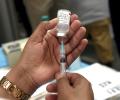
The ICMR-National Institute of Virology has been regularly undertaking studies to understand the protective efficacy of COVID-19 vaccines against emerging variants.
A drug developed by the Defence Research and Development Organisation (DRDO) may reverse the heart damage caused by a protein in the SARS-CoV-2 virus, a study conducted in fruit flies and mice has found.

India currently does not have any XBB 1.5 variant-based vaccines available.

The study, published in the Journal of Clinical Investigation, also demonstrates that the immunity built up from previous non-SARS-CoV-2 coronavirus infections does not prevent individuals from getting COVID-19.
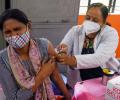
The research published in 'Nature Nanotechnolog' on Monday is based on a new approach to vaccine development called "proactive vaccinology", where scientists build a vaccine before the disease-causing pathogen even emerges, which has shown promising results in mice.
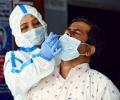
India on Wednesday reported 21 cases of the JN.1 Covid variant, a development that is neither surprising nor particularly worrying, scientists said while allaying fears but also advising adherence to existing precautionary measures.

Using this sequence data, the researchers traced the origins and evolution of SARS-CoV-2 by focusing on the tell-tale features of the virus.

COVID-19 patients commonly report symptoms such as brain fog, headaches, and insomnia, complications which are not new after a viral infection, the researchers said.

Ten states and Union Territories have so far detected the presence of the JN.1 sub-variant of the virus.

The study, published in the journal Nature Structural & Molecular Biology, noted that the 'nanobodies' can prevent infection with the novel coronavirus SARS-CoV-2 by blocking its interaction with the protein ACE2, which it uses as a gateway to enter and infect cells.

'If SARS-CoV-2 is anything like the first one, we expect antibodies to last at least two years, and it would be unlikely for anything much shorter'

'However, the importance of children in transmitting the virus remains uncertain,' the scientists cautioned in the study. 'Coronaviruses are a large family of viruses that can cause infection and disease in animals, capable of rapid mutation and recombination, leading to novel viruses that can spread from animals to humans,' they said.

China on Wednesday accused the United States for originating COVID-19, claiming America was trying to 'shift the blame' after US President Donald Trump said that the disease was leaked from a Wuhan lab, New York Post reported.
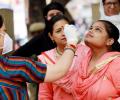
As many as 290 cases of KP.2 and 34 cases of KP.1, both sub-lineages of COVID-19 that are responsible for surge in cases in Singapore, have been found in India, according to official data.

The study describes a new blood test which pinpoints the immune system molecules called antibodies in infected individuals that specifically target a unique piece of the novel coronavirus SARS-CoV-2's spike protein.

Scientists have identified and tested an antibody that limits the severity of infections from a variety of coronaviruses, including those that cause COVID-19 as well as the SARS illness.
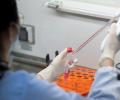
The World Health Organisation (WHO) has classified the EG.5 strain of the SARS-CoV-2 virus circulating in different parts of the world, including India, as a 'variant of interest' but said it did not seem to pose more of a threat to public health than other strains.

"Usually viruses that jump to a new host species take some time to acquire adaptations to be as capable as SARS-CoV-2 at spreading, and most never make it past that stage, resulting in dead-end spillovers or localised outbreaks," said Sergei Pond, another co-author of the study from Temple University in the US.
The researchers, including those from the University of Texas Health Science Center at San Antonio (UT Health San Antonio) in the United States, developed two molecules that inhibit the molecular 'scissor' enzyme used by the coronavirus called SARS-CoV-2-PLpro.

Of the seven cases, three were found in Gujarat and one each in Karnataka, Telangana, Chhattisgarh and Rajasthan, Indian SARS-CoV-2 Genomics Consortium (INSACOG) said.
In the wake of the surge in respiratory diseases and new JN.1 sub-variant of COVID-19, the World Health Organisation (WHO) said that the virus is evolving and changing and urged the member states to continue with strong surveillance and sequence sharing.
The Centre said that there is no reason to believe presently on the that they are responsible for the surge in cases in some districts in these two states.
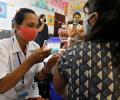
Antibody levels are higher when people receive the COVID-19 vaccine in the afternoon as compared to the morning, according to an observational study.
Researchers from the University of Florida in the US noted that the combination includes diphenhydramine, an antihistamine used for allergy symptoms.

Researchers at the Institute for Health Metrics and Evaluation (IHME) at the University of Washington, US, estimate that globally 63 per cent of those with long Covid during the first two years of the pandemic were female.

The Drugs Controller General of India has approved the manufacture of this Sars-CoV-2 spike protein recombinant nano-particle vaccine for 'examination, test, and analysis', reports Sohini Das.

'SARS-CoV-2 is going to change to avoid/overcome any thing thrown at it.'
 © 2026 Rediff.com - Advertise with us - Disclaimer - Privacy Policy - Sitemap - Feedback - About us - Terms of use - Grievances