
India Inc could be embarking upon a new phase of capital expenditure (capex) cycle, observed analysts, and suggest its revival would lead to a rerating of industrial stocks. Assisted by a property upcycle, analysts at Jefferies said several government initiatives were likely to drive capex. Indicators, they said, include a private project announcement at Rs 25 trillion for 2022-23 (up 150 per cent from pre-pandemic levels) and credit growth at about 16 per cent, which is closer to pre-pandemic highs.

ITC stock slipped over 4 per cent on Thursday (February 8) after British American Tobacco (BAT) said it could sell some of its stake in the company, recovering partially in trade. The stock of the cigarette-to-hotels conglomerate traded at Rs 420 levels, rising 1.3 per cent in intraday deals as compared to the S&P BSE Sensex that traded flat for most part of the day. The development, meanwhile, saw Jefferies downgrade the stock to 'hold' from 'buy' earlier with a target price of Rs 430, down a huge 17.3 per cent from its earlier price target of Rs 520.

JSW Steel (3.37 per cent), Tata Steel (3.33 per cent), Maruti (3.24 per cent), Power Grid (3.07 per cent), IndusInd Bank (2.95 per cent), Bajaj Finance (2.12 per cent) and Tech Mahindra (2.22 per cent) were among major gainers. On the other hand, Ultratech Cement, Sun Pharma, Nestle and L&T were the losers.

South Korean auto giant Hyundai Motor Company is considering tax implications of listing its Indian unit before taking a final call, according to sources privy to the development. Hyundai Motor is mulling an initial public offering (IPO) for its Indian arm to raise around $3 billion (at a valuation of up to $30 billion), and talks are in the early stages between the company and bankers, banking sources revealed. Hyundai Motor India Ltd (HMIL), however, declined to comment on the development.

One of the biggest advantages of index funds and ETFs is their low cost, points out Sarbajeet K Sen.

Notwithstanding concerns about lofty valuations, smallcaps recorded their most significant monthly gain in nearly three years in November. The National Stock Exchange Nifty Smallcap 100 finished the month with a 12 per cent gain, the most since February 2021 when it rose by 12.2 per cent. After declining by 4.1 per cent in the preceding month, the Nifty Midcap 100 rose by 10.4 per cent, the most since July 2022.

Most analysts have downgraded the stock of SBI Cards and Payments (SBI Card) as the credit card issuer posted weak results during the December quarter (Q3) of financial year 2023-24 (FY24). The sub-par show, analysts said, was for the eighth straight quarter. With this, they have slashed their earnings estimates by as much as 20 per cent over FY24-26 amid near-term pressure points in the company's growth outlook.

S&P Global Ratings on Wednesday slashed India's GDP growth forecast for the current financial year to 9.8 per cent saying the second Covid wave may derail the budding recovery in the economy and credit conditions.

S&P Global Ratings has forecast India's economy to shrink by 5 per cent in the current fiscal. It, however, has projected GDP growth to be 8.5 per cent in 2021-22 and 6.5 per cent in 2022-23.

Even as top Pegatron executives went to the factory near Chennai on Tuesday to make an assessment of the fire damage to decide on a possible date for resuming operations, sources said the impact of the closure will be minimal for Apple's iPhone production. Late in the evening sources said that the factory might be operational soon-but said they are waiting for a final update. It will also not impact the availability of the newly-launched iPhone 15 and iPhone 15 Plus, they said.

Titan Company on November 21, became the second Tata group firm to join Rs 3 trillion market capitalisation (market cap) club after its shares hit a new high of Rs 3,400, up nearly 2 per cent on the BSE in Tuesday's intra-day trade. At 12:28 PM; with a market cap of Rs 301,847 crore (Rs 3.02 trillion) Titan stood at number 16th position in overall market cap ranking on the BSE listed companies, the exchange data shows. Titan overtook paint company Asian Paints, which has a market cap of Rs 300,579 crore, data shows.
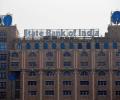
SBI Q3FY24 result review: A higher-than-factored weakness in the October-to-December quarter (Q3) results of State Bank of India (SBI), for financial year 2023-24 (FY24), has prompted brokerages to cut earnings estimates for the ongoing financial year. They, however, have maintained 'Buy' ratings on the stock, revising target price upwards in some cases, owing to the stock's recent underperformance relative to its peers.

From the Sensex pack, Mahindra & Mahindra climbed 3.81 per cent and Axis Bank advanced 2.68 per cent, followed by Tata Motors, Larsen & Toubro, Tata Steel, ICICI Bank, Reliance Industries, Maruti, IndusInd Bank and Sun Pharma. Asian Paints, Tech Mahindra, Nestle, Hindustan Unilever, Kotak Mahindra Bank and ITC were among the laggards.

S&P Global Ratings on Tuesday kept India's economic growth forecast in the fiscal year to March 2022 unchanged at 9.5 per cent but raised its predictions for the subsequent year on broadening out of the recovery. The Indian economy had shrunk by 7.3 per cent in 2020-21 fiscal (April 2020 to March 2021) as pandemic induced restrictions battered business activity. The gradual lifting of the restrictions has helped the economy to rebound from pandemic lows.

S&P Global Ratings on Monday retained its forecast of 9 per cent contraction in the Indian economy for the current fiscal, saying even though there are now upside risks to growth but it will wait for more signs that COVID infections have stabilised or fallen. S&P, in its report on Asia Pacific, projected the Indian economy to grow at 10 per cent in the next fiscal.

From the Sensex pack, IndusInd Bank, Mahindra & Mahindra, PowerGrid and Bajaj Finserve gained up to 2.01 per cent. On the other hand, bellwether stocks such as ITC, Kotak Mahindra, Tech Mahindra and Reliance were the laggards. ITC shares closed the session with a loss of 3.87 per cent lower and Reliance ended 1.92 per cent lower.

Eleven companies have launched their initial public offerings (IPOs) in December 2023, making this month the second-best December for public offerings since 1996. Collectively, they are raising Rs 8,182.7 crore this month. In December 2021, 11 companies raised Rs 9,534 crore. However, excluding December 2021, this month marks the best December for IPOs since 1996.

The sharp jump in shares of Kalyan Jewellers (Kalyan) has surprised many on the Street; however, analysts believe more steam could be left in the stock as the Thrissur-based gold retailer pivots to a new asset-light network expansion model. Kalyan's stock has surged 62 per cent in the past month, even as the S&P BSE SmallCap Index has gained just 5 per cent. In its latest business update, the company said its consolidated sales grew more than consensus expectations at 31 per cent year-on-year, led by strong domestic sales regardless of the volatility in gold prices.

Services sector activities improved further and touched a five-month high in April driven by a surge in incoming new work orders that boosted business activity and supported a renewed increase in employment, according to a survey. The seasonally adjusted S&P Global India Services PMI Business Activity Index jumped to 57.9 in April, from 53.6 in March, highlighting a sharp rate of expansion that was the fastest since last November amid mounting price pressures. For the ninth straight month, the services sector witnessed an expansion in output.

'From a risk-return perspective, large-cap funds may generate lower-than-historical average returns in 2024, whereas mid-, and small-cap funds hardly have any upside left.'

Shares of Bajaj Finance sprinted 4.7 per cent to Rs 7,732 per share on the BSE in Thursday's (January 4) intra-day trade as the non-bank finance company's (NBFC's) December quarter business update reflected minimal impact of the Reserve Bank of India's ban on two of its lending products. The shares, eventually, ended 4.4 per cent higher at Rs 7,710 per share as against 0.69 per cent gain in the benchmark S&P BSE Sensex. The NBFC's asset under management (AUM) topped the Rs 3-trillion-mark at the end of December 2023, swelling by roughly Rs 20,700 crore (35 per cent year-on-year) to hit Rs 3.11 trillion-mark.

Higher valuation creation in companies beyond the top 100 has given the domestic markets a shot at a $4 trillion market capitalisation (mcap) - a club exclusive to three countries currently. On November 23, the mcap of all BSE-listed stocks finished at a new record of Rs 328.33 trillion ($3.94 trillion), despite the benchmark indices ending with losses. The mcap was propelled by gains in the broader market, including small and midcap stocks - a trend dominant this year.

Growing concerns over slower-than-expected margin recovery, amid weak deposit growth have caught HDFC Bank's investors off guard. HDFC Bank's stock on Wednesday plunged nearly 9 per cent to hit an intraday low of Rs 1,527 on the BSE after reporting weaker-than-expected earnings in the third quarter (October - December) of the current financial year (Q3FY24). The shares of India's biggest private lender closed at Rs 1,536.9, down 8.46 per cent.

Equity markets rallied after softer-than-expected inflation data in the US and UK rekindled hopes of the end of the rate-hiking cycle by major central banks. The soft inflation reading drove down bond yields and the US dollar, whetting the appetite for risky assets. The 10-year US bond yield fell below 4.5 per cent after topping 5 per cent less than a month ago.

Equity benchmark indices ended flat on Wednesday with Sensex sliding 33 points and Nifty gaining 9 points after an unabated record-breaking rally in the last few trading sessions. Weak global market trends and fall in HDFC twins also spoiled markets party. The 30-share BSE Sensex dipped 33.01 points or 0.05 per cent to settle at 65,446.04.

Moody's Investors Service on Friday affirmed India's rating at the lowest investment grade of 'Baa3', with a stable outlook, saying high growth will support a gradual increase in income levels, but flagged risks of populist policies due to rise in political tensions. Moody's said although India's potential growth has come down in the past 7-10 years, the growth would outpace all other G20 economies through at least the next two years, driven by domestic demand. Moody's said the restoration of robust growth prospects post-pandemic, the effective commitment to inflation targeting and the rehabilitation of the financial system aided by reform supports its view of strengthening monetary and macro policy effectiveness.

With the Nifty50 just about 3 per cent away from its all-time closing high of 18,812 points, analysts at BofA Securities suggest investors book profit. Their reasons for the advice include risks like the possibility of a cut in corporate earnings growth forecasts, high valuation (one-year forward P/E of 19.5x), interest rates staying elevated for longer-than-expected and credit tightening. Going ahead, they expect the Nifty50 index to drop to 16,000 levels - down nearly 12 per cent from the current level of 18,255 points, which they believe would be a good time to buy.

Global funds, according to Christopher Wood, global head of equity strategy at Jefferies, are now beginning to pay more attention to India with the market now offering 30 companies with a market capitalisation over $25 billion.

From the Sensex pack, JSW Steel, Tata Steel, NTPC and UltraTech Cement emerged as major winners, closing the day with a gain of up to 3.33 per cent. On the other hand, Asian Paints, ITC, L&T and SBI were the laggards, ending the session up to 3.95 per cent lower. Of the 30 Sensex stocks, 14 closed the day in green, while on the 50-stock index Nifty 25 scrips ended with gains.

Airline stocks have been soaring following a steep decline in crude oil prices and sustained passenger traffic. Analysts have particularly turned bullish on the stocks of InterGlobe Aviation and SpiceJet. On December 20, shares of InterGlobe Aviation (IndiGo) hit a record high of Rs 3,009 on the BSE, having surged 43.24 per cent year-to-date (YTD).

Omkeshwar Singh, head, Rank MF, a mutual fund investment platform, answers your queries:

Asset-weighted returns of large cap funds lagged their benchmark by 273 basis points, ELSS funds by 318 bps and mid- and small-cap funds by 230 bps.

Billionaire Gautam Adani's embattled conglomerate said its balance sheet is "very healthy" and is laser focused on continuing business momentum, as it looked to reassure investors to keep faith in the conglomerate despite a share rout triggered by a damning report by a US short-seller. Group CFO Jugeshinder (Robbie) Singh in an earnings call said the group is confident of its internal controls, compliance and corporate governance. Separately, it released a compendium of group companies to highlight that it has adequate cash reserves and has ability to refinance debt.

India's manufacturing sector activities moderated in March with companies reporting softer expansions in new orders and production as inflation concerns dampened business confidence, a monthly survey said on Monday. The seasonally-adjusted S&P Global India Manufacturing Purchasing Managers' Index (PMI) was at 54.0 in March, down from 54.9 in February, highlighting weakest rate of growth in terms of production and sales since September 2021. The March PMI data pointed to an improvement in overall operating conditions for the ninth straight month.

>It's not easy to predict the market. But there are at least two positive factors to back the PSU banks, explains Tamal Bandyopadhyay.

M&M was the biggest loser in the Sensex chart, falling 6.39 per cent, followed by Tech Mahindra, Nestle India, Bajaj Finance, Axis Bank, ITC, JSW Steel, HDFC Bank and RIL. On the other hand, Sun Pharma, Tata Motors, Bharti Airtel, L&T and Infosys were among the winners, rising up to 2.10 per cent.

The Congress-led opposition stepped up its attack on Friday against the government over the Adani row and demanded that there should be a thorough investigation into what they alleged was a 'mega scam' as it involved public money.

The S&P BSE Auto Index has been one of the biggest outperformers among sectoral indices over the past year with returns of 26 per cent. By comparison, the benchmarks - the National Stock Exchange Nifty50 and the S&P BSE Sensex - managed about 6-8 per cent during this period. Improving demand, falling raw material costs, and rising product realisations, led by the premiumisation of portfolios, have led to a revision of growth estimates and upgrades by domestic brokerages.

Financial services and consumer durable companies accounted for most of the selling by foreign portfolio investors (FPI) in the last fortnight of February. FPIs sold finance stocks worth Rs 2,263 crore and consumer durable stocks worth Rs 1,111 crore, according to data collated by Prime Infobase. Information technology (selling worth Rs 708 crore), metals and mining (Rs 694 crore), and power (Rs 497 crore) were the other sectors where overseas funds sold shares.
